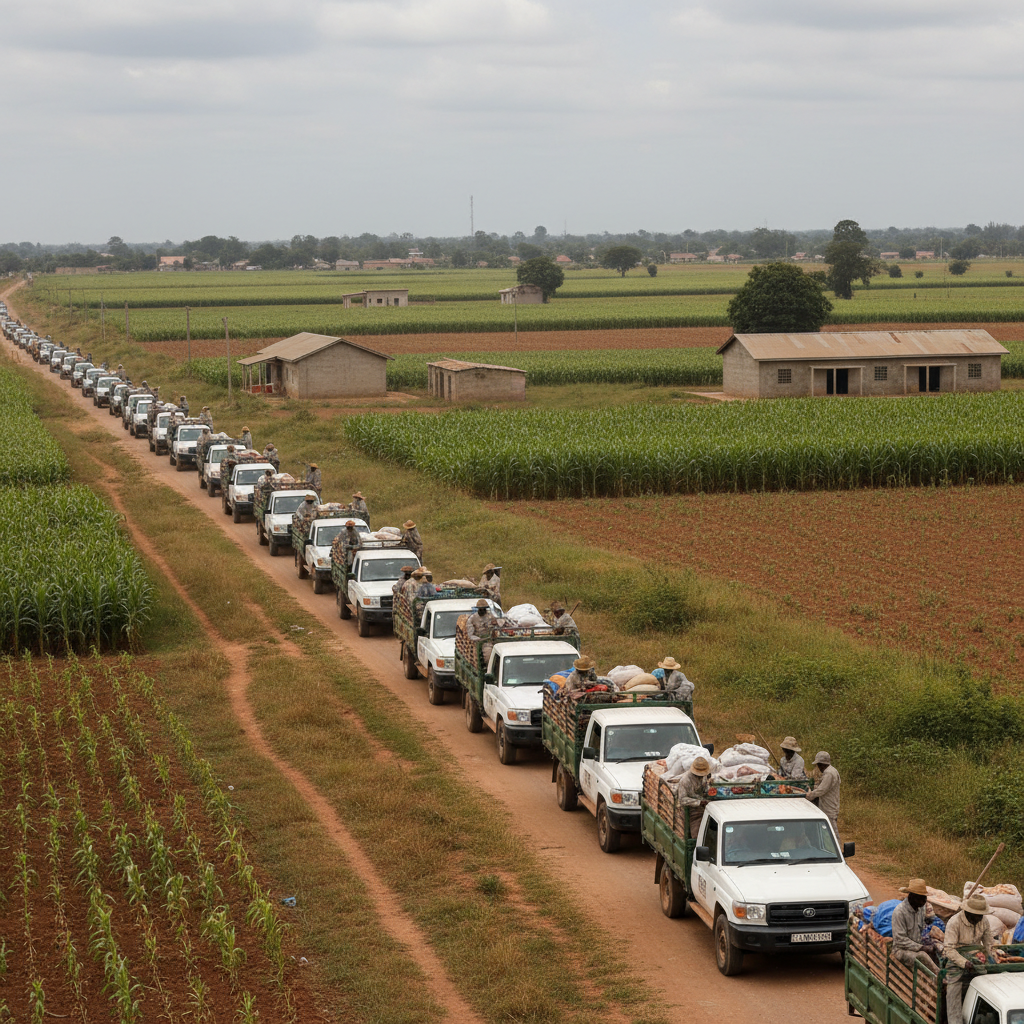
Ghana will deploy 500 new agricultural extension officers to support the national Feed Ghana Programme. These 500 officers will provide advanced technical guidance to farmers and communities across all 276 agricultural constituencies. The deployment signifies a direct investment in Ghana's agricultural backbone, aimed at improving farming practices.
These graduates will offer specialized advice on farming techniques, crop management, and pest control. Their presence aims to bridge the knowledge gap between agricultural research institutions and local farmers. Greater technical support is expected to increase crop yields and overall farm efficiency.
This initiative aligns with Ghana's broader economic strategy to enhance food security and reduce reliance on food imports. Agricultural development is a key pillar of government policy, particularly given Ghana's significant youth employment challenges. Previous efforts, like the 'Planting for Food and Jobs' program, have highlighted the need for sustained, direct farmer support. Data continues to show that improved farming practices directly correlate with increased output and farmer income.
The Ministry of Food and Agriculture (MoFA) has emphasized the critical role of extension services in modernizing Ghana's agricultural sector. An official from MoFA stated that these officers are essential for transmitting best practices to the grassroots level. This direct engagement is vital for achieving the Feed Ghana Programme's ambitious goals of national food self-sufficiency.
The deployment of these 500 officers is expected to have immediate and long-term implications for Ghana's agricultural output. Farmers will likely adopt more efficient methods, potentially leading to higher harvests and stable food prices. Decision-makers will closely monitor the impact on food production statistics and rural economic development. The success of this deployment could dictate future investments in agricultural extension services across the country, influencing market dynamics for essential commodities.
The effective integration of these officers into rural communities will be crucial for their impact. It will be important to ensure they have the resources needed to perform their duties effectively. Such resources include transportation, communication tools, and access to the latest agricultural research. This commitment to strengthening agricultural extension services reflects a concerted effort to support Ghana's overall economic growth. It also aims to improve the livelihoods of millions of smallholder farmers.