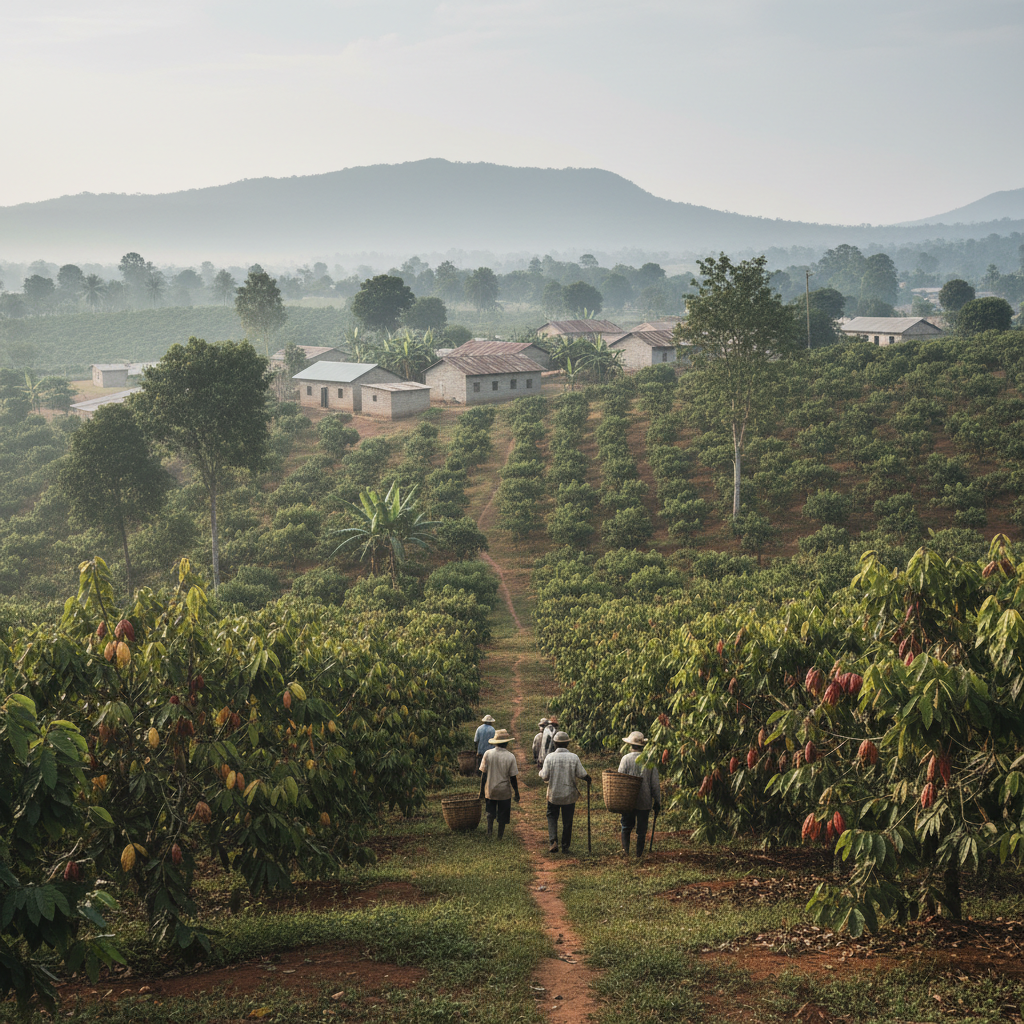
Ghana’s cocoa sector needs policies that prioritize the health and wellbeing of farmers, not just production and yields. Dr. Albert A. Arhin, a researcher at Kwame Nkrumah University of Science and Technology (KNUST), stated that a resilient cocoa sector cannot be achieved without resilient farmers. This call comes amidst declining cocoa production nationwide.
A recent study in cocoa-growing communities in Ghana and Côte d’Ivoire found that climate change affects both cocoa production and farmers. The study engaged over 1,000 cocoa farmers, including 500 Ghanaian farmers in quantitative surveys and qualitative interviews. Farmers expressed concerns that their health, labor capacity, and overall wellbeing were being overlooked despite efforts to increase productivity. This oversight contributes to significant challenges within the industry.
Ghana’s cocoa production has already fallen from an average of about 800,000 tonnes to nearly 600,000 tonnes. This decline impacts Ghana's economy, as cocoa remains a vital export commodity and a significant source of foreign exchange. The country's economic stability often hinges on robust performance in key agricultural sectors like cocoa.
Dr. Arhin highlighted that focusing solely on productivity interventions will not reverse this downward trend. He noted that labor shortages, farmer health issues, and reduced time on farms due to climate conditions all contribute to declining cocoa yields. Farmers also cited poor roads, low producer prices, and unfulfilled promises as persistent concerns impacting their livelihoods. These issues erode trust and motivation among the farming community.
“The impact of climate change is not only on the cocoa tree but also on the producer himself,” Dr. Arhin explained. “If the producer is not resilient, we cannot have a resilient cocoa sector.” He emphasized that government policies must include measures to protect farmers’ health, improve their welfare, and strengthen their resilience to climate shocks. Such comprehensive policies are crucial for long-term sector sustainability.
Mr. Jose Lopez Ganem, Executive Director of the Institute for Cacao and Chocolate Research, echoed these sentiments. He called for stronger investment in healthcare and infrastructure for cocoa farmers. Mr. Ganem stressed that farmer health is a critical component of agricultural productivity, especially with intensifying climate change pressures. He drew parallels with Taiwan, where farmers have quick and affordable access to healthcare services, demonstrating that linking farming to healthcare is achievable through deliberate government investments.
Mr. Ganem added that lessons could be drawn from sectors like oil production, where workers often receive robust healthcare support. He also underscored the importance of reliable road infrastructure and transportation systems to improve access to essential services for rural farmers. Broad discussions on climate resilience must therefore include investments in healthcare, rural infrastructure, and transportation. These integrated approaches protect farmers and sustain cocoa production in the long run.
The cocoa sector’s future performance will depend on how effectively policymakers integrate farmer-centric approaches. Stakeholders will watch for new initiatives addressing farmer welfare and climate resilience. The Bank of Ghana and the Ministry of Finance will monitor cocoa export revenues, as continued declines could impact Ghana’s balance of trade and foreign reserves. Implementing these recommendations could transform Ghana’s cocoa sector, safeguarding livelihoods and national economic stability.