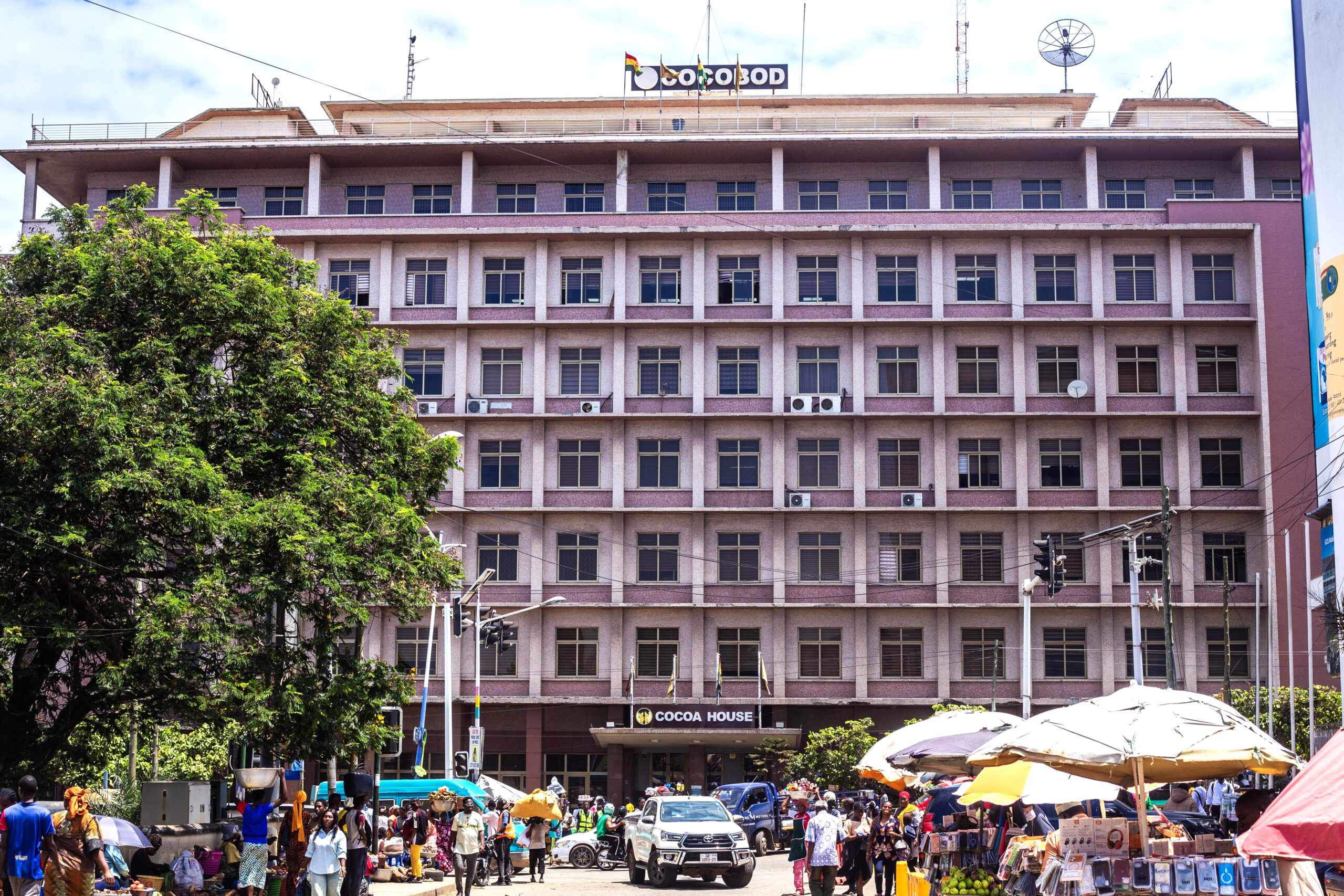
Ghana Cocoa Board (COCOBOD) recently reported a GHS 5.11 billion profit, largely driven by exchange-rate gains. However, an investigation reveals the state entity is on a lender's watchlist, indicating distrust from international financiers.
This finding stems from a 'China Capital' investigation, based on 4.8 million files from the Industrial and Commercial Bank of China (ICBC). The documents show COCOBOD's inclusion on the watchlist is due to mounting debt, chronic secrecy, and a pattern of financial mismanagement. These issues persist even as COCOBOD repeatedly seeks global loans to pay cocoa farmers.
COCOBOD's financial struggles are deeply intertwined with Ghana's broader economic challenges, particularly the Domestic Debt Exchange Programme (DDEP). The Board was significantly affected by this debt restructuring exercise, designed to alleviate Ghana's debt distress. This situation highlights ongoing concerns about the financial health of key state-owned enterprises and their impact on public finances.
Dr. Evans Kissi, a sustainability management researcher at the University of Kassel, stated COCOBOD's operations lack transparency and accountability. Nicholas Opoku, a lawyer specializing in regulatory compliance, echoed this, noting deep inadequacy in cocoa sector transparency, especially regarding price calculations and debt servicing.
The revelations imply continued scrutiny of COCOBOD's financial practices and governance. Decision-makers will need to address the underlying issues of debt and transparency to restore lender confidence and ensure the long-term stability of Ghana's vital cocoa sector. The government's commitment to inject GHS 1 billion if COCOBOD's equity falls negative will be closely watched.
The 'China Capital' investigation, a collaboration involving 75 journalists, analyzed ICBC archives and eight of COCOBOD's annual reports. These documents detail why the cocoa regulator made the lender's watchlist. COCOBOD received a $600 million syndicated loan from a consortium including ICBC in November 2019.
The Domestic Debt Exchange Programme, implemented in 2023, compelled domestic bondholders to swap existing high-yielding bonds for new ones. These new bonds carried drastically lower coupon rates and extended maturities. This contradicted former President Nana Akufo-Addo's 2022 assurance that no investor would suffer 'haircuts'.
COCOBOD restructured GHS 15.5 billion ($1.3 billion) in short-term local debt, specifically 180-day cocoa bills. Under the DDEP, the Bank of Ghana's GHS 7.4 billion in these bills took a 50 percent haircut. Local banks held the remaining portion of these restructured bills.
More than 97 percent of these bills were restructured into term debt, with repayments spread over five years. Pre-DDEP government bonds offered interest rates between 15 percent and 21 percent annually. These rates fell to as low as zero percent in 2023, then gradually rose to 10 percent in later years, with maturities extending up to 15 years.
Auditors found COCOBOD's management accounts showed negative equity of GHS 3.526 billion ($326 million) as of September 30, 2022. This contrasted with positive equity of GHS 132 million ($12.5 million) at March 31, 2023. The government subsequently issued a Letter of Comfort, promising to inject GHS 1 billion ($94 million) into COCOBOD for the 2023/2024 season if its equity turned negative.
ICBC closely monitored sovereign and cocoa bill maturities, restructuring, loan repayments, cocoa production, and shipments. This vigilance underscores the significant financial risks associated with COCOBOD's operations. The ongoing need for external financing and the lack of transparency continue to pose challenges for Ghana's cocoa sector.