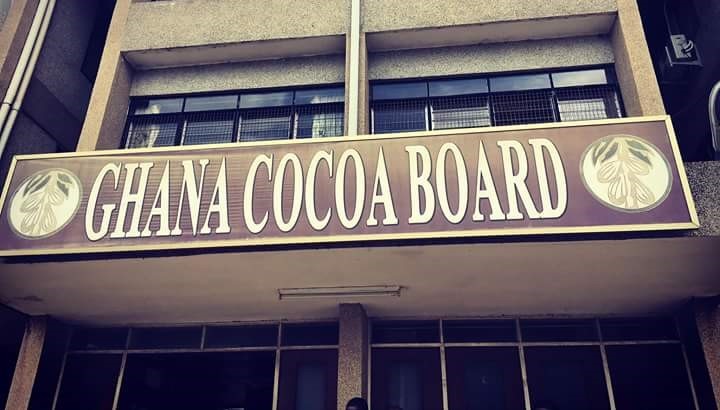
The Ghana Cocoa Board (COCOBOD) has completed its scheduled 2026 payments under the Domestic Debt Exchange Programme (DDEP). The institution settled GHS 2.31 billion with bondholders. This action aims to repair COCOBOD's balance sheet and rebuild investor confidence after years of financial pressure.
This payment represents the completion of COCOBOD's mandatory DDEP obligations for the year. The settlement comes as the state cocoa buyer attempts to emerge from a period of acute financial stress. This stress exposed weaknesses in Ghana’s cocoa financing model and forced the restructuring of billions of cedis in obligations.
COCOBOD sits at the centre of Ghana’s cocoa economy. It raises financing to support the purchase of beans from farmers. It then sells the crop into international markets. This structure creates substantial working-capital requirements. It leaves the institution exposed when production, cocoa prices, export receipts, and financing conditions move against it. These vulnerabilities became particularly visible during Ghana’s wider debt crisis.
COCOBOD subsequently implemented its own cocoa-bill exchange programme. Participating investors received new cocoa bonds under revised repayment terms. The board formally announced completion of this exercise in September 2023. The latest payment therefore represents another stage in the post-restructuring process rather than a fresh borrowing programme.
For investors, this payment provides another test of COCOBOD's ability to honour restructured obligations predictably. For the cocoa industry, it raises the more difficult question of whether debt clearance will be accompanied by a more sustainable financing model. Debt restructuring inevitably weakens confidence because instruments once regarded as relatively secure are exchanged for securities with revised maturities or repayment structures. Consistent payment after such an exercise becomes essential if an issuer wants eventually to rebuild credibility and regain more normal access to capital.
COCOBOD’s latest settlement follows another payment earlier this year. In July, the board paid GHS 162.00 million. This fully settled outstanding obligations to individual Cocoa Bill holders who did not participate in the government’s Domestic Debt Exchange Programme. The board acknowledged that some of those obligations had remained outstanding due to financial constraints following the 2023 restructuring. It said the settlement formed part of its commitment to honour legitimate debts.
Taken together, the GHS 2.31 billion DDEP settlement and the earlier GHS 162.00 million payment point to an institution attempting to close out legacy obligations. It is also trying to rebuild trust with investors. However, clearing debt does not, on its own, resolve the deeper financial weaknesses that produced the restructuring. COCOBOD’s long-term financial health remains closely tied to the economics of Ghana’s cocoa industry.
The board must raise enough financing to purchase cocoa while meeting producer-price commitments. It also funds operational programmes and services existing liabilities. Its ability to perform these functions depends heavily on production volumes, international cocoa prices, and the timing of export receipts. That makes the institution unusually exposed to volatility in both commodity markets and financing conditions. International cocoa prices have been particularly volatile in recent years.
COCOBOD’s own historical review showed spot prices rising from about US$2,000 per tonne in March 2023. They reached US$12,072 per tonne in February 2024. Prices then fell to around US$7,960 per tonne by September 2024. Such movements create both opportunity and risk. Higher global prices can strengthen export earnings. However, they can also increase the amount of working capital required to purchase cocoa from farmers. This happens when domestic producer prices rise alongside the international market.
The latest settlement should be viewed as evidence that one layer of COCOBOD’s financial difficulties is being addressed. It is not proof that the institution’s broader problems have been solved. The more important issue is whether its operating model can now generate sufficient and predictable cash flow without returning to unsustainable borrowing. This will be crucial for its future stability and Ghana's cocoa sector.