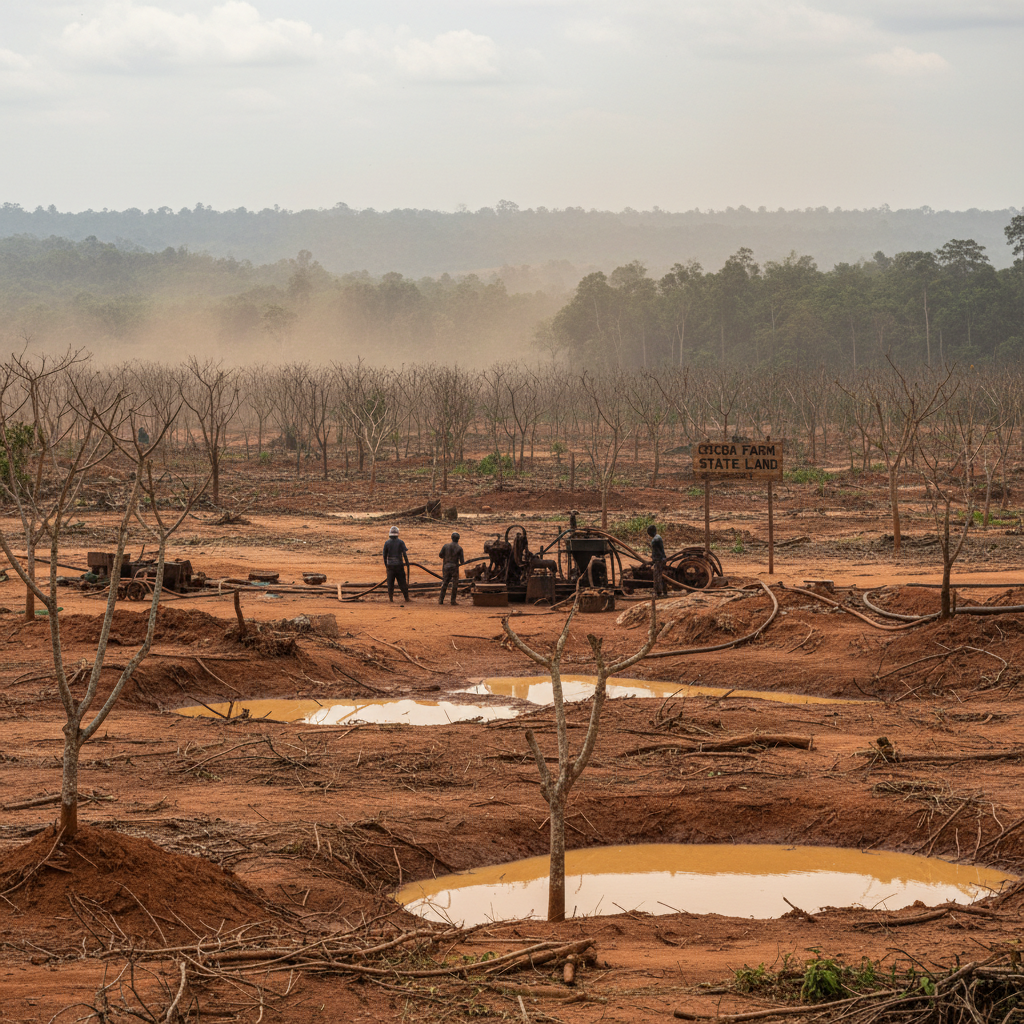
The Ghana Cocoa Board (COCOBOD) has warned that illegal mining, locally known as galamsey, has destroyed more than 100,000 acres of high-yield cocoa plantations. This widespread destruction gravely threatens the stability and future of Ghana's cocoa industry. Without urgent intervention, the entire sector faces potential collapse, impacting the national economy.
This significant land loss directly results from illegal mining operations expanding into prime cocoa-growing regions. The regions most affected include Ashanti, Western, and Central Ghana. Declining cocoa yields on remaining farms further compound the problem for farmers. The primary trigger is miners seeking gold, often at the expense of established agricultural land. This puts a crucial economic pillar of Ghana at risk.
The destruction of cocoa farms negatively affects Ghana's broader economic outlook. Cocoa traditionally remains a top foreign exchange earner for the West African nation. Reduced export volumes of cocoa beans directly translate into lower foreign exchange earnings for Ghana. This trend exacerbates existing pressures on the Cedi and limits the government’s capacity for various economic interventions. Data from the Bank of Ghana consistently highlights agriculture’s contribution to GDP and export revenues.
Samuel Asuman, Regional Manager for the Western South Cocoa Health and Extension Division at COCOBOD, spoke on the issue. He described illegal mining as the most significant threat facing Ghana's cocoa industry. Asuman stated that the reduction in export volumes severely limits foreign exchange earnings. This also cripples COCOBOD's capacity to settle operational debts. Furthermore, it hinders the funding of crucial farmer welfare programmes.
COCOBOD has previously invested heavily in rehabilitating diseased cocoa farms. However, galamsey activities are destroying farms that COCOBOD has already invested significant resources to restore. Abdul-Majid Mumuni, Deputy Executive Director of COCOBOD's Cocoa Health and Extension Division, urged farmers not to surrender their farms. He stressed cocoa's continued importance as one of Ghana's most valuable economic commodities. The government and COCOBOD are strengthening measures to protect cocoa-growing areas.
The economic implications of this destruction are severe and multifaceted. A continued decline in cocoa production will lead to job losses for thousands of farmers and their families. It will also reduce Ghana's standing as a major global cocoa producer. This could prompt changes in international cocoa pricing and supply chains. Decision-makers must implement stronger enforcement of mining regulations to protect agricultural lands. The market will closely watch export figures and COCOBOD's financial health in the coming months. The MP for Prestea Huni-Valley, Robert Wisdom Cudjoe, also cautioned farmers against short-term gains from illegal mining. He highlighted the long-term value of cocoa over transient payments.