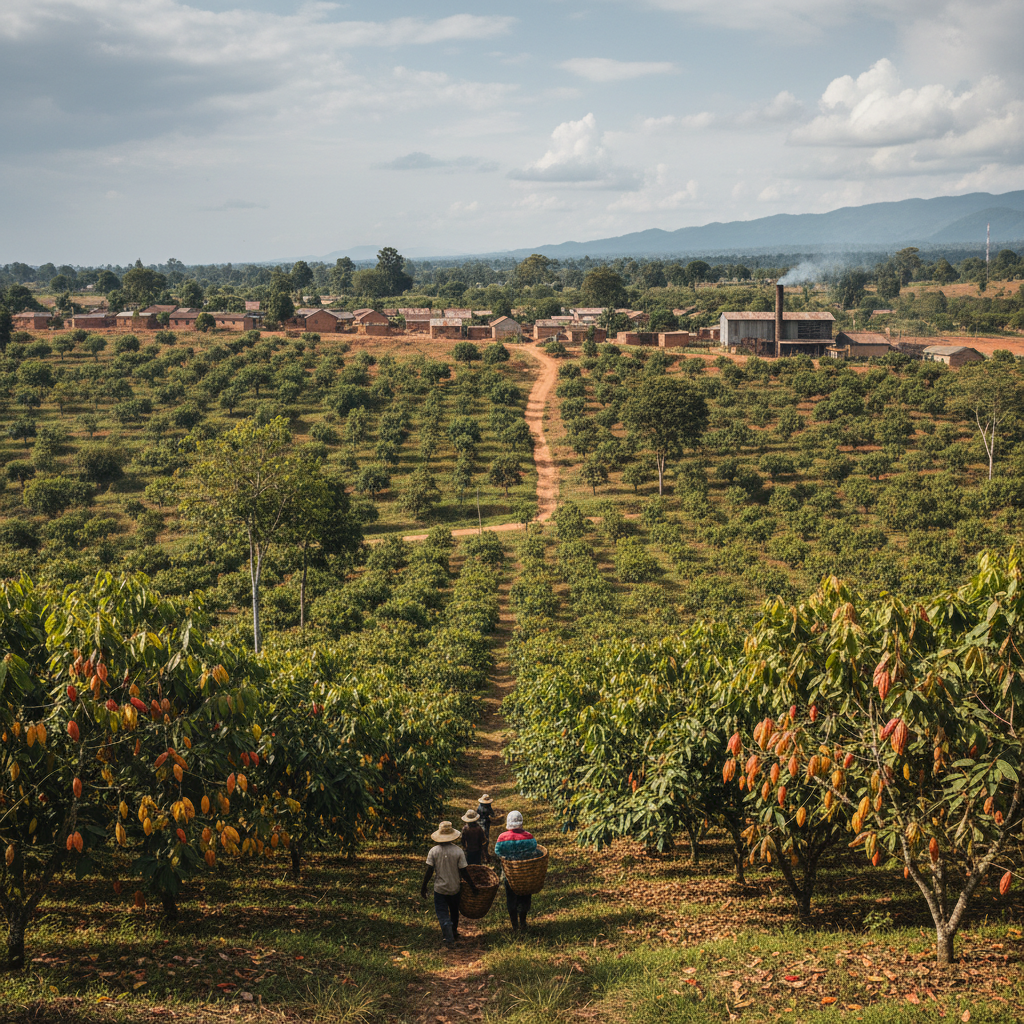
Ghana and Côte d’Ivoire together lose an estimated GHS 142 billion in potential annual economic value. This substantial economic gap arises from exporting cocoa beans rather than creating finished cocoa products. The Hershey Company, a US-based chocolate giant, generated nearly US$12 billion (approximately GHS 142 billion) in sales in 2025. This revenue highlights the value created outside the cocoa-producing countries.
This significant financial disparity underscores a long-standing challenge in the global cocoa industry. West African nations supply the majority of the world's cocoa beans. However, they capture only a small fraction of the final product's economic worth. The vast majority of the value addition occurs in destination markets. Here, the beans are processed into chocolate, cocoa butter, and other high-value items.
Ghana's economy heavily relies on cocoa exports. The country often faces volatile global commodity prices. This situation affects farmer incomes and national revenue. Despite being the world's second-largest cocoa producer, Ghana exported 850,000 tonnes of cocoa beans in the 2020/2021 season. Data from the Ghana Cocoa Board (COCOBOD) shows that only a small percentage of this volume undergoes local processing. This limits real economic growth.
A development expert stressed the need for African nations to process more cocoa locally. Praise Nutakor, a Partnerships and Communications Specialist for Africa at UNDP, highlighted this point. Nutakor stated, “The future of cocoa should not only be grown in Africa. It should increasingly be made in Africa.” This shift would allow producing countries to capture greater economic benefits.
To achieve this, substantial investment in infrastructure, manufacturing capabilities, and skilled labour is necessary. Policymakers must also implement policies that support local industries and encourage private sector participation. Expanding processing into chocolate, cocoa butter, and other derivatives would create new jobs. It would also diversify the economy beyond raw commodity exports. This strategy could also foster broader economic ecosystems, such as tourism and culinary experiences, similar to Hershey’s model.
The lesson from Hershey is clear: prosperity comes from transforming resources into industries, brands, and experiences. Ghana and Côte d'Ivoire have supplied premium cocoa for generations. The next chapter must focus on producing premium chocolate and building global brands. This approach will expand local industries. It will also ensure that the wealth created by cocoa remains in Africa. This will lead to sustainable development and increased economic stability.
Decision-makers in Ghana face the imperative to drive this transformation. They must attract investment into value-added processing and develop supportive policies. A failure to act means continued dependence on primary exports. This will perpetuate the cycle of missed economic opportunities. The global market will watch closely for shifts in policy and investment trends within the cocoa sector.