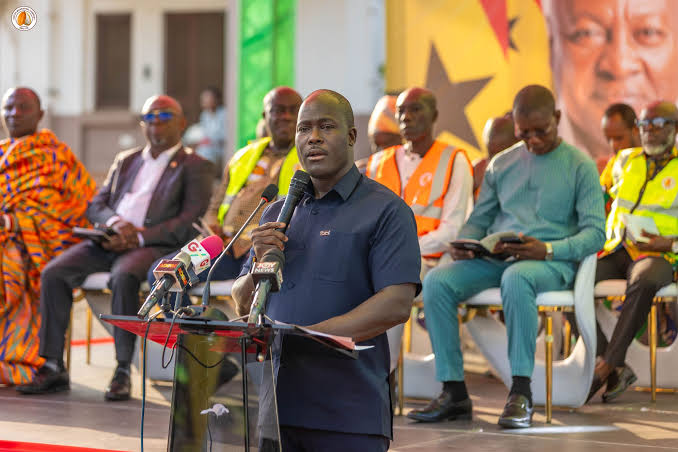
Ghana’s Cocoa Marketing Company (CMC) has challenged the global cocoa industry to ensure farmers receive a fairer share of the value from their produce. Dr. Wisdom Kofi Dogbey, Managing Director of the CMC, stated this at an international gathering in Singapore. This intervention highlights Ghana's push to reshape the financial structure of its vital cocoa sector.
The core issue is who captures the economic value from cocoa, a question now central to industry reforms. Farmers face rising production costs, while processors and retailers capture significant value downstream. Ghana’s new policy aims to guarantee farmers at least 70.00% of the gross free-on-board (FOB) price. This policy also includes increasing domestic processing and restructuring the Ghana Cocoa Board’s finances.
This move fits into Ghana’s broader economic strategy to maximize earnings from its primary exports. Cocoa is a major source of foreign exchange, rural employment, and export earnings. Over 800,000 farming households depend directly on this crop. The current system often leaves farmers vulnerable to price volatility despite their crucial role in the supply chain.
Dr. Dogbey’s statement underscores a critical imbalance in the global cocoa trade. He argued that the economics of the industry need reconsideration. This is especially true as farmers bear the brunt of increasing expenses for fertiliser, labour, and disease control. The current system often fails to provide adequate returns for these essential producers.
The implications of this policy shift are significant for Ghana’s economy and its cocoa farmers. A fairer producer price is not just a social intervention; it is an investment in the long-term health of the industry. If farm incomes remain low, farmers cannot invest in new planting materials or productivity-enhancing technology. This leads to reduced productivity and constrained future supply, creating a cycle of weak returns.
Ghana’s proposed 70.00% producer-price formula directly addresses this imbalance. By linking farmer compensation more closely to the gross FOB value, the government seeks greater transparency. This approach also makes prices more responsive to international market conditions. This marks a departure from the previous system where producer prices were largely fixed for the season.
While fixed prices offered some protection, they also transferred substantial risk to COCOBOD. They limited farmers' participation in periods of sharp international price increases. The new approach aims for stability and sustainable incomes at the farm level. However, a higher percentage of the international price does not automatically guarantee a living income if yields are weak or costs rise too quickly.
Therefore, a “fair price” must consider the real cost of farming and household needs. It must also account for the investment required to keep farms productive. This holistic view is essential for the sustainability of the entire supply chain. The government's commitment to this new pricing mechanism reflects a deeper understanding of farmer welfare and its link to national economic stability.
The second, and potentially more impactful, part of Ghana’s strategy is value addition. The country aims to process at least 50.00% of its domestic cocoa production locally. This target is set for the 2026/27 season. This represents a significant shift from the long-standing model of exporting large volumes of raw beans. Local processing creates more jobs and captures additional value within Ghana.
This strategic move could boost Ghana's industrial capacity and diversify its export portfolio. It would also reduce reliance on volatile raw commodity prices. The government's focus on both fair pricing and local processing signals a comprehensive approach. This approach seeks to empower farmers and strengthen Ghana's position in the global cocoa market. The success of these initiatives will be closely watched by international markets and local stakeholders.