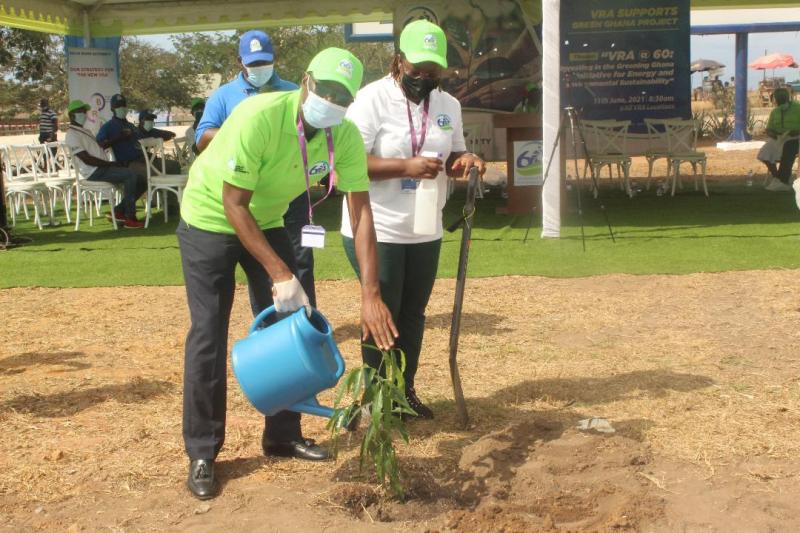
Ghanaian farmers, local authorities, and businesses planted 1.3 million trees in 2025. This significant reforestation effort brought more than 181,000 hectares of cocoa-growing landscapes under sustainable management. The achievement is detailed in the Rainforest Alliance's newly released 2025 Annual Report, titled 'Regeneration Takes Root'.
These tree-planting activities position Ghana as a leading example of regenerative agriculture. The initiative seeks to actively restore degraded land. It also aims to strengthen the livelihoods of communities in rural areas. This progress was largely driven by the Rainforest Alliance's EU LEAN project. This project brought together farmers, local government, and private companies through eight landscape management boards.
Ghana's commitment to regenerative agriculture aligns with broader national efforts to promote sustainable development. The forestry sector, including cocoa agroforestry, contributes to Ghana's climate change mitigation goals. Data from the Ministry of Food and Agriculture consistently shows the importance of sustainable practices for long-term agricultural productivity. This effort also supports Ghana's position as a major global cocoa producer, ensuring environmental sustainability alongside economic growth.
Nicholas Jengre, Country Director of Rainforest Alliance Ghana, commented on these achievements. He stated, "Protecting nature remains essential, but the future also depends on our ability to regenerate it." Mr. Jengre highlighted that communities are taking a key role in shaping a more resilient future. He noted that healthier soils and trees returning to farms demonstrate practical regeneration.
This progress suggests continued positive impacts on Ghana's agricultural sector and rural economies. Decision-makers and markets will watch for further expansion of regenerative practices. Such initiatives aim to boost cocoa yields and farmer incomes. This model could also attract more climate-focused investments in the country. The Rainforest Alliance's report emphasizes the need for sustained investment from governments, businesses, and financial institutions to support farmers in this transition.
The Rainforest Alliance's report highlights other regional examples. In Côte d’Ivoire, where cocoa is a primary income source, nearly 87% of cocoa-producing families earned below living income benchmarks. Their Hershey Income Accelerator Program (HIAP) aims to improve farmer incomes. By 2025, 89% of participating Ivorian farmers completed the first year of their Farm Enterprise Plans. HIAP demonstration plots produced approximately 34% more cocoa pods per 20 trees than comparable farms outside the program.
Globally, the Rainforest Alliance reported protecting or restoring 11.9 million hectares of ecosystems. They also avoided or sequestered 5.5 million metric tonnes of greenhouse gas emissions. These efforts contributed GHS 26.64 billion ($2.22 billion) in additional farm income through higher yields and sustainability premiums. Over 10.8 million farmers and workers received information on their rights and responsibilities during the year.
Agriculture accounts for about 80% of global tropical deforestation. Climate change could reduce agricultural production by up to 35% by 2050. Against this backdrop, the Rainforest Alliance launched its new Regenerative Agriculture Standard in 2025. This science-based framework includes 119 requirements. It covers soil health, biodiversity, water stewardship, climate resilience, and social outcomes.
Santiago Gowland, CEO of the Rainforest Alliance, emphasised the importance of trust and demonstrable evidence. He stated, "Accelerating regenerative agriculture comes down to trust, and trust is earned with credible, demonstrable evidence." The new standard ensures impact on soil, biodiversity, and livelihoods is measured and verified. This growing market demand for responsibly produced commodities is evident. Rainforest Alliance Certified products are now available in 172 countries across more than 66,000 products.