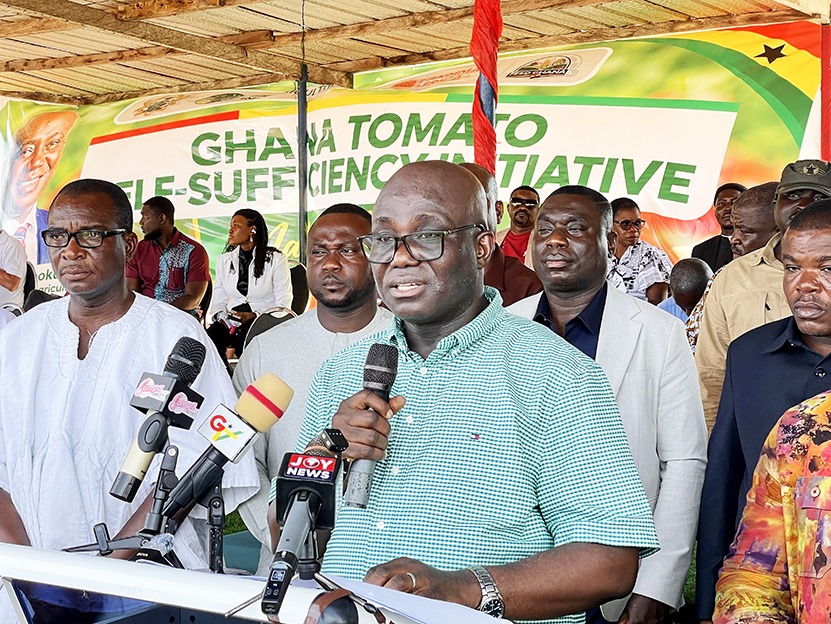
Ghana's Ministry of Food and Agriculture has launched a national initiative to curb tomato imports. The Ghana Tomato Self-Sufficiency Initiative (GHATSI) aims to establish a reliable, year-round domestic tomato value chain.
This new policy seeks to reduce Ghana's dependence on imported tomatoes. It will create jobs and eventually generate surplus for export. The country faces an estimated domestic tomato supply deficit of about 300,000 tonnes during the off-season. This period typically runs between December and July each year.
Ghana's economy has long struggled with import dependence across various sectors. This includes food items like tomatoes. The nation spends significant foreign exchange on these imports. Initiatives like GHATSI align with broader government efforts to boost local production. They aim to strengthen the agricultural sector and reduce pressure on the Ghana cedi.
Minister of Food and Agriculture, Eric Opoku, emphasized the economic cost of imports. He stated, "Every cedi spent on imported tomato is a Ghanaian job exported." Mr. Opoku highlighted Ghana's potential, citing its fertile land, water resources, and experienced farmers. He believes the country can meet its own tomato demand.
The initiative's success hinges on effective implementation and accountability. Decision-makers will monitor key metrics. These include farmer payments, timely input delivery, and processing expansion. The market will also watch for a decline in tomato imports. This will indicate the policy's effectiveness.
GHATSI's first phase targets approximately 100,000 tonnes of tomatoes. This will come from more than 10,000 acres across 35 districts. The program will progressively scale up to about 400,000 tonnes of annual tomato supply. This expansion will cover more than 40,000 acres of land.
The initiative connects farmers to essential resources. These include land, irrigation, and quality inputs. It also provides technical support, financing, and insurance. Farmers will benefit from aggregation, processing, and guaranteed markets. This comprehensive approach aims to address past coordination failures in the tomato value chain.
FarmMate Africa, a private-sector partner, will connect farmers to various markets. These include fresh markets, hotels, restaurants, and institutional buyers. They will also facilitate connections to processors and eventually export markets. Pan African Savings and Loans will provide production financing directly to participating farmers. Multi-peril crop insurance will protect against unforeseen risks.
The farmer enhancement package is estimated at GHS 20,000 per acre. This covers inputs, land preparation, and soil testing. It also includes technical assistance, insurance, and other production requirements. A packhouse facility will be established at Anloga. This facility will support sorting, grading, packaging, and marketing of tomatoes.
GHATSI is projected to create more than 150,000 direct and indirect employment opportunities. Approximately 50,000 of these will be year-round jobs in its first phase. This significant job creation will boost rural economies. It will also provide stable livelihoods for many Ghanaians.
Anloga District Chief Executive, Sandra S. Kpedor, noted the district's agricultural potential. She appealed for support in agricultural research. This research would focus on tomato varieties resilient to climate change. Ms. Kpedor also called for increased access to affordable fertilizer. High input costs remain a burden for farmers.
The Minister cautioned against a mere ceremonial launch. He stated, "GHATSI must not become another successful launch followed by silence." He stressed that the program's true measure will be its tangible impact on farmers and the market. This includes whether imports decline as intended.