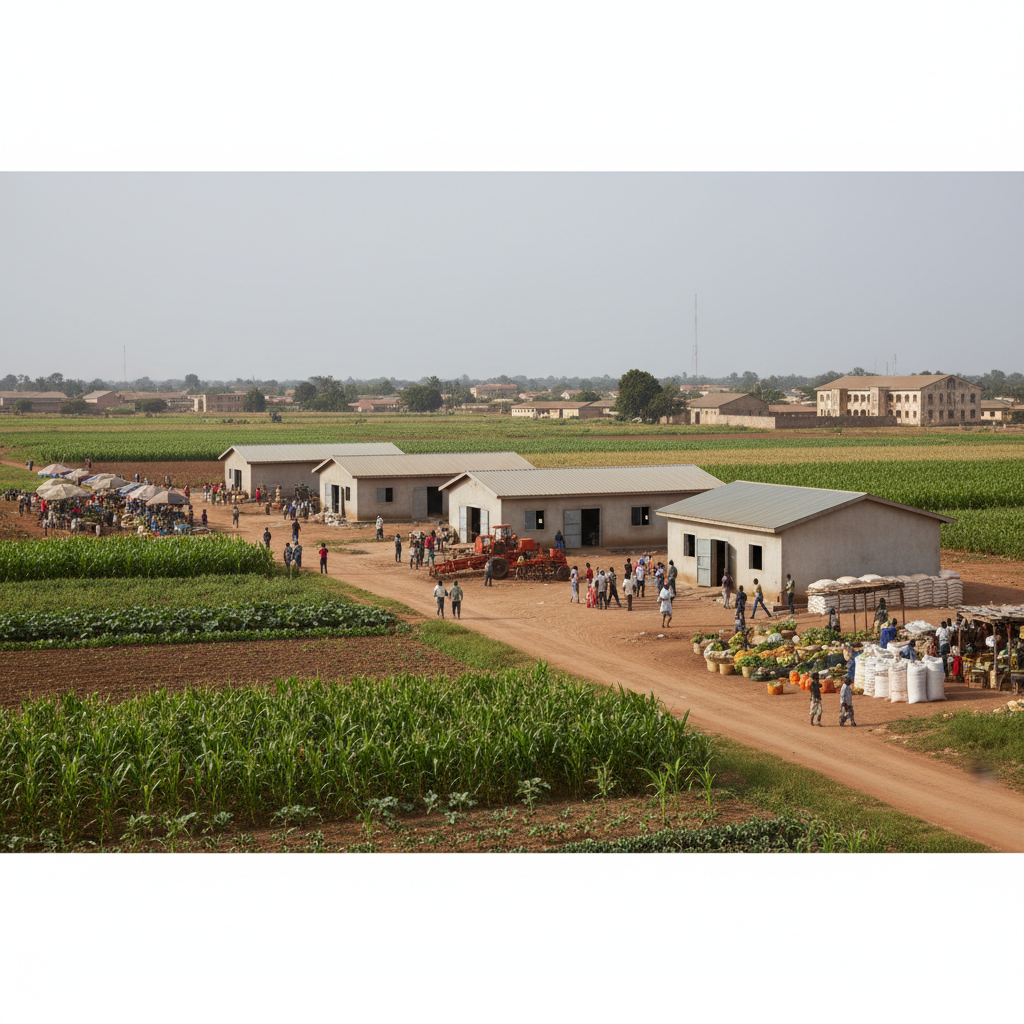
President John Dramani Mahama announced that Ghana will establish 11 Farmer Service Centres this year. One of these crucial centres will be located in the Upper West Region. These facilities are part of a broader government strategy to boost agricultural output nationwide.
The initiative will equip farmers with vital resources. These include mechanisation services, modern storage facilities, and irrigation support. It also provides climate-smart agricultural technologies to adapt to changing weather patterns. This comprehensive support aims to significantly improve farming practices and harvest yields.
This development aligns with Ghana's long-term economic strategy to transform its agricultural sector. Agriculture accounts for about 20% of Ghana's Gross Domestic Product (GDP). It employs nearly half of the country's workforce. The government seeks to move beyond raw agricultural exports towards local processing and value addition. This approach will create more jobs and higher incomes for farmers.
President Mahama highlighted the plan during a courtesy call from the Upper West Regional House of Chiefs. He stated, "One of the 11 farmer service centres that we are budgeting for this year is located in the Upper West Region." The President earlier stressed the importance of empowering farmers as active participants in Ghana's economic transformation. This initiative directly addresses that goal.
The establishment of these centres could significantly impact regional economies. Farmers in the Upper West Region involved in rice production in Wa, livestock farming in Tumu, and maize production in Nadowli will benefit directly. Vegetable farmers across the region will also gain from these interventions. Improved access to technology and resources is expected to increase crop yields and livestock productivity.
Further details on the specific locations of the remaining ten centres are expected soon. Financial markets and agricultural stakeholders will closely monitor the rollout and initial impact of these centres. Evidence of increased farm output and processing capacity could attract more investment into Ghana's agricultural sector. This could also lead to a more stable and prosperous rural economy.
The government's focus on modernising agriculture could reduce reliance on food imports. This would save valuable foreign exchange reserves. It would also enhance Ghana's food security. The success of these centres will be crucial for the nation's broader economic stability and growth plans into 2027.