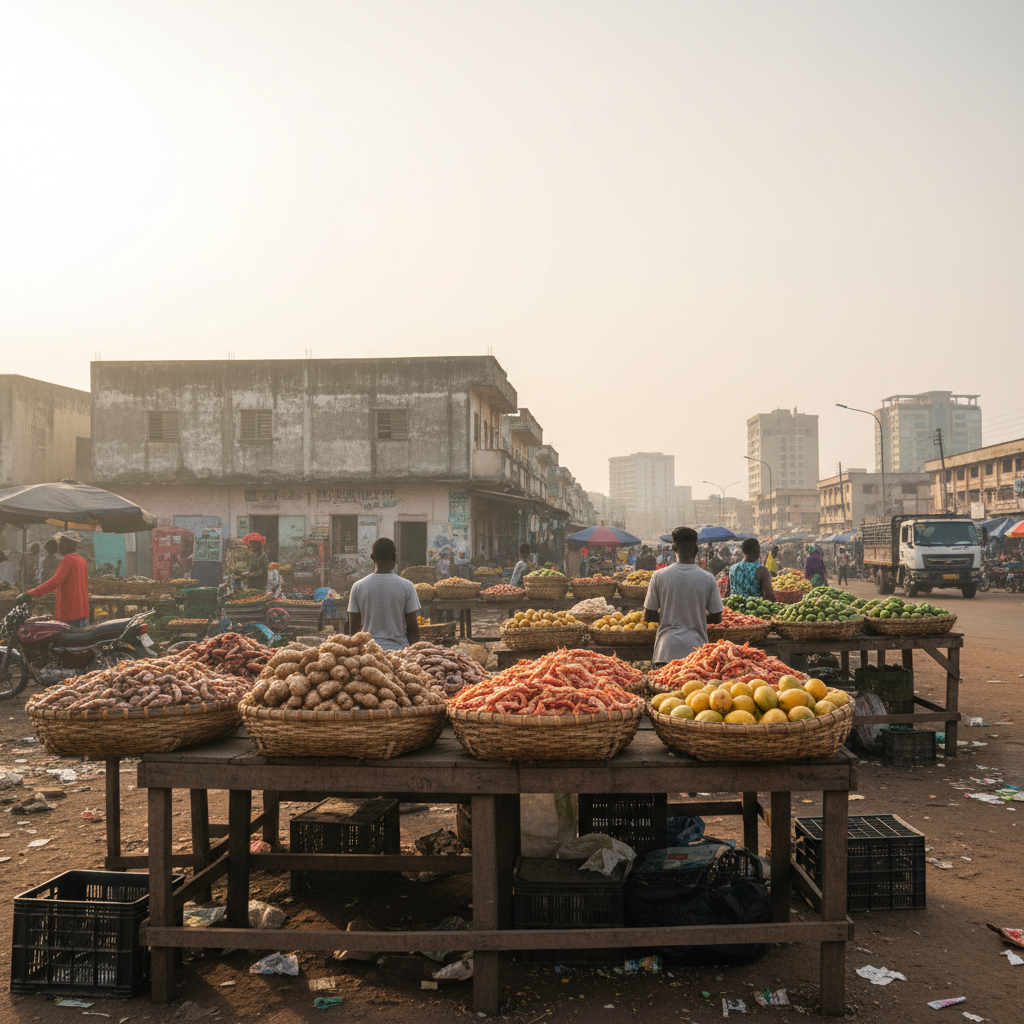
Ginger prices in Ghana jumped by 102.5% year-on-year in June 2026, making it the top price gainer among high-inflation food items. Shrimps followed with a 90.8% increase, and mangoes rose by 87.2% during the same period. This data comes from the Ghana Statistical Service’s June 2026 inflation report.
These sharp increases highlight a mixed price environment for Ghanaian households, as some essential food items become significantly more expensive. The rising costs of specific goods like ginger, shrimps, and mangoes contribute to ongoing inflationary pressures. This directly impacts household spending on food, although other food staples saw price declines.
The current inflation trends reflect a broader economic challenge in Ghana, where the cost of living remains a significant concern for citizens. While certain food items have become cheaper, the persistent rise in prices for essential services and high-demand foods continues to strain household budgets. This situation can affect consumer purchasing power and the overall stability of the Ghanaian economy.
The Ghana Statistical Service’s June 2026 inflation report details specific contributors to the overall price increases. Bus and trotro fares, a major public transport cost, were the biggest contributor, accounting for 10.5% of inflation pressures. Payments for rents contributed 8.4%, and secondary school fees accounted for 7.2% of the pressures. These figures indicate that non-food items are also playing a crucial role in driving inflation.
Food items such as ginger (7.0%), fish (river) (6.6%), and cooked rice (5.3%) also remained significant contributors to inflation. Fresh tomatoes added 5.2% to inflation, while yam contributed 5.1%. Hotel accommodation (4.9%) and green plantain (3.8%) further added to the inflation drivers. These items show that price hikes are not limited to a few isolated food groups but extend across various sectors.
Conversely, some common food items experienced notable price declines in June 2026. Kontomire (Cocoyam leaves) saw a significant fall of 38.0%, providing some relief to consumers. Garden eggs dropped by 33.1%, and maize prices decreased by 32.1%. These declines offer some balancing relief, but the overall picture suggests a complex market where consumers must navigate varying price movements.
Millet prices fell by 23.0%, and pawpaw saw a decrease of 22.4%. Other items with lower prices included beans (-21.3%), guinea corn/sorghum (-19.3%), and lime (-18.3%). Foreign apples (-17.5%) and solid fuels like firewood (-16.6%) also became cheaper. This diverse movement in prices means consumers experience both increases and decreases depending on their specific consumption patterns.
Going forward, policymakers will need to monitor these highly differentiated price movements to understand overall economic stability. The persistent increase in transport, housing, and education costs, alongside key food items, indicates that inflationary pressures might continue. Businesses and consumers will need to adjust to these changing price dynamics in the coming months.