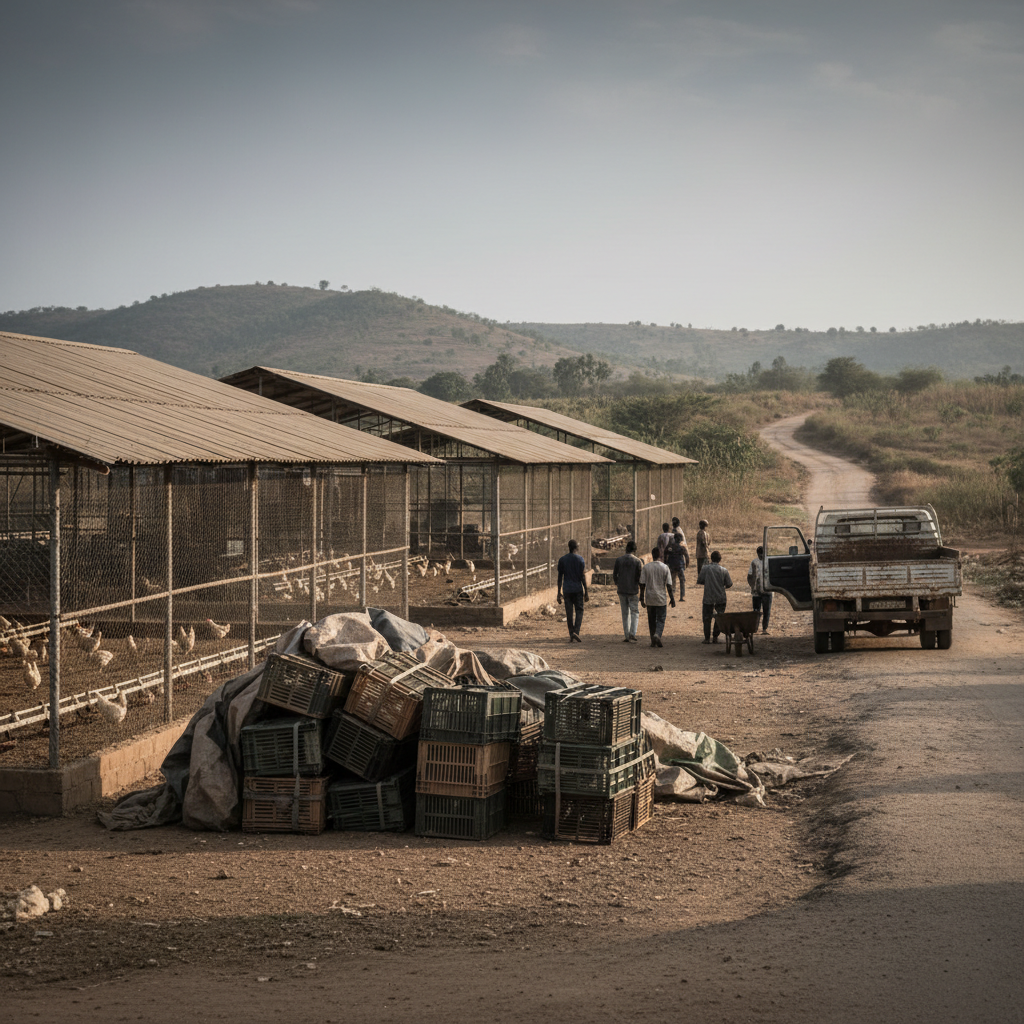
Ghana's Minister of Agriculture, Eric Opoku, states that the lack of a reliable market for farmers is the biggest problem facing the nation’s poultry industry. This challenge hinders growth, even as efforts are made to increase chicken production. Improving market access and value addition are critical for the sector's transformation.
Minister Opoku explained that simply raising more chickens will not help farmers if they cannot sell their products. The government's Nkoko Nkitinkiti programme addresses this by focusing on the entire poultry supply chain. This includes processing, packaging, and marketing to ensure farmers have consistent buyers for their birds.
Ghana's agricultural sector contributes significantly to the national GDP and employment. The poultry industry, in particular, has seen government investment to reduce reliance on imported chicken. Data from the Ministry of Food and Agriculture indicates that local poultry production has struggled to meet domestic demand, with imports often filling the gap. Addressing market deficiencies like those highlighted by Minister Opoku is crucial for achieving food security and economic self-sufficiency in poultry.
“The biggest challenge confronting the poultry business in Ghana is the lack of market,” Minister Opoku said, emphasising the need for processing. “If you are unable to add value, there is no way you can transform the poultry sector. Value addition is key.” He noted that the government plans to build the Nkoko Nkitinkiti Poultry Processing Centre in Bechem. This centre will offer a steady market for farmers and help make locally produced chicken more competitive against imports.
This initiative could lead to increased investment in poultry processing infrastructure across Ghana. Decision-makers and industry stakeholders will closely watch the development and impact of the Bechem processing centre. A successful model could encourage similar projects, providing consistent income for farmers and reducing Ghana's poultry import bill. This strategy aims to ensure that boosted production translates into economic benefits for local farmers and the broader economy.
The Minister also urged participants in the Nkoko Nkitinkiti programme to view their birds as business investments. This encourages a commercial mindset beyond mere home consumption. Such a shift is vital for fostering a sustainable and profitable poultry sector. Economic reports show that a stronger domestic poultry industry can create numerous jobs and generate GHS hundreds of millions in local revenue. Therefore, effective market strategies are as important as production increases.