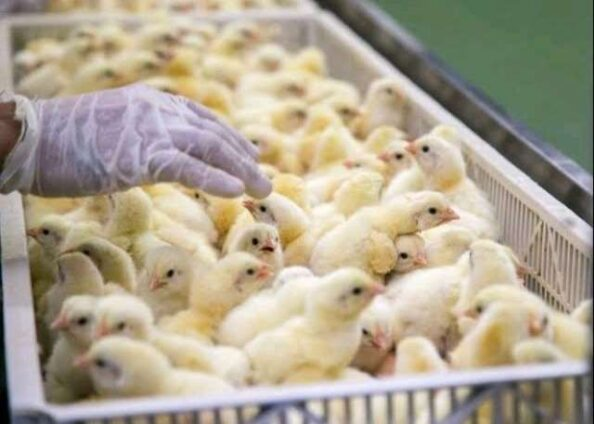
The Greater Accra Poultry Farmers Association has warned that the government’s Nkoko Nkitinkiti initiative alone cannot fully revive Ghana’s poultry industry. The association states high costs for animal feed must be carefully addressed. This includes the price of key ingredients like maize and soya.
Ali Muhammed, Chief Executive Officer of the Greater Accra Poultry Farmers Association, emphasized the need for a coordinated system. This system would support farmers, input suppliers, and processors. Mr. Muhammed said a lack of coordination between the agriculture and trade sectors makes it hard for farmers to get affordable raw materials for feed. Increasing local production of maize and soya is central to reducing Ghana's dependence on imported chicken.
This situation highlights long-standing structural issues within Ghana's agricultural sector. Over the past decade, Ghana has consistently imported large quantities of poultry products. This has put pressure on local producers. Data from the Ministry of Food and Agriculture shows that poultry feed costs represent a significant portion of total production expenses. This often leads to local chicken being more expensive than imported frozen alternatives.
Mr. Muhammed clarified that farmers are not seeking short-term assistance or free support. They want sustainable policies that address the core problems of the industry. He reported that while the Nkoko Nkitinkiti program initially brought hope, it has not tackled the deeper challenges in commercial poultry production. He stated, “It’s only a catching phase.”
The central challenge is creating conditions for poultry farmers to operate profitably. This involves linking maize and soya producers with feed processors and poultry farmers. Mr. Muhammed called for a deliberate policy framework to reduce feed costs. Such policies could make local products more competitive against imported chicken, where costs are often lower. The recent “egg glut” situation demonstrates the difficulties producers face even after significant investment.
This issue has broader implications for Ghana’s economy. A thriving local poultry industry boosts food security and creates jobs. It also reduces the outflow of GHS for imported goods. Decision-makers must consider integrating agricultural policies with trade strategies to support local industries. This will help make them competitive in the long term. Markets will watch for sustained government efforts that move beyond direct interventions. They will look for policies that support the entire value chain.
Consumers prefer local chicken based on taste and quality. However, affordability remains the main factor in purchasing decisions. Mr. Muhammed noted that disposable income drives consumer choices. Therefore, reducing production costs is essential for local poultry to capture a larger market share. Until these costs are managed, imported frozen chicken will likely maintain its competitive edge.