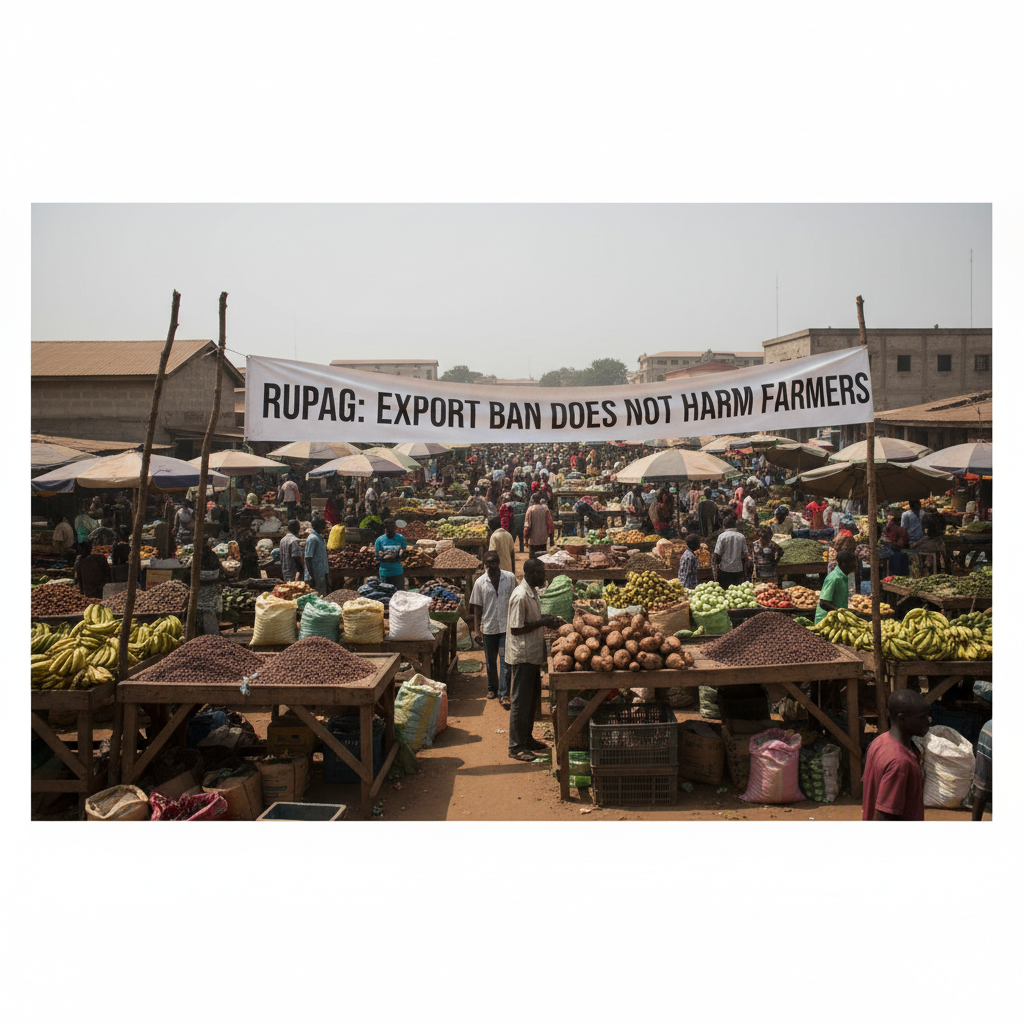
Ghana's Rubber Processors Association (RUPAG) has dismissed claims that a temporary government ban on raw rubber exports is harming farmers. The association insists this policy strengthens Ghana's local processing industry. They deny the policy creates monopolies.
RUPAG stated that local processors purchased 30,967 tonnes of raw rubber between January and June 2026. This included 13,431 tonnes from traders and aggregators and 17,535 tonnes directly from farmers. Purchases from traders and aggregators significantly increased after the export ban was announced.
This policy forms part of Ghana's broader economic strategy to boost industrialisation and local value addition. Ghana aims to move away from exporting raw materials and instead process them within the country. This supports the government’s 24-Hour Economy Policy.
RUPAG issued a statement on July 13, asserting that recent reports suggesting harm to the rubber value chain are “not supported by evidence.” They noted domestic purchases from traders and aggregators increased by 124 percent in the first half of 2026 compared to the same period in 2025. Direct purchases from farmers also rose by about 12 percent.
The export restriction aims to address the significant deficit between Ghana’s natural rubber production and its processing capacity. Ghana produced approximately 110,800 tonnes of natural rubber in 2025. However, installed processing capacity stood at about 171,460 tonnes, resulting in a deficit of over 60,000 tonnes. Factory utilisation was only 41 percent.
Processing rubber locally instead of exporting it raw could generate substantial economic benefits. RUPAG projects an additional US$1.36 billion in foreign exchange earnings between 2026 and 2031 from local processing. This would also prevent an estimated GHS 326 million in lost tax revenue during the same period. This aligns with industrial policies in other West African nations like Côte d’Ivoire, Liberia, and Nigeria, which also promote domestic processing.
Stakeholders, including farmers, traders, aggregators, processors, and government agencies, must collaborate. Their cooperation is essential to build a competitive rubber industry. This collective effort will support Ghana’s wider industrialisation push.