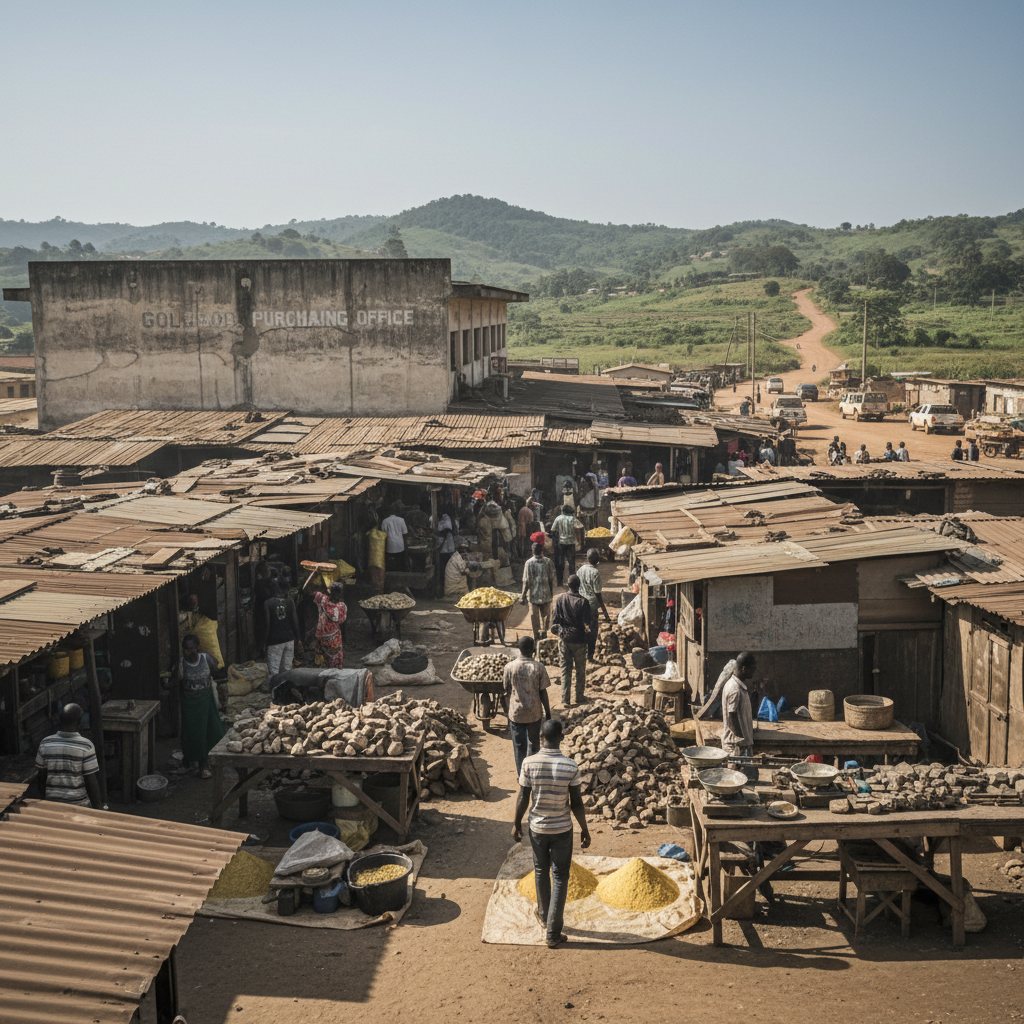
Ghana's artisanal and small-scale miners (ASM) have supplied 99.5% of all gold purchased by the Ghana Gold Board (GoldBod) since its establishment. This amounts to 135.221 metric tonnes out of a total of 135.843 metric tonnes acquired between January 2025 and May 2026. This significant contribution underscores the vital role the ASM sector plays in the nation's gold aggregation programme.
Deputy Finance Minister Thomas Nyarko Ampem revealed these figures in Parliament, emphasizing the sector's importance. The high volume of gold from small-scale miners helps the government mobilize foreign exchange, strengthen national reserves, and combat gold smuggling. GoldBod's efforts aim to formalize gold trade and ensure Ghana retains more value from its mineral resources.
This performance by the ASM sector and GoldBod fits into Ghana's broader macroeconomic recovery goals. Gold smuggling led to estimated losses of US$11.4 billion between 2019 and 2023. GoldBod's operations, supported by the Ghana Gold Board Act, 2025 (Act 1140), seek to reverse this trend. The program aims to bring all gold trading activities into the formal economy, improving transparency and accountability.
Mr. Ampem highlighted GoldBod as a strategic pillar for economic recovery, telling Parliament, "The Ghana Gold Board is a strategic arm of our nation's macroeconomic recovery, anchored on foreign exchange mobilisation and anti-smuggling architecture." He explained that GoldBod's goal is to move Ghana away from a system where gold wealth was undervalued and vulnerable to illicit trade. GoldBod has established a nationwide network of 1,184 licensed buyers, including aggregators and various tiers of buyers, to purchase gold exclusively from licensed miners.
GoldBod's impact on the Ghanaian economy has been substantial. In 2025 alone, GoldBod purchased, aggregated, and exported 104 metric tonnes of ASM gold, generating over US$10 billion in revenue. This significantly contributed to the Ghana cedi's appreciation by about 41% in 2025 and increased gross international reserves from approximately US$8.98 billion in December 2024 to US$13.8 billion by the end of 2025. Between January 2025 and May 2026, GoldBod spent about US$16.1 billion on gold purchases, with US$9.8 billion spent in 2025.
The ongoing collaboration between GoldBod and the National Anti-Illegal Mining Operations Secretariat (NAIMOS) aims to improve regulatory compliance and tackle illegal mining. This partnership shows that GoldBod's mandate extends beyond purchasing gold. The institution is crucial for enhancing Ghana's economic sovereignty through strategic management of its gold resources. The success of this initiative will be watched closely for its continued impact on Ghana's foreign exchange stability and mineral resource governance.