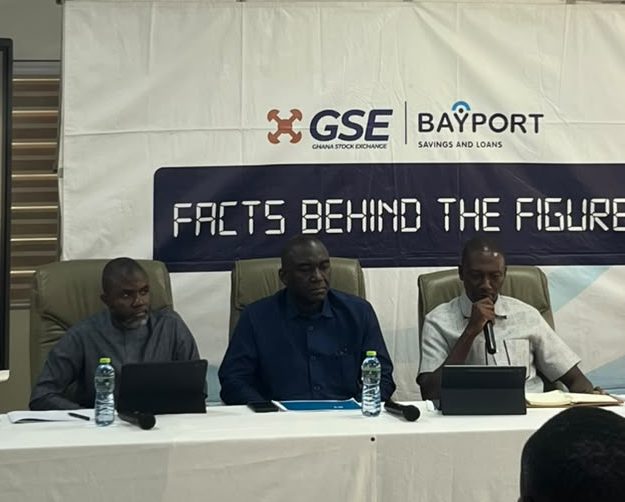
Bayport Savings and Loans PLC aims to control at least 50% of Ghana's government payroll lending market by the end of 2029. The company seeks to achieve this through a combination of falling interest rates, stronger risk controls, and digitally enabled distribution.
This ambitious target follows Bayport's current 33% market share. Chief Executive Officer Akwasi Aboagye stated the company wants to help more teachers and civil servants access financial services. He believes the firm can substantially expand its position within the next three years.
Payroll lending is a highly competitive segment within Ghana's consumer credit market. Lenders are attracted by the predictable repayments, which come directly from salaries. However, maintaining pricing discipline and credit quality is challenging as institutions compete for borrowers. Bayport's strategy aligns with broader efforts to deepen financial inclusion across Ghana. The company's focus on public-sector workers in rural areas addresses a significant gap in financial service access. This approach supports the government's agenda for economic development outside major urban centers.
Akwasi Aboagye, Bayport Ghana's Chief Executive Officer, highlighted the impact of declining interest rates. He said lower rates allowed the lender to reduce loan pricing. This reduction helps more civil servants enter the formal credit market. Mr. Aboagye explained, "We're able to serve a lot more customers."
Bayport's strategy includes a strong focus on geographic expansion. The lender identifies public-sector workers in rural and peri-urban communities as a key growth area. Many of these locations lack traditional banking infrastructure. The company plans to deploy field representatives with tablets to onboard eligible customers. This digital approach allows expansion without the high cost of physical branches. This model reflects a broader trend in financial services, separating customer acquisition from brick-and-mortar networks. It enables Bayport to grow its customer base efficiently and cost-effectively.
The company's growth strategy is already showing strong financial results. Bayport recorded a profit of GHS 118 million at half-year. It is targeting approximately GHS 240 million for the full year. This projected profit would represent a significant earnings milestone for the lender. It would also reinforce management's argument that growth is accompanied by stronger operating performance. The more important test, however, will be the quality of its loan assets as the portfolio expands rapidly. This aggressive expansion into underserved markets could introduce new risks if not managed carefully.
Achieving a 50% market share would solidify Bayport's position as a dominant player in Ghana's payroll lending sector. This move could influence pricing and competition across the consumer credit market. Regulators will likely monitor the impact on financial stability and consumer protection. The success of Bayport's digital onboarding in rural areas could also set a precedent for other financial institutions. This could accelerate financial inclusion for many Ghanaians previously excluded from formal credit. Investors and analysts will closely watch Bayport's asset quality and profitability metrics in the coming quarters.