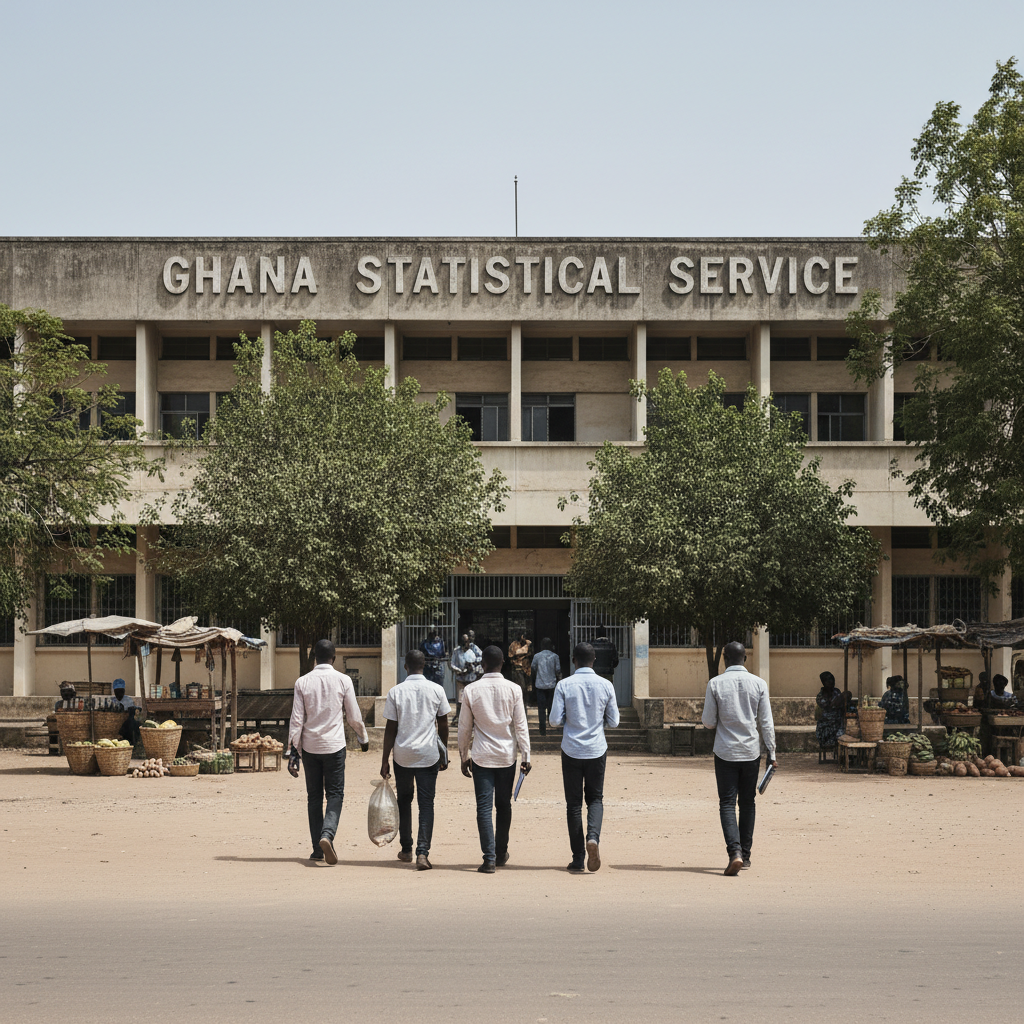
The Ghana Statistical Service (GSS) has completed Ghana's first nationwide Non-Standard Units Survey (INSUS). This survey aims to standardize the measurement of locally traded food items. This addresses a significant challenge in accurately tracking food quantities.
The GSS conducted the survey with the Ministry of Food and Agriculture (MoFA). It covered markets, households, and farms across the country. Field officers determined the standard weights of food items sold in local units. These units include 'olonkas', bowls, bundles, and sacks. This initiative tackles long-standing inconsistencies from using non-standard measurements in food transactions.
This effort is crucial for Ghana's economic data quality. Reliable food measurement directly impacts agricultural planning and market stability. Inconsistent measurements hinder accurate assessment of food supply and consumption. This can lead to flawed economic policies and market inefficiencies. Improved data helps in understanding food security and inflation trends better.
Dr. Iddrisu Alhassan, the Government Statistician, presented the findings in Accra. He stated, “Every day food changes hands not in kilograms or litres but in bowls, bundles, heaps and buckets.” He added these measures have a hidden cost. The same unit can represent different weights in different parts of the country. This highlights the need for standardization to improve data reliability.
The INSUS will provide specific conversion factors to improve the quality of agricultural statistics. It will also strengthen the Consumer Price Index, a key measure of inflation. Decision-makers and markets will watch how these new standardizations impact food price reporting. Researchers and government institutions should adopt these new conversion factors for better data comparability. This foundational work will enable more evidence-based policymaking for Ghana's food sector.
The survey identified and weighed agricultural produce sold in local units. It established reliable national conversion factors. The results will be on an open web-based platform. This platform will include a photographic library of various measurement units for future statistical work. This open access will support broader data analysis and research.
Dr. Alhassan explained that INSUS and the CPI are complementary. INSUS measures the quantity a local unit represents. The CPI, in contrast, focuses on the prices of goods. He emphasized they are not competing exercises. Instead, they work together to provide a more complete economic picture.
The survey sampled 261 markets from a national frame of 1,419. It also included about 2,000 households and selected farmers. Field officers used standard reference objects like a 300-millilitre Coca-Cola bottle. This helped classify the sizes of local containers. This process ensured consistency in calculating average conversion factors.
The findings showed significant regional differences in unit weights. One 'olonka' of dried white maize weighed an average of 2.55 kilogrammes nationally. Cabbage heads ranged from 0.42 kilogramme for small sizes to 1.2 kilogrammes for large ones. Bundles of 'kontomire' also varied considerably. However, bottled palm oil showed consistent weights across the country. These variations underscore the need for unified standards.