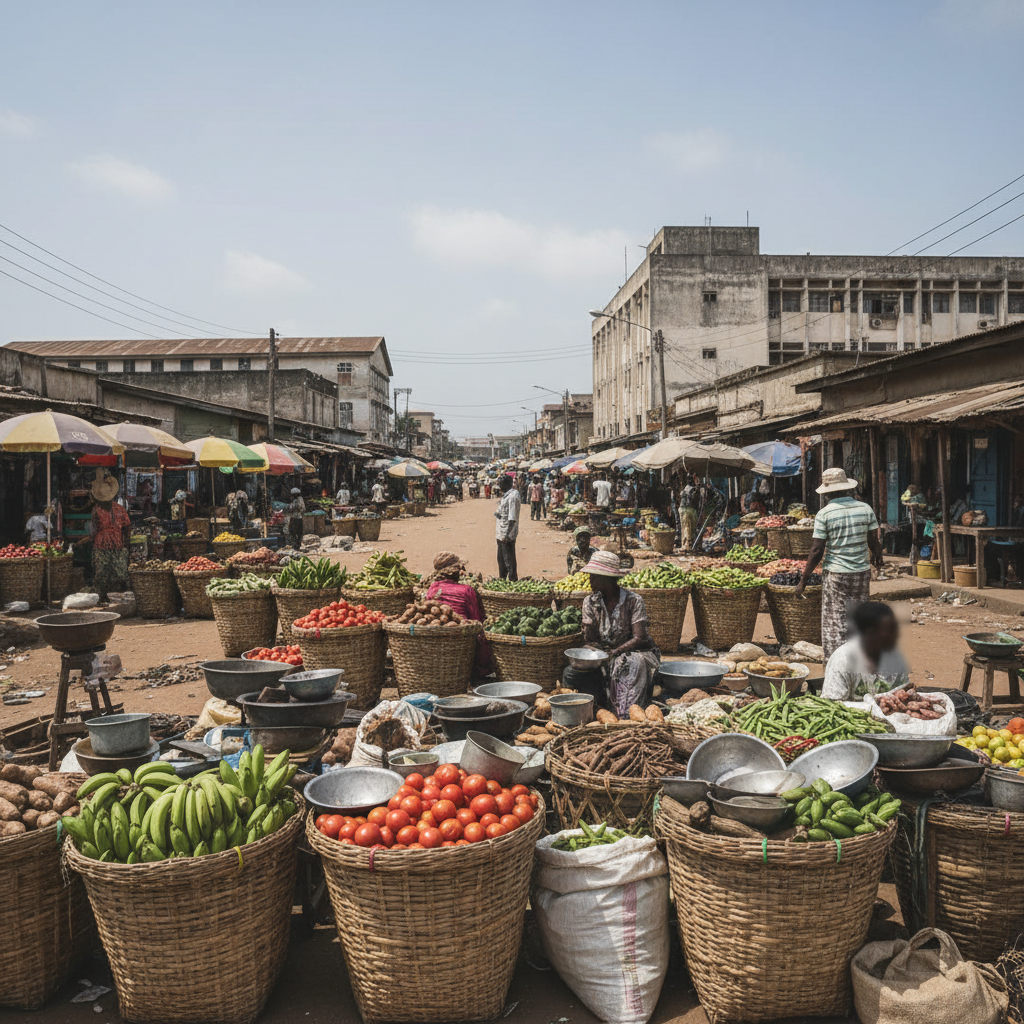
Ghana's food markets and households continue to widely use non-standard food measurement units. The Ghana Statistical Service (GSS) revealed this in its first Non-Standard Units Survey (NSUS) on July 7, 2026. This practice creates inconsistencies in food pricing, agricultural data, and household consumption estimates across the nation.
Local units such as olonka, cups, buckets, bundles, and heaps dominate food commodity measurements. However, these units show significant variations in their actual weights across different regions. Even containers appearing standard, like cups and margarine tins, show considerable differences in household food measurements.
This situation adds complexity to Ghana's economic data collection and analysis. Inaccurate food price data can distort inflation figures and make monetary policy decisions harder. It also affects the true picture of food security and agricultural output, which are crucial for national planning. Prior GSS reports, such as the May 2026 inflation figures, often categorize food and non-food inflation, making accurate food measurement essential.
Government Statistician Dr. Alhassan Iddrisu presented the survey findings. Dr. Iddrisu stated the survey provides Ghana's first national evidence on non-standard food measurement units. This foundation aims to strengthen official statistics for better policymaking.
The GSS has developed national conversion factors for major food commodities to tackle these challenges. These factors will allow local units to convert into standard kilograms and litres. This move will improve the quality of Consumer Price Index (CPI) estimates, agricultural statistics, and household consumption data. Decision-makers and markets will watch for how these new conversion factors impact the accuracy of economic indicators and food prices.
These conversion factors will help in creating a more consistent and reliable framework for food measurements. This standardization will directly affect how inflation is calculated and understood by the public and investors. Businesses and consumers will benefit from more transparent and predictable pricing in food markets. The improved data quality will also empower policymakers to create more effective agricultural and food security programs.
The initiative by GSS is a significant step towards harmonizing food measurements nationwide. This will strengthen the accuracy and reliability of Ghana's official statistics. The move is expected to have a positive ripple effect across various economic sectors dependent on precise food data. Future economic forecasts will likely benefit from this improved data integrity.