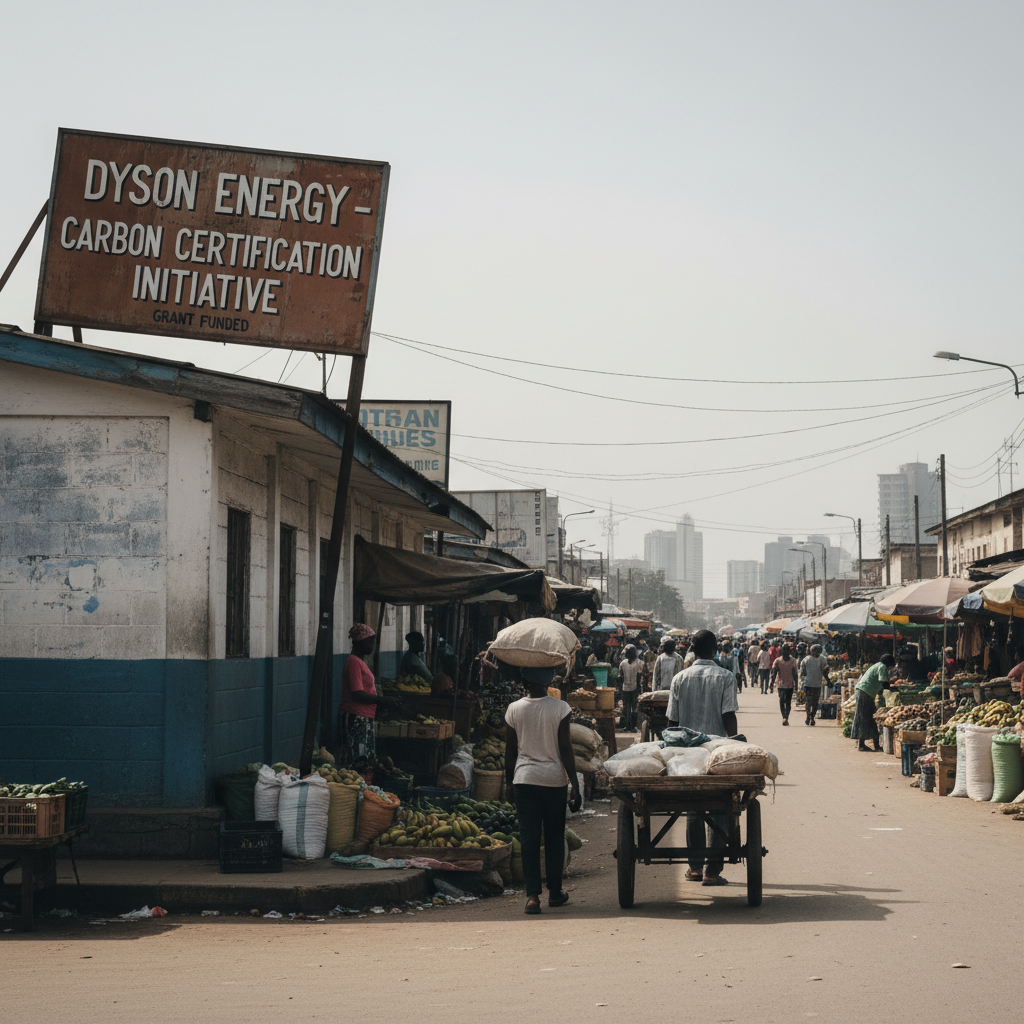
A Ghanaian renewable energy company, Dyson Energy, has won a €25,000 grant from ShEquity. This grant will help the company achieve carbon certification and train more Ghanaian women as solar engineers.
Dyson Energy secured the top prize at the 2026 ShEquity Climate-smart SME Showcase and Pitch Finale. The company was one of ten climate-focused small and medium-sized enterprises (SMEs) competing for the award. Agribusiness firm Gateway Feeds also received a similar grant.
This initiative helps Ghanaian businesses enter the growing global carbon markets. Ghana aims to meet its Nationally Determined Contributions (NDCs) under the Paris Agreement. Building capacity in carbon certification directly supports these national climate goals.
Michael Matthews, Managing Director of Dyson Energy, confirmed the grant's allocation. He stated it will finance the company's carbon certification process. Matthews also added that part of the funds will train more Ghanaian women as solar engineers. He expressed gratitude to ShEquity, pledging Dyson Energy's commitment to the program's objectives.
Benson Njiru, Managing Partner and Chief Finance Officer of ShEquity, explained the program's design. It aims to identify and support high-potential Ghanaian businesses. These businesses must be capable of meeting international carbon credit certification standards. Mr. Njiru noted that both winning companies showed strong financial viability. They also demonstrated robust gender and climate impact. Their potential for participation in carbon credit markets is significant.
The grant will enable Dyson Energy to engage technical consultants. It will also fund activities necessary to achieve internationally recognized carbon certification. Participating businesses received training on standards like Verra, Gold Standard, and I-REC. This capacity-building program is part of the ShEquity Technical Assistance Facility. The Deutsche Gesellschaft für Internationale Zusammenarbeit (GIZ) funds this pilot initiative.
Thirty gender-responsive green SMEs participated in the broader ShEquity program. Fifteen of these businesses received customised Carbon Opportunity Maps. These maps support their entry into carbon markets. The ten finalists, including Dyson Energy, gained connections with investors and carbon certification bodies. These partnerships help businesses align with international climate frameworks such as Article 6 of the Paris Agreement. They also support Ghana's national climate commitments.
Achieving carbon certification allows companies like Dyson Energy to generate carbon credits. These credits can be sold, providing a new revenue stream. This boosts their financial stability and contributes to Ghana's green economy. Increased participation in carbon markets can attract foreign investment into Ghana's renewable energy sector. It also promotes sustainable development across the country.