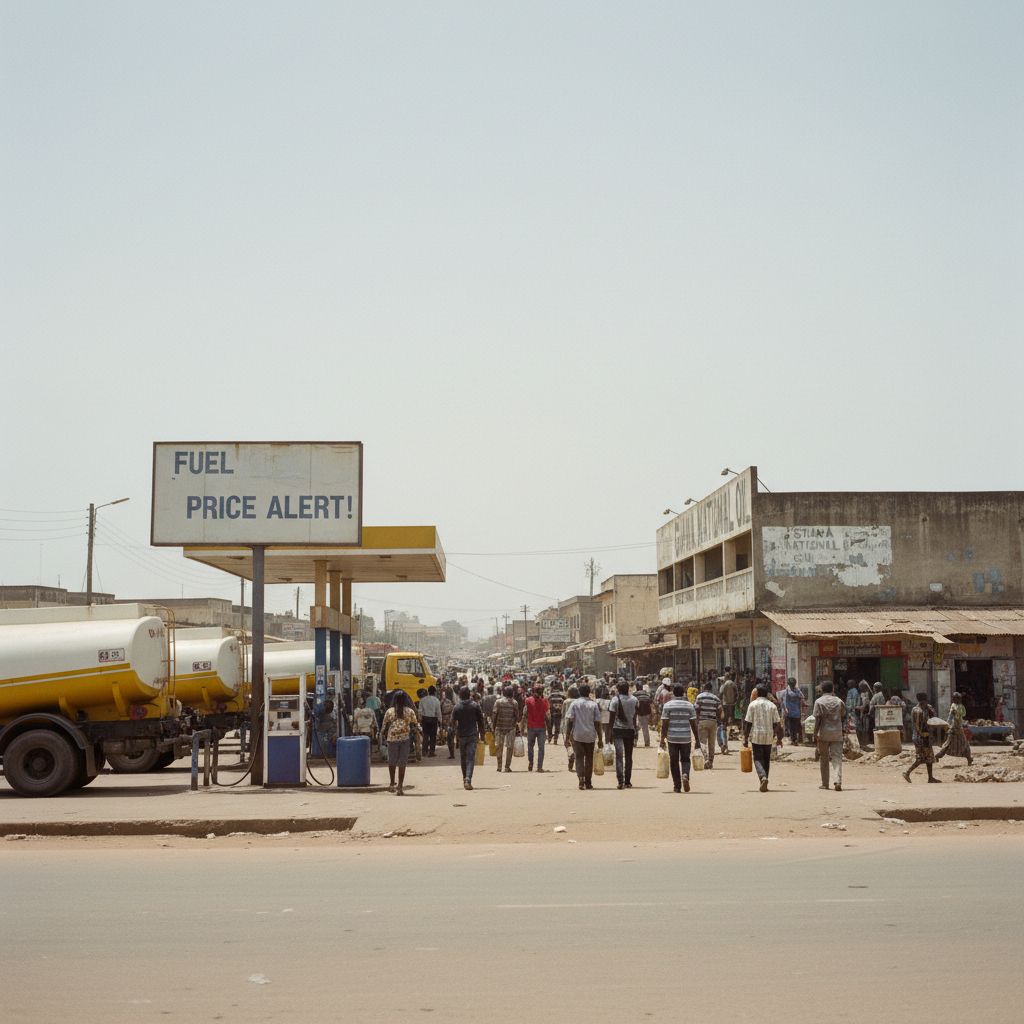
Ghana’s fuel prices are set to decrease from July 1. This adjustment follows a significant drop in global crude oil prices. Currently, pump prices have not yet reflected this international trend.
The delay is due to Ghana’s structured petroleum pricing system. The National Petroleum Authority (NPA) operates on a two-week pricing window. This system means that current domestic prices remain fixed until the window closes on June 30.
This situation fits into Ghana's broader economic narrative of delayed market responses. The country often experiences a time lag between global market shifts and local price adjustments. Such delays affect consumer spending and commercial operational costs, impacting sectors from transport to manufacturing.
JoyNews Research highlighted the mechanics of this delay. The NPA reviews global oil prices, exchange rate movements, and other cost factors. This review happens only when a pricing window expires. Consumers will likely see changes at the pump from Wednesday, July 1, after the current window concludes.
This pricing mechanism and inventory cycles mean that relief arrives with a delay. Market watchers and consumers will closely monitor the NPA’s announcement. Any significant price reduction could ease cost-of-living pressures for many Ghanaians.
Earlier this year, geopolitical tensions between Iran, Israel, and the United States pushed crude prices close to $120 per barrel. This led to diesel prices exceeding GHS 17 per litre in Ghana. Petrol prices also rose across the country during that period.
Before these tensions, petrol traded around GHS 10 per litre. Diesel was between GHS 11 and GHS 12 per litre. Global oil prices then were stable, ranging from $60 to $70 per barrel. This earlier stability shows how global events directly influence domestic fuel costs.
Now, with tensions easing and crude oil falling to around $72 per barrel, the expectation is for lower pump prices. Oil marketing companies must first sell off existing stock imported at higher prices. Only then can cheaper, newly imported fuel influence retail prices.
The relative strength of the Ghana cedi also contributes to the potential for price declines. A stronger cedi makes imported fuel cheaper in local currency terms. This provides additional support for the anticipated price reductions.
The current pricing window guarantees a price floor for oil marketing companies. They cannot undercut this floor, even if global prices drop during the window. This ensures a predictable environment for fuel retailers.
The forthcoming adjustment will be a significant development for individuals and businesses. Lower fuel prices can reduce transportation costs and the cost of goods. This could stimulate economic activity in various sectors.
The process highlights the interconnectedness of global markets and local economic conditions. Ghana's reliance on imported petroleum products makes its economy susceptible to international price fluctuations. The current trend offers a welcome relief.