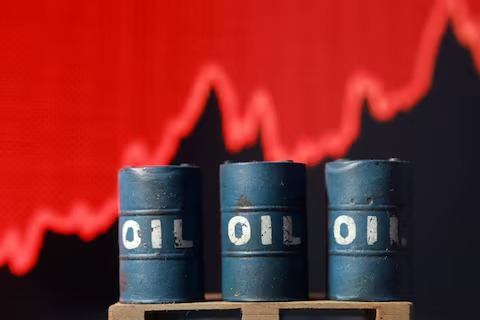
Gulf oil exports jumped by over 3 million barrels from May to exceed 10 million barrels per day in June. The increased flows occurred as the US military helped secure oil transit through the Strait of Hormuz. Despite this rise, Gulf oil exports remain 40% below levels seen before recent conflicts.
The United Arab Emirates played a crucial role in this recovery, facilitating the movement of millions of barrels of crude oil to international buyers. This allowed producers to increase their output and contributed to lower global oil prices. The improved shipping conditions were a direct result of an agreement between the US and Iran to restore maritime traffic.
This surge in oil exports from the Gulf helps stabilize global energy markets, which directly impacts Ghana's economy. As a net importer of crude oil, Ghana benefits from lower international oil prices. Reduced fuel costs can ease inflationary pressures and improve the balance of payments for Ghana.
Data from Kpler indicates that combined crude and condensate exports from Saudi Arabia, the UAE, Kuwait, Iraq, and Iran rose by over 3.5 million barrels per day to 10.07 million barrels per day. Johannes Rauball, an analyst at Kpler, noted that the backlog of crude oil cleared quickly after the June 17 agreement. This agreement between the US and Iran aimed to halt conflict and restore shipping through the Strait of Hormuz.
Looking ahead, sustained stability in the Strait of Hormuz is critical for consistent global oil supply. Decision-makers and markets will closely monitor geopolitical developments in the Gulf region. Any disruption could quickly reverse the positive trend of increased exports and potentially lead to higher global oil prices, impacting Ghana's energy costs.
UAE exports reached between 3.7 million and 3.8 million barrels per day in June, according to Kpler, Vortexa, and LSEG data. This figure represents an increase of over 1 million barrels per day compared to May levels. Ship broker BRS reported that 98 tankers crossed the Strait of Hormuz between June 22 and June 28, averaging about 14 vessels daily. This activity marks the highest traffic since the conflict began, signaling increased willingness from ship owners to operate in the region.
Saudi crude exports also rose in June, by 768,000 barrels per day to 4.52 million barrels per day, according to Kpler. Exports averaged around 6.3 million barrels per day last week, nearing January levels, as Riyadh increased loadings from Ras Tanura. During the conflict, Saudi Arabia and the UAE rerouted some exports through pipelines that bypass Hormuz, an option not readily available to Iraq and Kuwait.
Exports from Iraq and Kuwait recovered to approximately 800,000 barrels per day each, as per Vortexa data. Kuwait significantly boosted its output in June to 1.65 million barrels per day. Iran also increased its exports by over 70% in June, reaching 640,000 barrels per day following an easing of the US blockade, Vortexa reported. ADNOC also utilized a tanker shuttle service to help maintain its export capacity.