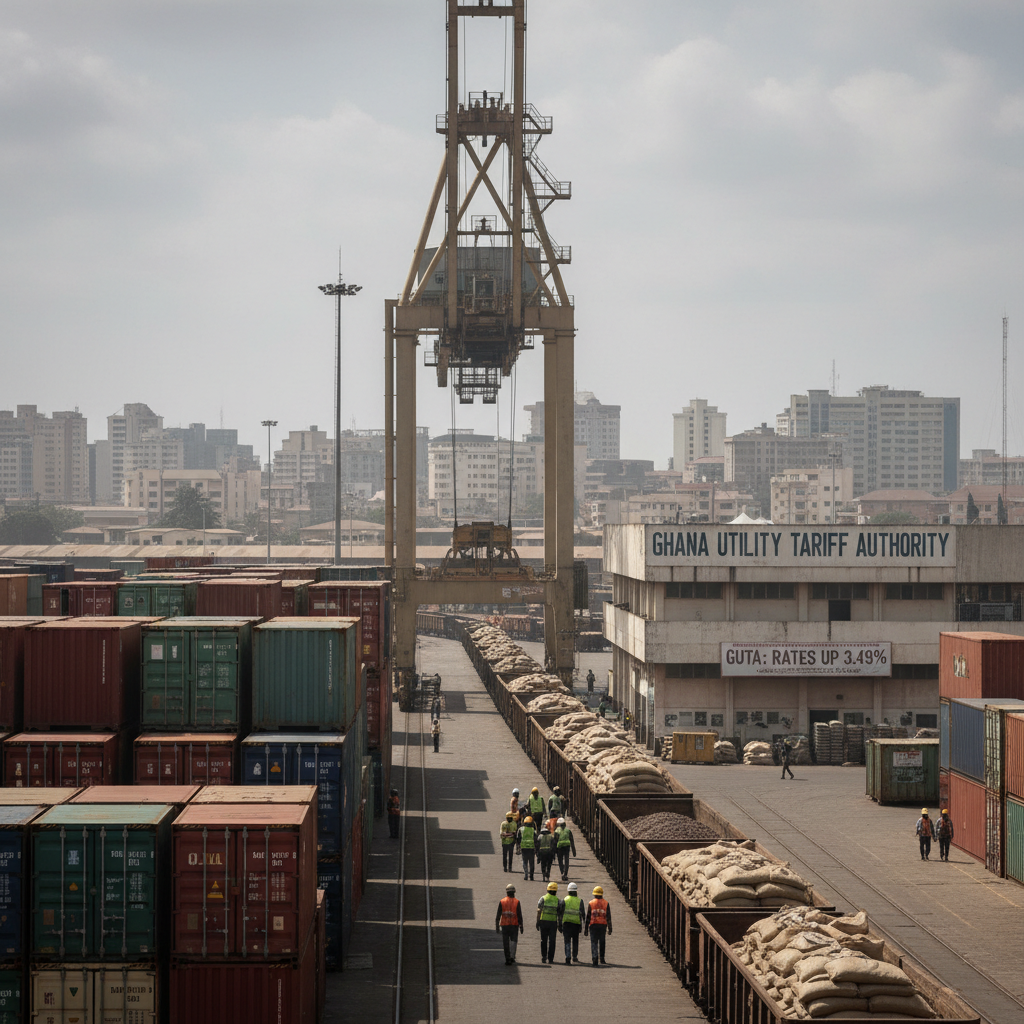
The Ghana Union of Traders' Associations (GUTA) President, Clement Boateng, has asserted that financial struggles of utility providers stem from internal inefficiencies. He insists consumers should not pay for these issues through higher tariffs. This statement follows significant utility tariff adjustments announced by the Public Utilities Regulatory Commission (PURC).
Electricity tariffs will rise by 3.49%, and water tariffs will increase by 0.85%, effective July 1, 2026. These new rates have raised considerable concern among Ghanaian businesses and households. Boateng argues that operational losses, rather than insufficient revenue, are largely responsible for the sector's financial challenges.
These repeated tariff increases affect the broader Ghanaian economy, particularly businesses already facing rising operational costs. High utility prices can reduce business profitability, slow economic growth, and increase the cost of living for ordinary citizens. Data from the Ghana Statistical Service regularly indicates rising inflation, making any additional cost burden significant.
Clement Boateng, speaking on Joy FM's Midday News, highlighted specific figures. He stated, “They [utility providers] should know that the financial challenges they find themselves in are attributed to their own inefficiencies in their operations.” Boateng added, “If you take Ghana Water Company, for instance, they are recording operational losses of between 51 and 52 per cent. In the electricity sector, operational losses are about 32 per cent.”
These operational losses largely result from theft, illegal connections, and wastage within distribution networks. Addressing these issues would significantly improve utility providers' financial health. Decision-makers and regulators will likely face increased pressure to push utility companies towards greater efficiency. Businesses and consumers will monitor the implementation of these tariffs and any proactive measures taken to reduce system losses.
Reducing these losses would bolster revenue collection for utility providers, decreasing the need for frequent tariff adjustments. This approach would ease the financial strain on consumers and businesses. Improving efficiency also aligns with the government's broader economic goals of stabilising prices and fostering a conducive business environment. Future policies will likely focus on asset protection and reducing non-technical losses. This could involve enhanced monitoring systems and stricter enforcement against illegal activities. The outcome will directly influence market stability and household budgets across Ghana.