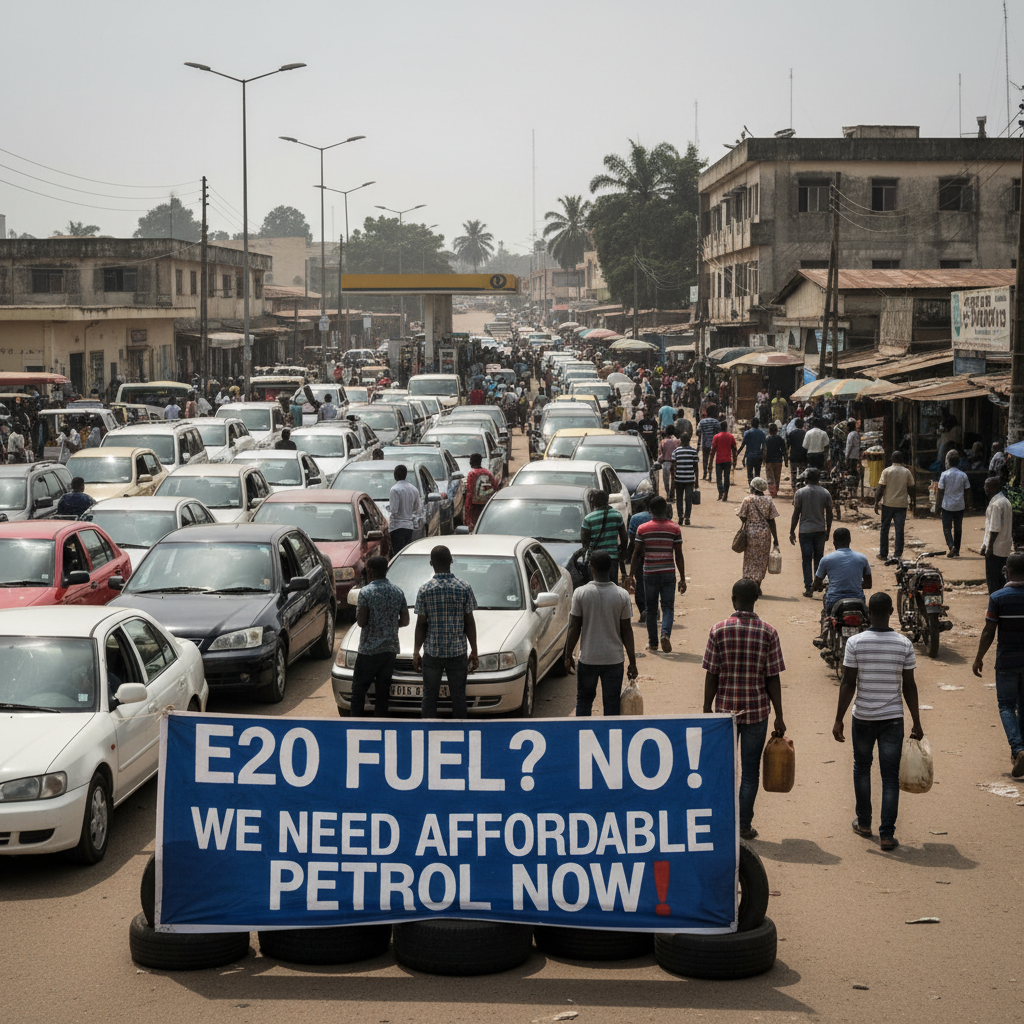
Indian motorists are protesting the government's mandate to make E20 petrol the standard fuel choice. E20 contains 20% ethanol blended with petrol. Drivers report issues like engine wear and lower fuel efficiency since its widespread introduction.
The complaints amplified in April when E20 replaced the 10% blend at pumps. Unblended petrol is available but costs 40-50% more. Many vehicles are not designed for the E20 blend.
This biofuel push fits into India's larger economic plan to reduce oil imports and cut carbon emissions. India, the world's third-largest car market, imports most of its crude oil. The government aims to support farmers by using crops like sugarcane and maize for ethanol production. Other Asian countries are also exploring similar biofuel programs.
Prime Minister Narendra Modi's government dismisses these complaints as "misleading." A government statement last month claimed extensive testing showed no engine damage. Auto manufacturers, including Maruti Suzuki, also stated that years of data found no widespread vehicle damage.
Motorists will likely continue to voice their concerns over engine issues and higher servicing costs. Experts warn that the full impact on older vehicles may appear over time. Decision-makers face pressure to address driver dissatisfaction while pursuing energy independence goals.
Last week, several motorists protested in Delhi against the mandatory E20 blend. An entrepreneur, often linked to the opposition Congress party, organised the demonstration. Protesters accused the government of imposing E20 without adequate preparation for existing vehicles.
Rahul Bharti, a senior executive from Maruti Suzuki, stated that India's largest carmaker serviced over 15 million older vehicles not compliant with E20. He reported no fuel-related faults in these vehicles. However, automakers admitted E20 causes a 3-3.5% drop in fuel efficiency. Some estimates suggest this drop could be as high as 4-12%.
The government's rapid transition strategy from 10% ethanol in 2022 to a mandatory 20% blend by 2025 is five years ahead of schedule. Critics argue India skipped a crucial step: allowing time for vehicles to adapt. Puneet Gupta, director of Mobility Global, stated that over 75% of vehicles in India are not E20-compliant. A Thomson Reuters Foundation analysis found only about 20% of new petrol vehicles sold in the past 15 years were E20-compliant.
Mohammed Arif, a motorcycle engine repairer, observed increased fuel residue buildup in carburettors of older bikes. He attributes this to the higher ethanol content, leading to more frequent cleaning and higher servicing costs. Basil Jacob, who runs a car servicing centre, noted customers reporting lower fuel efficiency. People pay the same price per litre but get fewer kilometres with E20. This indicates that savings from cheaper ethanol production are not passed to consumers.