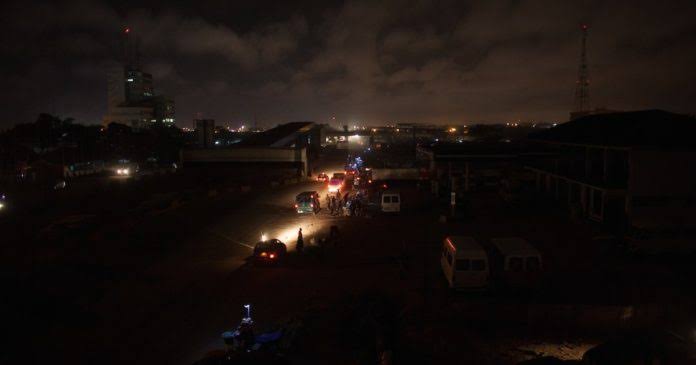
Fiifi Boafo, former Head of Public Affairs at the Ghana Cocoa Board (COCOBOD), has strongly criticised the National Democratic Congress (NDC) government for its handling of the nation's power sector. He asserts the party has not demonstrated effective capacity to manage electricity supply, leading to widespread disruptions.
These frequent power outages, known locally as 'dumsor', are causing significant concern among Ghanaians. They are eroding public trust in the government's ability to resolve the persistent problem. Mr. Boafo highlighted that stable electricity is crucial for daily life and economic activity across the country.
This situation fits into a broader narrative of Ghana's ongoing struggle with energy reliability, a challenge that has historically plagued various administrations. The current disruptions echo past periods of instability, raising questions about long-term solutions and infrastructure investment. Data consistently shows that reliable power is a key factor for business growth and foreign direct investment.
“NDC has not been able to manage the power sector better,” Mr. Boafo stated in an interview. He questioned why power challenges consistently re-emerge whenever the NDC is in government. He further noted that consumers pay additional levies on fuel, intended to ensure stable power, yet outages persist.
The recurring power challenges carry significant implications for Ghana's economy and social fabric. Businesses face increased operational costs due to reliance on generators, impacting profitability and potentially leading to job losses. Households and students also suffer, affecting productivity and education outcomes. Decision-makers must address these issues to restore investor confidence and support economic stability.
Mr. Boafo specifically questioned the effectiveness of measures like the additional levy consumers pay on fuel. This levy was introduced to help ensure a stable supply of electricity. However, the recent outages suggest that the expected results have not been achieved, despite the financial burden on citizens.
He recalled a conversation with a 15-year-old boy after the 2024 change of government. The boy expressed concern about President John Dramani Mahama's return to power. Mr. Boafo suggested this reflects a broader anxiety among some Ghanaians regarding potential recurring power challenges under the current administration.
The former COCOBOD official urged the government to consult individuals who previously managed the power sector successfully. He believes this approach would be more effective than attempting to resolve every challenge independently. “Nothing stops them from going to the people who managed it better,” he advised.
Mr. Boafo specifically mentioned former government officials like Dr. Matthew Opoku Prempeh, known as NAPO, and Boakye Agyarko. He suggested their experience in the energy sector could be invaluable in addressing the current difficulties. Seeking their expertise could provide practical solutions and restore public confidence.
He stressed that the impact of power outages extends far beyond households. Businesses, students, workers, and institutions all suffer significant disruptions. Hairdressers cannot work, welders cannot operate, and media organisations incur extra costs for generators, highlighting the widespread economic damage.
Mr. Boafo concluded by calling on the government to demonstrate greater competence and provide public reassurance. He emphasised the need for confidence that recurring power challenges will not become a permanent feature of the NDC administration. Stable power is fundamental for Ghana's progress.