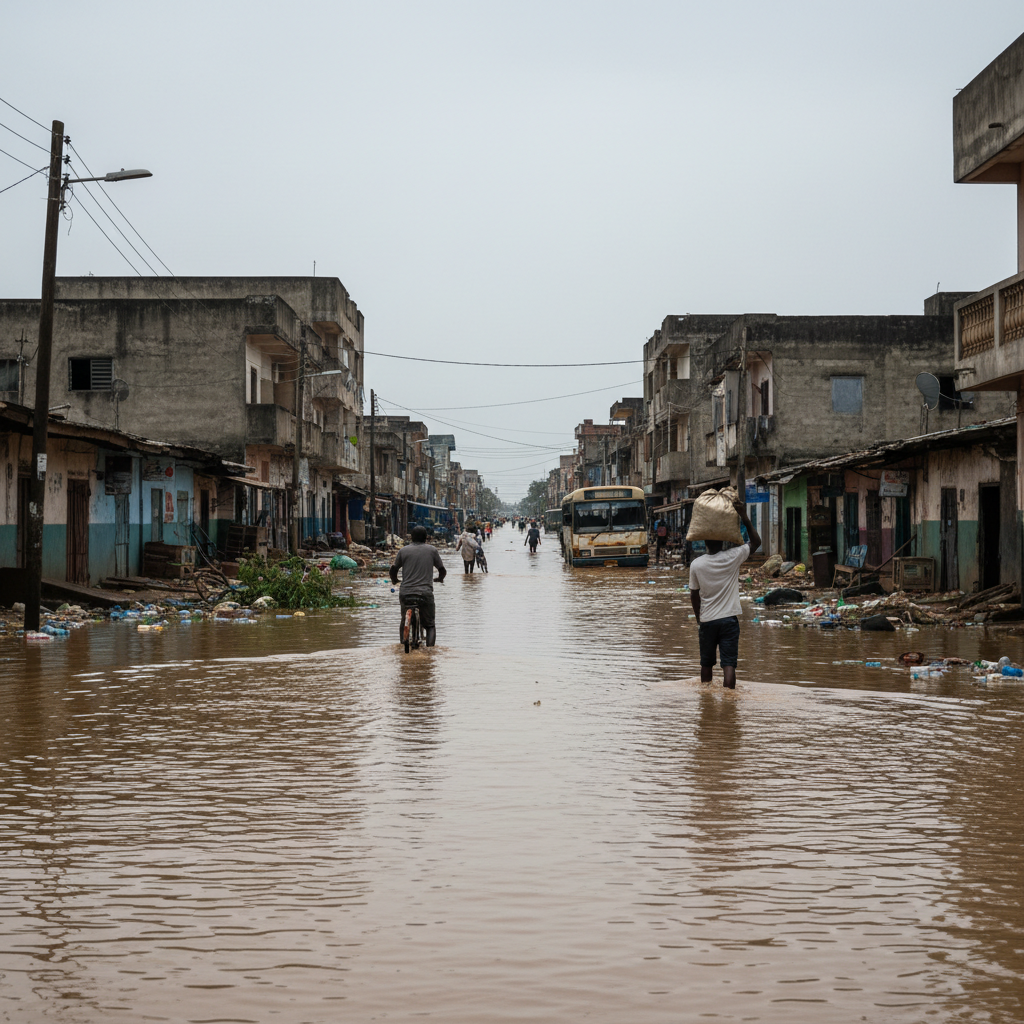
Accra's recent heavy flooding has exposed significant gaps in Ghana's emergency response system, with firefighters frequently unable to perform water rescues due to a lack of essential equipment. Security consultant Gerald Sintim-Aboagye highlights that the Ghana National Fire Service (GNFS) operates without rescue boats, life jackets, inflatable rafts, and other crucial water-rescue gear.
This deficiency turns potential rescuers into spectators during flood disasters. The absence of multi-terrain response capabilities, which other countries possess, means Ghana is ill-equipped to handle the realities of widespread urban inundation. This critical shortfall directly impacts the safety of Accra residents, who face increasing risks during the rainy seasons.
The recurrent flooding in Ghana's capital city is a consistent drag on the national economy, causing millions of Ghana cedis in damage to property and infrastructure annually. Beyond immediate losses, it disrupts business activities, impedes transport, and poses severe public health risks. Ghana has reportedly invested nearly GHS 10 billion (equivalent to almost $1 billion at prevailing exchange rates over two decades) in flood control. Despite this, Accra continues to experience significant flooding, underscoring the ineffectiveness of past interventions and the urgent need for a more strategic approach.
Gerald Sintim-Aboagye, a former British Army professional, stated, "A rescue boat is not a luxury. It is essential. It saves lives. It empowers firefighters. It protects communities." His analysis emphasizes that preparedness measures are financially more viable than dealing with the aftermath of tragedies. Sintim-Aboagye advocates for immediate re-equipping of the GNFS, particularly in flood-prone areas like Accra, Kumasi, Cape Coast, and Sekondi-Takoradi.
Addressing Accra's flooding crisis requires a multifaceted approach beyond just immediate rescue capabilities. Decision-makers must prioritize urgent investment in modernizing and expanding the city's outdated drainage infrastructure. Regular desilting of major drains, widening narrow channels, and constructing new storm drains are vital steps. Furthermore, the enforcement of building codes to prevent construction on waterways is critical to long-term flood prevention. This is not merely an environmental challenge; it is a planning failure that demands immediate policy shifts and significant public finance allocation.
A unified flood response command, integrating entities such as the GNFS, the National Disaster Management Organisation (NADMO), Ghana Police Service, military engineers, and local assemblies, could streamline emergency operations. Such coordination would ensure faster responses, clearer communication, and more efficient resource allocation during crises. Introducing community flood-preparedness programs and investing in early-warning and real-time monitoring systems are also essential for equipping citizens with knowledge and providing timely alerts. Long-term resilience requires developing flood-resistant infrastructure, including elevated roads and retention ponds, to adapt urban planning to current climate realities.