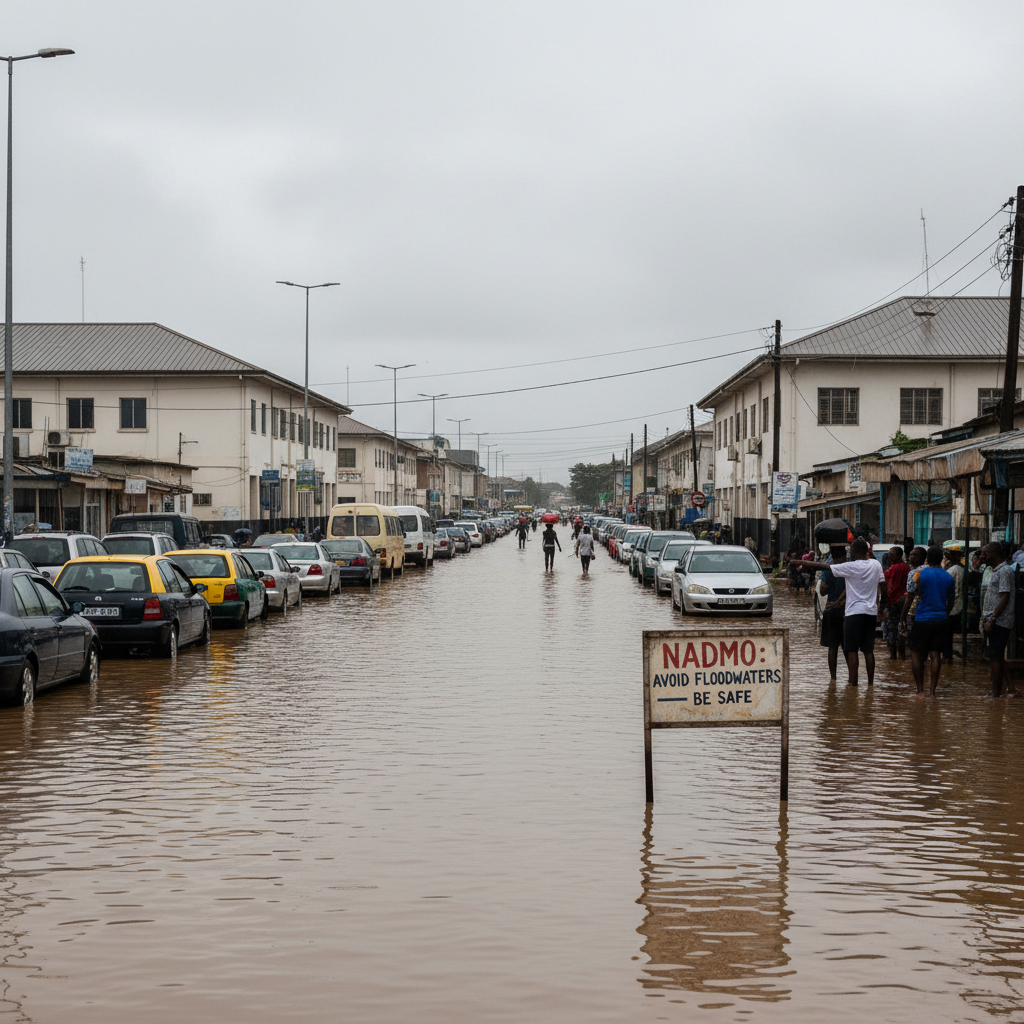
Heavy overnight rains on Monday, June 29, 2026, triggered severe traffic congestion across the national capital, Accra. Several major roads experienced heavy gridlock, significantly slowing commuter movement.
Richard Amuyatey, Director of the Inspectorate Division at the National Disaster Management Organisation (NADMO), urged the public to avoid contact with floodwaters. He emphasized that parts of the city continue to experience rising water levels. Commuters stranded within Accra should seek safer locations and suspend their journeys.
This latest flooding incident underscores Accra's persistent challenge with seasonal rains and urban drainage infrastructure. Poor urban planning and inadequate sewage systems frequently exacerbate the impact of heavyrainfall. Such disruptions lead to lost productivity and economic slowdowns in the city.
Mr. Amuyatey stated, “We are on the ground, and so we are responding to all. What they need is to stay indoors where they are to stay safe.” He cautioned residents against walking or driving through submerged roads, stressing the serious risks to life and safety. Authorities continue to monitor affected areas as Accra grapples with the disruptions.
The economic implications of such frequent flooding are significant. Businesses face operational delays, and workers struggle to reach their workplaces, leading to substantial productivity losses. Furthermore, damage to infrastructure requires substantial public funds for repairs, diverting resources from other essential development projects. The repeated nature of these events also impacts public confidence and foreign investment.
For residents still at home, Mr. Amuyatey advised remaining indoors until the situation stabilises. Stranded residents needing NADMO support can contact the national emergency line 112 or 0302964 884. This guidance aims to minimise casualties and further complications. The government and city planners face ongoing pressure to implement sustainable solutions for Accra's perennial flooding problem. This includes investing in better drainage systems and enforcing stricter construction regulations. Long-term strategies are crucial for mitigating the economic and social costs of future rainfall events.