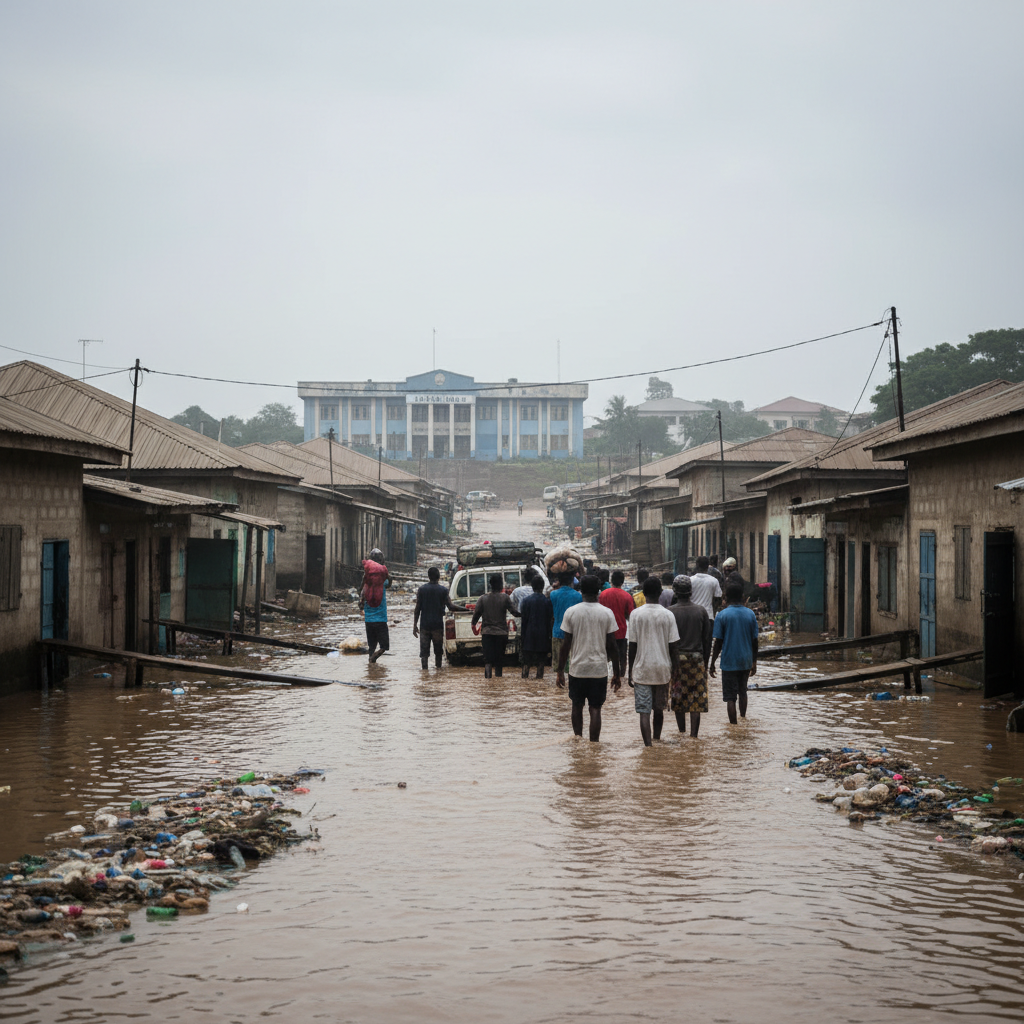
The Ghana National Fire Service (GNFS) has confirmed 12 deaths and nearly 500 rescues following severe flooding across the Greater Accra Region. Heavy rains on Monday triggered widespread inundation, prompting urgent emergency responses in affected communities.
These floods created dangerous conditions, trapping residents and disrupting daily life in several key areas of the capital. Firefighters and other rescue personnel worked continuously since Sunday to extract people from rising waters. The high number of rescues underscores the immediate danger faced by a significant portion of the urban population.
This latest incident highlights Ghana's persistent struggle with urban flooding, particularly in Accra. Despite substantial investments in flood control over two decades, the city remains vulnerable to seasonal downpours. Previous government initiatives and international projects have aimed to improve drainage and infrastructure, yet flash floods continue to cause casualties and property damage every year.
Alex King Nartey, a member of the GNFS Public Relations Team, confirmed these numbers in an interview on Joy FM's Midday News on Tuesday, June 30. He stated, "Unfortunately, we lost about 12 people. That's the number that I can confirm." Mr. Nartey also cautioned that the death toll could rise as search and recovery operations are still in progress. Teams rescued approximately 105 people from Tse Addo and about 300 from the Odawna area.
The confirmed fatalities include two bodies recovered from Alogboshie, one at Achimota, two at Alajo, four at Odawna, and two at Tema Newtown. Rescue efforts also extended to Dome, Kwabenya, Adenta, Anyaa, and Ablekuma. Although no serious injuries were reported among the rescued, at least one elderly person remains missing in Tema Newtown. These ongoing search efforts mean the final casualty count could be higher, requiring continued vigilance from emergency services.
These floods will likely prompt renewed calls for more effective urban planning and infrastructure development. The economic impact includes potential damage to homes and businesses, disrupting livelihoods for thousands of residents. Decision-makers will face pressure to accelerate ongoing flood mitigation projects and implement robust long-term solutions. Improved drainage systems and public awareness campaigns about flood preparedness are crucial next steps for the capital. The market for construction and civil engineering services focused on flood control may see increased demand.