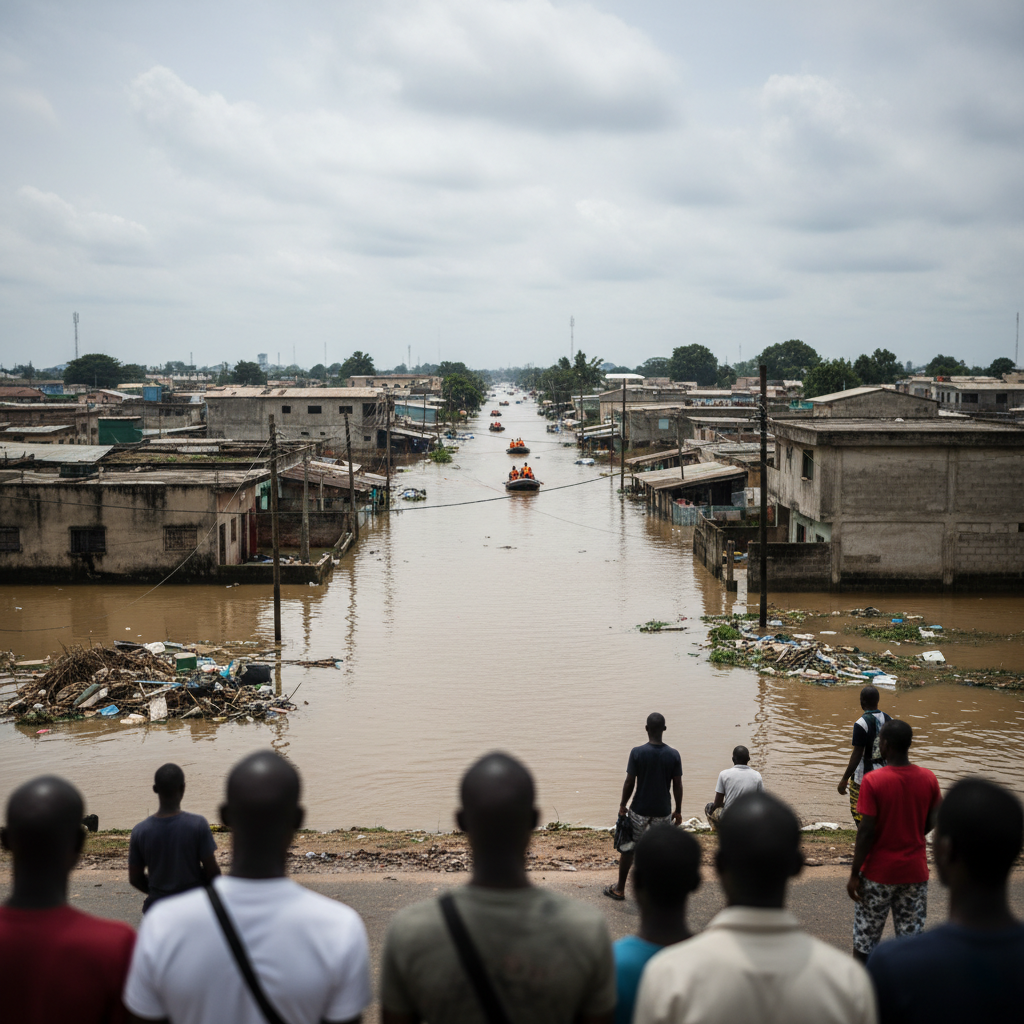
Ghana National Fire Service (GNFS) confirms 12 people died and nearly 500 others were rescued after severe flooding in Greater Accra Region. Heavy rains on Monday caused widespread damage and displacement. Firefighters worked through Sunday and Monday carrying out critical rescue operations.
About 105 individuals were rescued from Tse Addo. Another 300 individuals were rescued from the Odawna area. The GNFS Public Relations Team, represented by Alex King Nartey, provided a breakdown of the fatalities. Two bodies, a mother and child, were recovered from Alogboshie. One death was recorded in Achimota, while Alajo reported two fatalities. Odawna saw four deaths, and Tema Newtown recorded two. Mr. Nartey cautioned the death toll could still rise as search and recovery efforts continue.
This latest flood event highlights persistent challenges with Accra's flood control infrastructure. Ghana has received an estimated GHS 14.5 billion (US$1 billion) in international financing for flood control, sanitation, and urban water infrastructure over the last two decades. Despite these investments, the country continues to suffer devastating floods that claim lives and destroy property. Flash floods are a recurring problem in Accra, particularly during the two annual rainy seasons. These events consistently disrupt economic activity and strain emergency services.
Official records from the World Bank, African Development Bank (AfDB), and African Water Facility show Ghana secured approximately GHS 14.36 billion (US$990 million) in major multilateral financing between 2000 and 2024. These funds targeted flood resilience, sanitation, and water infrastructure. Approximately GHS 10.48 billion (US$723 million) of this amount was specifically earmarked for Greater Accra and the Greater Accra Metropolitan Area (GAMA). However, not all funding was solely for Accra; some supported national rural and urban water programs benefiting Accra among other regions.
The GAMA project received two additional World Bank financial injections. A GHS 1.8 billion (US$125 million) injection in September 2020 extended the program to the Greater Kumasi Metropolitan Area and addressed COVID-19 hygiene needs. A further GHS 435 million (US$30 million) in August 2024 covered cost overruns due to inflation and completed the Asafo Sewerage Network's rehabilitation. Development professionals increasingly suggest that stronger enforcement of existing regulations, rather than more funding, is crucial for addressing Accra's flooding crisis. This indicates a potential shift in focus from capital injection to governance and implementation.
Going forward, decision-makers will likely face increased pressure to demonstrate the effective utilization of previous investments. Markets may react to potential disruptions in commercial activity caused by the floods, impacting sectors such as retail and transportation. The ongoing search and recovery operations mean the human cost could still climb. The public will be watching for immediate relief efforts and long-term strategies to prevent future catastrophes.