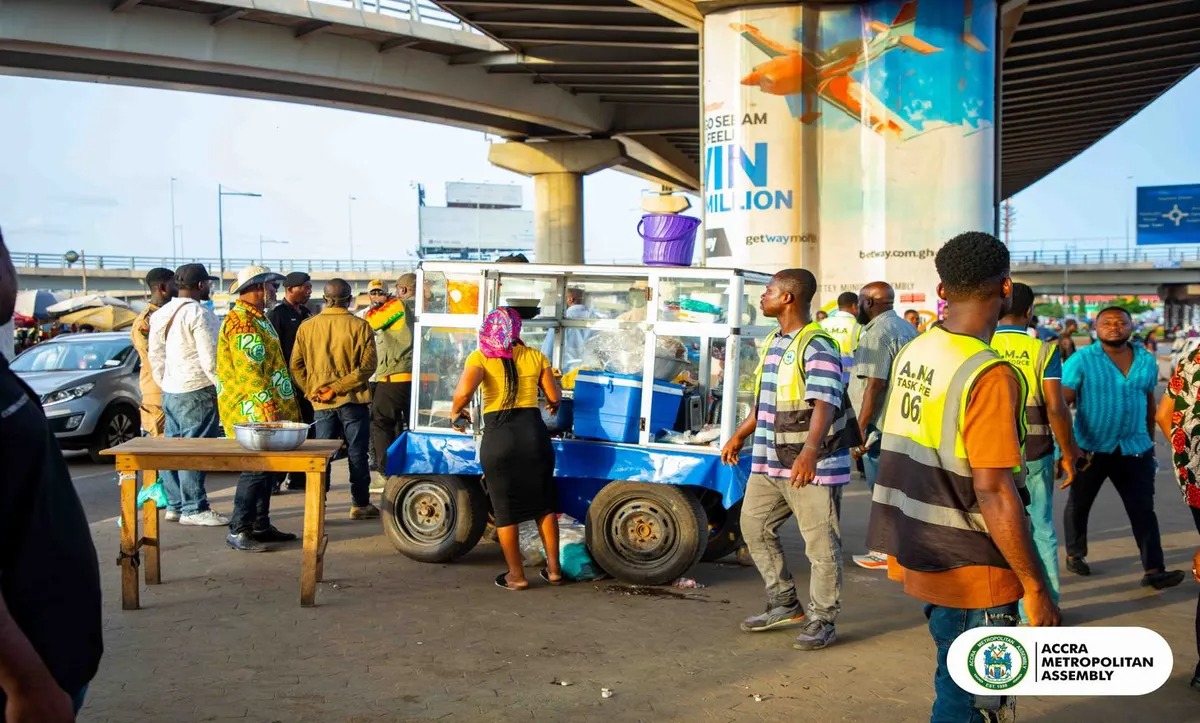
Accra Mayor Michael Kpakpo Allotey has banned all trading, hawking, and unauthorized activities under the Kwame Nkrumah Interchange. He warned that anyone ignoring this directive will face legal prosecution. This move targets food vendors, beggars, and individuals sleeping under the Korle Klottey section of the interchange.
This ban is a critical part of the Accra Metropolitan Assembly's (AMA) broader plan to restore order and improve sanitation throughout Accra. The Mayor stated the area beneath the interchange must remain clean, safe, and free from obstruction. These efforts address poor sanitary conditions and safety risks posed by unauthorized structures and activities.
This initiative fits into Ghana’s ongoing efforts to enhance urban infrastructure and public health, often highlighted by calls for better city management. Previous reports have identified issues such as traffic congestion and poor sanitation as major challenges in Accra. The AMA’s enforcement actions align with a national drive for stricter adherence to by-laws and urban planning regulations.
Mayor Allotey reaffirmed the AMA’s commitment to enforcing by-laws on sanitation, building permits, and public order. He explained that removing makeshift structures helps create a better environment. This focus on adherence to regulations reflects a growing expectation for better governance and public service delivery across Ghana.
The immediate implication is stricter enforcement, with task forces actively removing illegal structures and activities. This will likely lead to a cleaner public space and improved traffic flow around the interchange. Decision-makers will monitor public compliance and the long-term effectiveness of these measures. Markets, especially informal ones, will need to adapt to these new spatial restrictions.
During the operation, task force teams removed makeshift structures and other unauthorized setups. These activities had created unhygienic conditions and safety hazards for both motorists and pedestrians. The Mayor also led an operation to demolish illegal wooden structures along Otublohum Road near the Circle VVIP Station.
These unauthorized structures contributed to traffic congestion, poor sanitation, and public space obstruction. The AMA will continue to remove any structures built without proper approval. This sustained effort aims to regularize urban development and ensure public safety.
The Mayor also instructed owners of drinking spots, managers of the VVIP Station, and cattle owners along Otublohum Road to clear choked gutters. They have 24 hours to comply or face sanctions. This instruction underscores the AMA's commitment to basic sanitation standards.
Allotey appealed to residents, traders, transport operators, and business owners to support efforts to keep Accra clean, safe, and well-organized. Public cooperation is crucial for the success of these urban renewal initiatives. The AMA emphasizes a collaborative approach to city management.