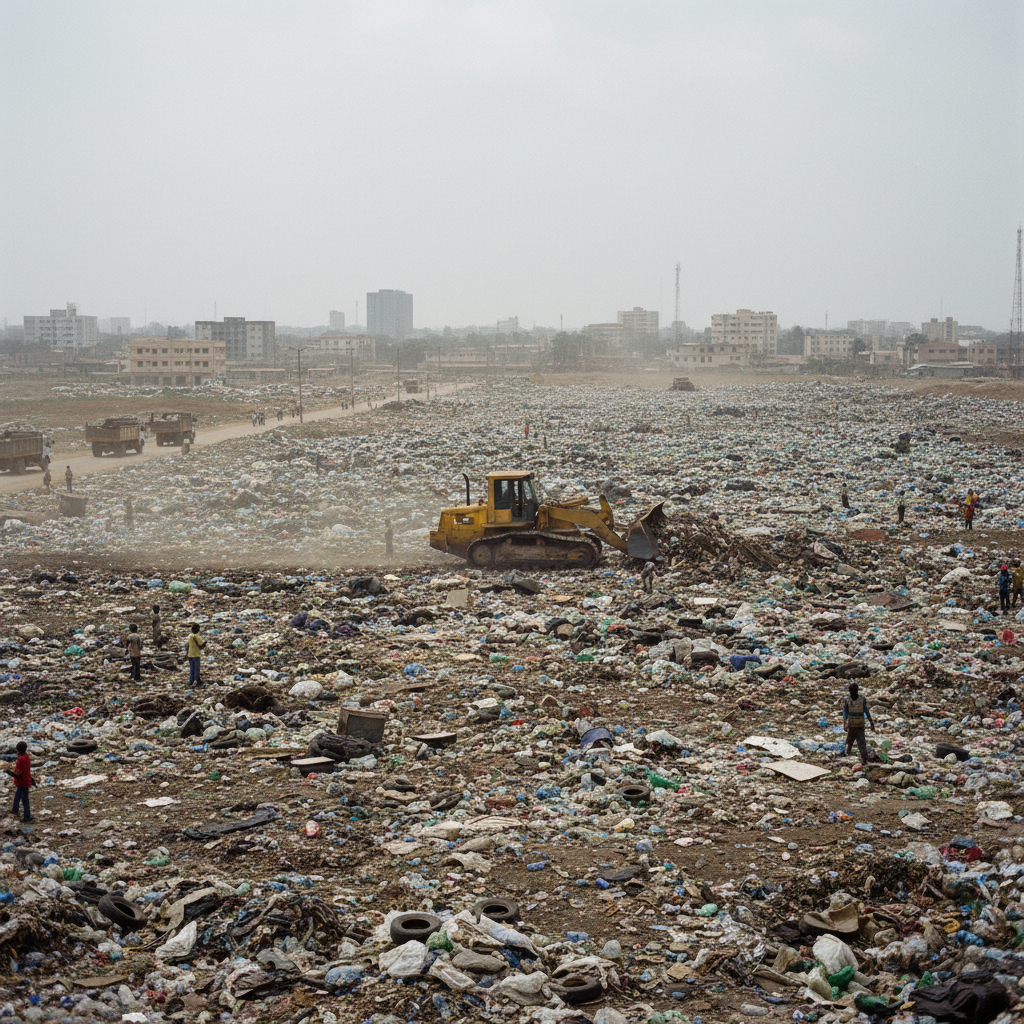
Richard Fiadomor, President of the Chamber of Local Governance, has called on the government to secure dedicated land for waste management facilities in Accra. The current shortage of disposal sites is significantly worsening sanitation challenges across the capital. This critical issue affects the capacity of Metropolitan, Municipal, and District Assemblies (MMDAs) to manage waste effectively.
The rapid expansion of urban areas without proper planning has created this scarcity of suitable land. MMDAs struggle to find locations for landfills, transfer stations, and other vital waste infrastructure. This problem also impacts small-scale waste collection operators who use tricycles, known as "Aboboyaa." They lack the capacity to transport waste over long distances, leading to inefficiencies and challenges in service delivery.
This situation underscores a broader challenge within Ghana's urban development and public services. Uncoordinated development and the sale of land without considering public infrastructure needs have been persistent issues. The absence of comprehensive land-use planning has long hindered various public services, including drainage and waste management. It highlights a critical need for integrated planning that balances economic growth with essential public infrastructure.
Mr. Fiadomor stated, "That is why the Aboboyaa do not have the capacity to go long distances, and that is why some of them are also misbehaving along the line." He explained, "So central government needs to come in so that we can see how best we can get a land allocated for waste management." He stresses the need for government, local authorities, and traditional leaders to collaborate on a coordinated land-use plan.
Urgent government intervention is necessary to allocate land for waste management. Without it, the lack of suitable disposal sites will continue to undermine efforts to keep Accra clean. This will also exacerbate the recurring sanitation problems. The issue directly impacts public health and the economic efficiency of waste collection services. Decision-makers must address this planning deficit to avert further deterioration of the capital's sanitation infrastructure. This situation calls for immediate policy actions to integrate land planning with urban development strategies.
Mr. Fiadomor asserts that MMDAs, as legally mandated planning authorities, must be involved before land is sold. This involvement would ensure that spaces are reserved for essential services like drainage systems and waste management facilities. The failure to plan for such infrastructure has led to current difficulties, especially in densely populated areas of Accra. These areas face increasing limitations on available land.
While traditional authorities and landowners have rights over their lands, collaboration with assemblies is crucial before development. Mr. Fiadomor stressed, "The government, central government, must come in to ensure that the land is yours; you have the liberty to sell it, but before you sell the land to anybody or a group of people, you should get the MMDAs involved." Proper planning would allow assemblies to proactively identify areas for future infrastructure development. This would prevent new communities from being built in ways that complicate waste collection and disposal.