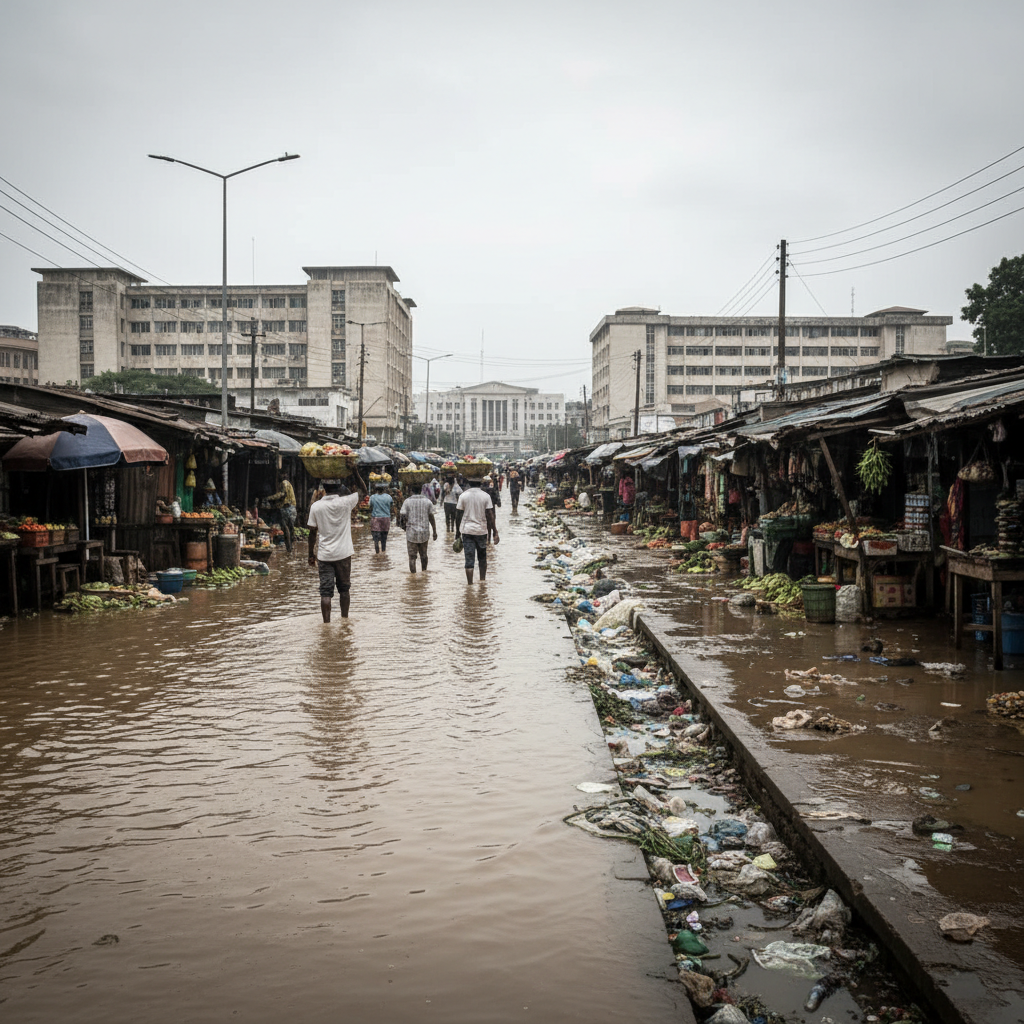
Environmental engineer Dr. Juliet Ohemeng-Ntiamoah states that Ghana's recurring flood crisis stems from structural and planning failures, not primarily from indiscriminate waste disposal. She argues the standard narrative focusing on poor sanitation overlooks deeper engineering deficiencies. Dr. Ohemeng-Ntiamoah suggests that current flood management strategies, such as routine clean-ups, are insufficient to address the systemic issues.
Dr. Ohemeng-Ntiamoah, speaking on JoyNews' Newsfile programme, cautioned against government officials overemphasizing waste disposal in flood discussions. She acknowledged the benefits of community clean-ups for social cohesion but stated they do not solve urban sanitation problems. The engineer indicated that Ghana must adopt evidence-based engineering approaches to tackle the root causes of urban flooding effectively. This perspective challenges the common public and governmental focus on citizen indiscipline as the main culprit.
This re-evaluation of flood causes is crucial for Ghana's urban development, especially given ongoing rapid urbanization across major cities like Accra. Effective flood management will support economic stability by protecting infrastructure and livelihoods. The country's vulnerability to climate change, with increasingly extreme weather events, further underscores the urgency of robust infrastructure solutions. Historically, annual flood disasters have resulted in significant economic losses and displacement, highlighting the need for sustainable remedies.
Dr. Ohemeng-Ntiamoah urged policymakers to redesign drainage infrastructure using international standards, specifically considering a 100-year flood. She explained a 100-year flood design means systems can manage flood events with a one percent annual probability. Many global cities have adopted this principle for climate-resilient urban planning. This approach helps cities withstand intense rainfall linked to climate change.
Furthermore, Dr. Ohemeng-Ntiamoah identified increasing stormwater runoff from rapid urbanization as a major flood contributor. She explained that urban development often replaces natural surfaces with concrete, preventing rainwater absorption. This creates a surge in surface water which overwhelms existing drainage systems. This transformation of urban landscapes puts immense pressure on inadequate infrastructure.
She also clarified that clogged drains are primarily caused by accumulated silt, not plastic waste. Dr. Ohemeng-Ntiamoah observed that sediment build-up is the initial obstruction in drainage channels. Once drains become silted, plastic bottles and other debris get trapped, worsening blockages. This crucial distinction highlights the need for effective sediment management in drainage maintenance.
Dr. Ohemeng-Ntiamoah also reframed the issue of constructions in flood-prone areas. She described it as a broader failure to protect wetlands, vital natural flood buffers. Wetlands absorb excess stormwater and reduce flood peaks. Their destruction through unregulated development weakens natural flood protection systems. The absence of sufficient detention points, areas for temporary stormwater storage, further exacerbates the problem.
Moving forward, decision-makers must prioritize significant investment in resilient drainage infrastructure across Ghana. This includes adopting advanced engineering designs and enforcing environmental protection laws to safeguard natural flood defenses. Markets will likely respond positively to credible, long-term flood mitigation plans. These plans would reduce economic disruptions caused by perennial flooding. Continuous monitoring of urban development and rainfall patterns will be essential to adapt these strategies effectively.