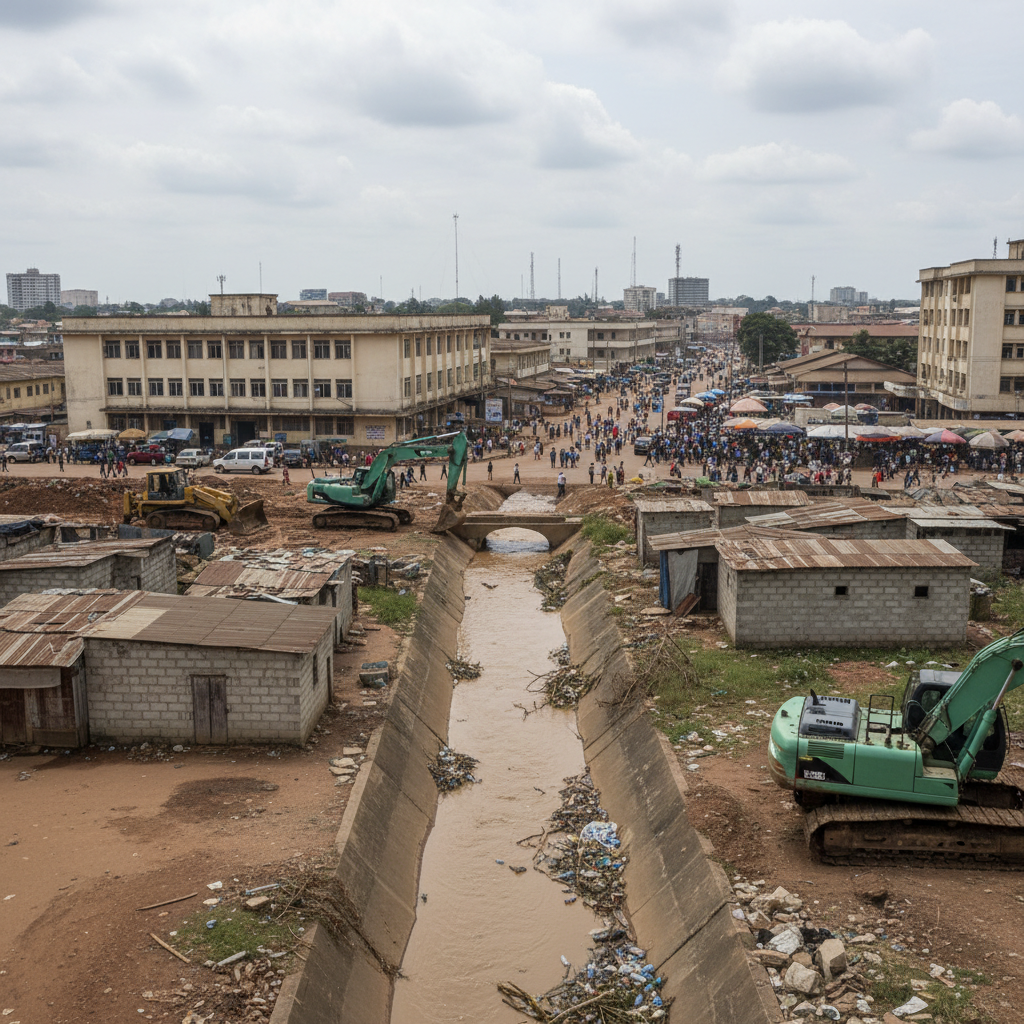
Ghana's disaster management strategy requires a continuous, long-term approach to flood mitigation. ED Andrews, an expert in operational governance and risk management, warns the country focuses too much on responding to disasters instead of preventing them. This reactive stance has exposed severe weaknesses in Ghana's planning and preparedness for recurring floods.
Andrews made these remarks during a JoyNews' Newsfile discussion on July 4, 2026. He highlighted that disaster management should begin with mitigation and preparedness, not after floods have already caused destruction. Ghana's own rainfall data indicates a predictable cycle of major flood events every 10 years, making the country’s lack of readiness particularly concerning.
This pattern suggests that state agencies and planners should anticipate and prepare for significant floods. The continuous cycle of major rainfall events, observed since 1990, offers clear predictability for risk management. For example, recent rainfall figures include 243.9mm in one hour on July 3, 2026, 212.8mm on June 3, 2026, 182.5mm on June 9, 2026, and 169.2mm on June 29, 2026. These figures demonstrate the scale of the threat Accra consistently faces.
ED Andrews said that disaster management involves a cycle starting with mitigation, then moving to preparedness. He stated, “disaster management is not about response; that is what we are seeing.” He further explained that true preparedness includes practical planning, simulations, and rescue drills, which Ghana currently lacks. Andrews believes the country has failed to prepare for mass casualty events, showing no evidence of coordinated flood response exercises involving state institutions like the National Disaster Management Organisation (NADMO) and the military.
The current situation, according to Andrews, constitutes a “massive failure” that leaves Ghana vulnerable to heavy rainfall. He criticises the absence of proper preparedness. He further points to the Greater Accra Resilient and Integrated Development (GARID) project, which he believes has strong ideas for flood reduction. Andrews stressed that the GARID project could be significantly effective if fully implemented, moving Ghana towards a more proactive flood management strategy. This shift from response to continuous mitigation and preparedness is crucial for protecting lives and property in Ghana.
Moving forward, decision-makers must prioritize long-term flood mitigation plans and invest in robust preparedness measures. This involves funding for infrastructure, urban planning reforms, and effective early warning systems. Regular simulations and inter-agency coordination meetings are also essential to ensure a swift and effective response to future flood events. The market, particularly the insurance sector and construction industry, will closely watch these developments. Accra’s resilience to climate change impacts hinges on these strategic improvements.