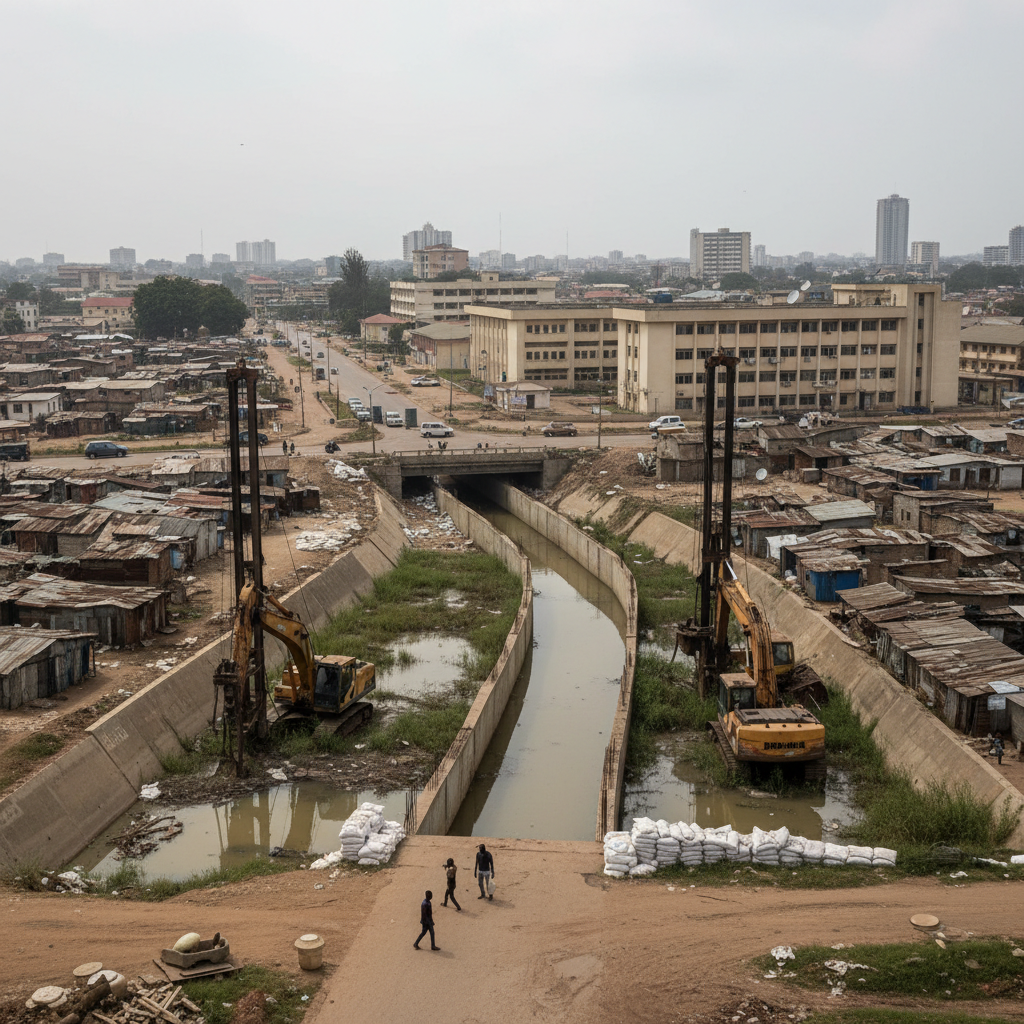
President John Mahama's government capped spending and delayed payments for infrastructure projects, including the crucial Greater Accra Resilient and Integrated Development (GARID) Project. These actions contributed to the project’s “moderately unsatisfactory” rating from the World Bank and severe flooding in Accra in June 2026. This strategy was part of a broader effort to reduce headline inflation from 23.5% in January 2025 to 3.8% by January 2026.
The GARID project, a $350 million World Bank-funded initiative, aimed to reduce flood risk and improve waste management in Greater Accra. Its implementation suffered due to fiscal measures from the Ministry of Finance during 2025. The World Bank noted that while funds were available, the government was slow to utilise them, impacting the project’s progress. This decision to delay essential infrastructure funding led to widespread displacement and property destruction during the June 2026 floods.
This situation highlights the ongoing challenge of balancing fiscal stability with critical development needs in Ghana. Previous administrations have also grappled with managing public expenditure while addressing infrastructural deficits. The Mahama government’s focus on inflation control was a central policy, echoing concerns from economic analysts about unsustainable public spending. However, the GARID project's stalled progress illustrates a potential downside to aggressive austerity measures, especially when high-impact projects are affected. Prioritising short-term fiscal gains over long-term resilience can lead to significant human and economic costs.
The World Bank’s May 2026 update explicitly stated, “The implementation of GARID has been significantly constrained by fiscal measures introduced by the Ministry of Finance during 2025.” The Finance Ministry even swept GHS 13.8 million from GARID’s account, delaying contractor payments. Although the government later returned the swept funds and processed some payments after World Bank pressure, the damage was done. The World Bank concluded that these actions “have not fully addressed the financing gap affecting works implementation.”
This episode suggests potential future debates about government spending priorities, particularly for projects backed by international donors. Policymakers must weigh the benefits of fiscal discipline against the urgent need for critical infrastructure development. Future governments and financial markets will watch closely for how such trade-offs are managed, especially regarding climate resilience initiatives. The incident underscores that macroeconomic stability encompasses not only inflation figures but also robust, functioning urban infrastructure.
The current government will need to re-evaluate its approach to funding infrastructure to avoid similar setbacks. Timely disbursement of funds, particularly for projects addressing public safety and environmental resilience, remains paramount. Ignoring these projects could lead to higher costs in the long run, both financially and socially. The events of June 2026 serve as a stark reminder of the human cost when critical infrastructure is neglected due to fiscal constraints. Effective governance requires a delicate balance between fiscal responsibility and proactive investment in national development.