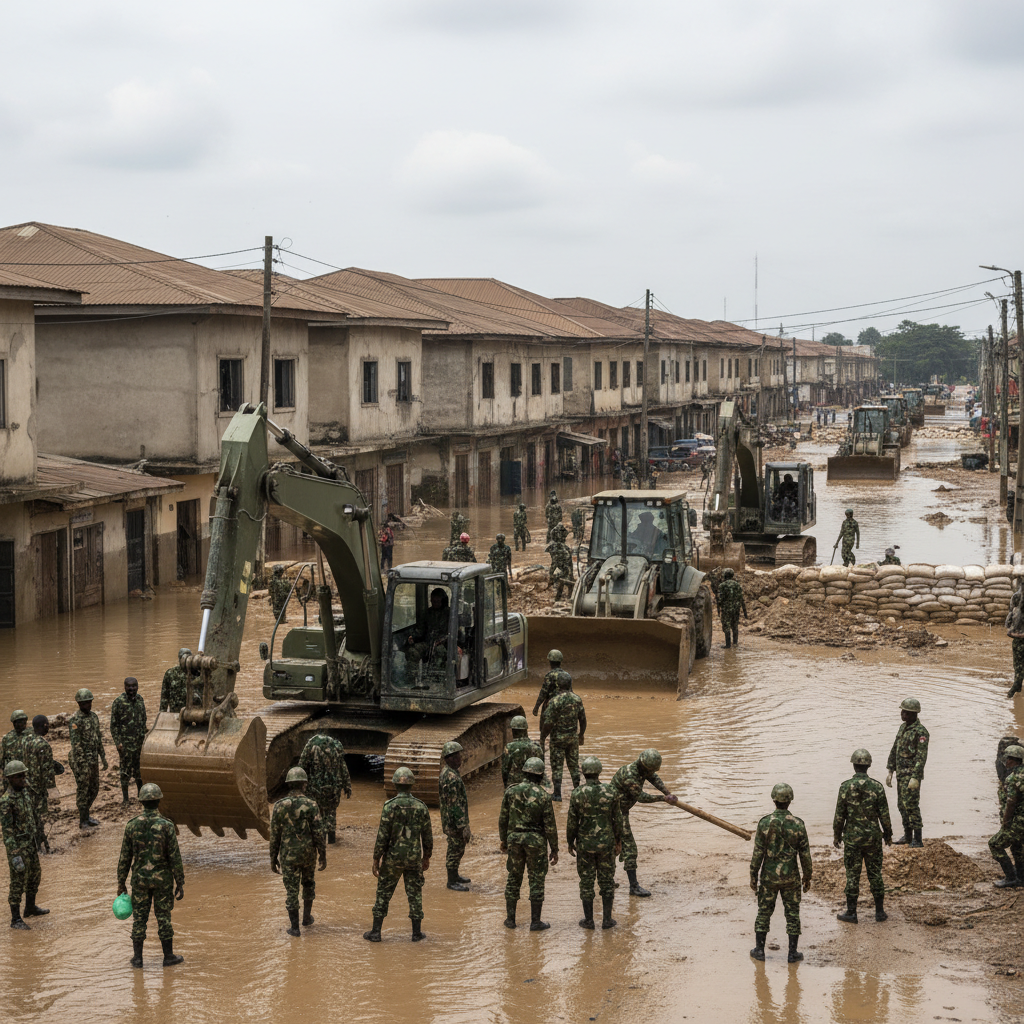
Ghana's Interior Minister, Muntaka Mohammed-Mubarak, announced the deployment of the Ghana Armed Forces’ 48 Engineers Regiment. They will undertake emergency drainage clearance and support flood recovery operations. This action follows recent severe floods in parts of the country.
Monday's heavy rainfall led to widespread flooding across Accra. It resulted in 12 reported deaths and significant property destruction. Many people also lost their livelihoods. The military deployment aims to speed up recovery efforts and restore affected communities quickly.
This intervention highlights the ongoing challenge Ghana faces with urban flooding. Seasonal rains often paralyze economic activities in the capital. Prior flood events, like those in 2015, have also led to substantial economic losses. The government's consistent challenge has been improving urban infrastructure and drainage systems. This deployment directly addresses the urgent need to mitigate disruption and protect lives.
Minister Mohammed-Mubarak stated, “We have engaged the Acting Defence Minister to deploy the 48 Engineers to undertake the necessary clearance works. This will help us respond quickly and avoid delays associated with procurement processes.” His statement to Parliament on Tuesday, June 30, emphasized the urgency of the situation. This strategy aims to accelerate the recovery process without bureaucratic hurdles.
The deployment of military engineers means faster clearance of blocked drains and debris. It will also involve essential engineering works in flood-hit areas. This decisive action should help restore normal economic activities and protect public health. The speed of this recovery will provide an important indicator of future disaster preparedness. Decision-makers and markets will watch the effectiveness of this military intervention.
Heavy rains are a recurring issue, with authorities describing them as among the heaviest recorded in Accra recently. The floods impacted several communities, including Alajo, Adabraka, Kaneshie, and parts of Tema. The government is mobilising all necessary resources for swift recovery. This effort intends to reduce the flood's impact on communities and infrastructure. Continuing investment in permanent flood solutions remains crucial for long-term urban resilience.
The deployment underscores a shift towards more direct government action in crisis management. It moves away from protracted bureaucratic procedures during emergencies. This approach seeks to minimize the economic fallout from natural disasters. Businesses and residents will keenly observe the immediate impact of these efforts. Effective drain clearing is vital for preventing future flood recurrences.
This emergency response also signals potential future policy considerations for urban planning. It highlights infrastructure development in flood-prone areas. The government's ability to coordinate various agencies will be key to long-term solutions. Such solutions extend beyond immediate military intervention. This event showcases the severe impact of climate events on Ghana's urban centers.