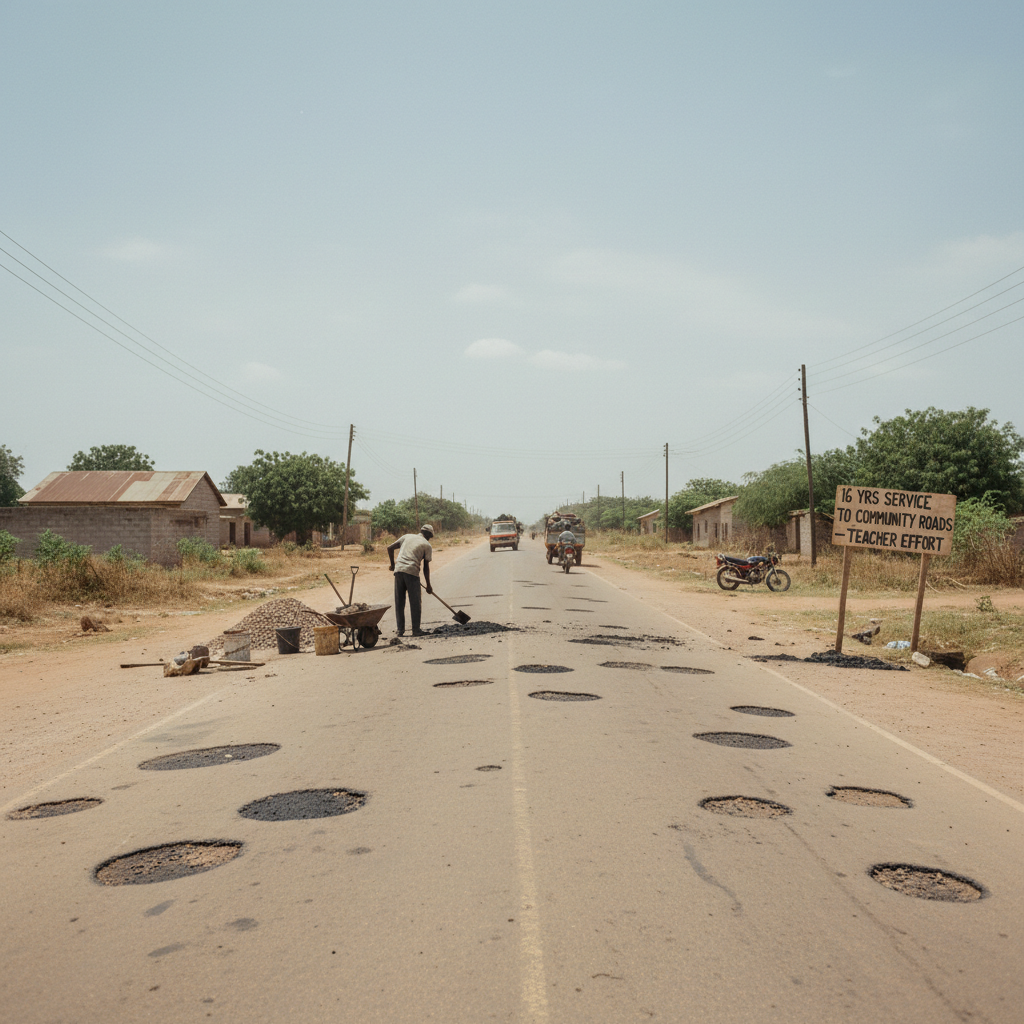
Samuel Badu Dauda, a teacher at Jachie-Pramso Senior High School, has spent 16 years voluntarily patching potholes on the Mankranso-Tepa-Sunyani road. He uses his own resources to prevent road accidents. This individual initiative underscores a persistent national challenge concerning road infrastructure and safety in Ghana.
Mr. Dauda began his efforts in 2009, filling potholes with gravel, sand, and laterite. He started after witnessing numerous preventable road crashes on the stretch. His decision stemmed from grief over lives lost due to accidents he believed were avoidable. He felt he could not remain inactive while poor road conditions endangered motorists.
This situation highlights Ghana's broader struggle with road safety and infrastructure maintenance. Studies on road traffic crashes in Ghana reveal that poor road conditions contribute to approximately 15.50% of all recorded accidents. The Police Motor Traffic and Transport Department (MTTD) and the National Road Safety Authority (NRSA) consistently classify pothole-related incidents under the larger category of “poor road conditions.” The deteriorating state of roads like the Mankranso-Tepa section forces drivers into hazardous maneuvers, such as swerving into oncoming lanes or losing control of their vehicles, particularly during rainy seasons when water obscures potholes.
Mr. Dauda stated that his actions are not meant to replace government agencies' responsibilities for road maintenance. He aims only to save lives while awaiting a permanent solution from the government and the Ghana Highway Authority. “When an accident occurs, kills people, and is attributed to potholes or bad roads, I feel sad for not taking responsibility,” he explained. His continuous work receives support from some drivers and road users, which he invests back into the project.
The long-term implications of inadequate road maintenance include continued economic losses from accidents and increased strain on healthcare services. It further impacts the efficiency of transportation networks, hindering economic activity and regional connectivity. Mr. Dauda’s actions prompt questions about the allocation of public funds for infrastructure and the effectiveness of road maintenance programs. Stakeholders, including the government and regulatory bodies, will need to respond with more proactive and sustainable solutions to address Ghana's road safety challenges. His appeal for civic responsibility urges Ghanaians to take action on community issues where they have the capacity.
This ongoing problem requires significant investment in infrastructure and more rigorous oversight of road construction and repair projects. Decision-makers face pressure to prioritize road safety to reduce accident fatalities and improve national development. The engagement of individuals like Mr. Dauda, though commendable, emphasizes the urgent need for systemic governmental solutions.