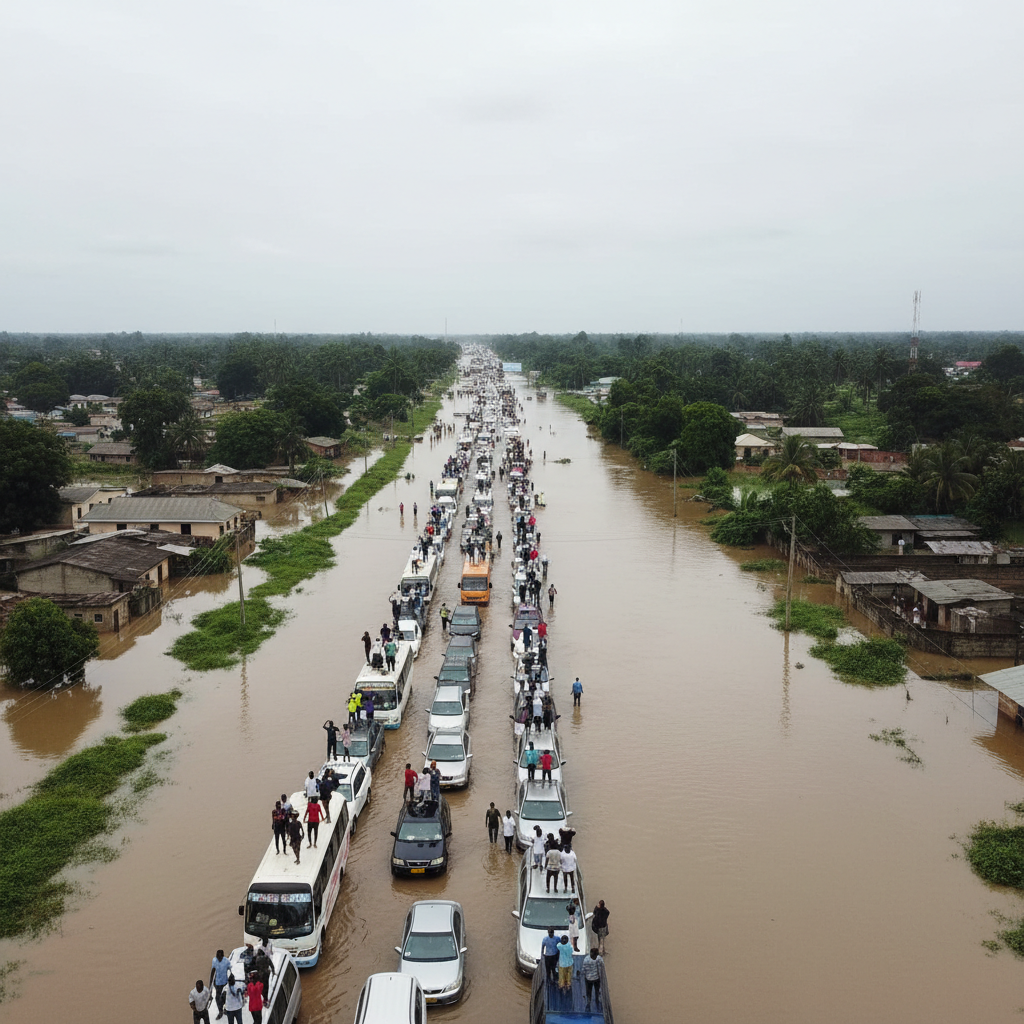
Floodwaters have cut off the main Winneba–Cape Coast highway, stranding hundreds of commuters. This major disruption has brought movement along the busy corridor to a complete standstill.
The situation has left travellers on both sides of the road unable to cross. Rising water levels continue to submerge sections of the road. This effectively paralyses traffic flow along this important route.
This incident significantly impacts Ghana's domestic trade and transportation network. The Winneba-Cape Coast highway is a critical artery connecting the Greater Accra Region to the Central Region and beyond. Disruptions like this delay the movement of goods and people, potentially affecting supply chains and local economies. Recent data from the Ghana Statistical Service indicates that road transport accounts for over 90% of internal freight and passenger movement, highlighting the economic vulnerability to such closures.
The Meteorological Department stated that rain is expected to continue until the afternoon of Monday, June 29. Furthermore, indications suggest additional rainfall is moving in from the Benin–Togo coastal corridor. This forecast signals a potential for prolonged disruption if water levels do not recede swiftly.
Policymakers will closely monitor the situation for its economic fallout. Extended closures could lead to increased transport costs and delays in manufacturing and retail sectors. Businesses reliant on the free flow of traffic along this route face immediate challenges. Emergency services will likely prioritise clearing the road to restore normal economic activity.
The economic impact of road closures due to flooding is not new to Ghana. For example, similar incidents have sometimes forced significant rerouting or extended journey times, leading to financial losses for transporters and traders. Ensuring resilient infrastructure against such weather events remains a key development challenge. The National Disaster Management Organisation (NADMO) often issues warnings during such conditions, advising against travel through floodwaters. The government's response will indicate its preparedness for increasing climate-related infrastructure challenges.
The disruption also affects regional connectivity beyond Ghana's borders. The coastal highway forms part of a larger West African corridor, facilitating trade with neighbouring countries. Delays on this route can have ripple effects across the sub-region. Swift action to clear the road and manage traffic will be crucial to minimise broader economic consequences.