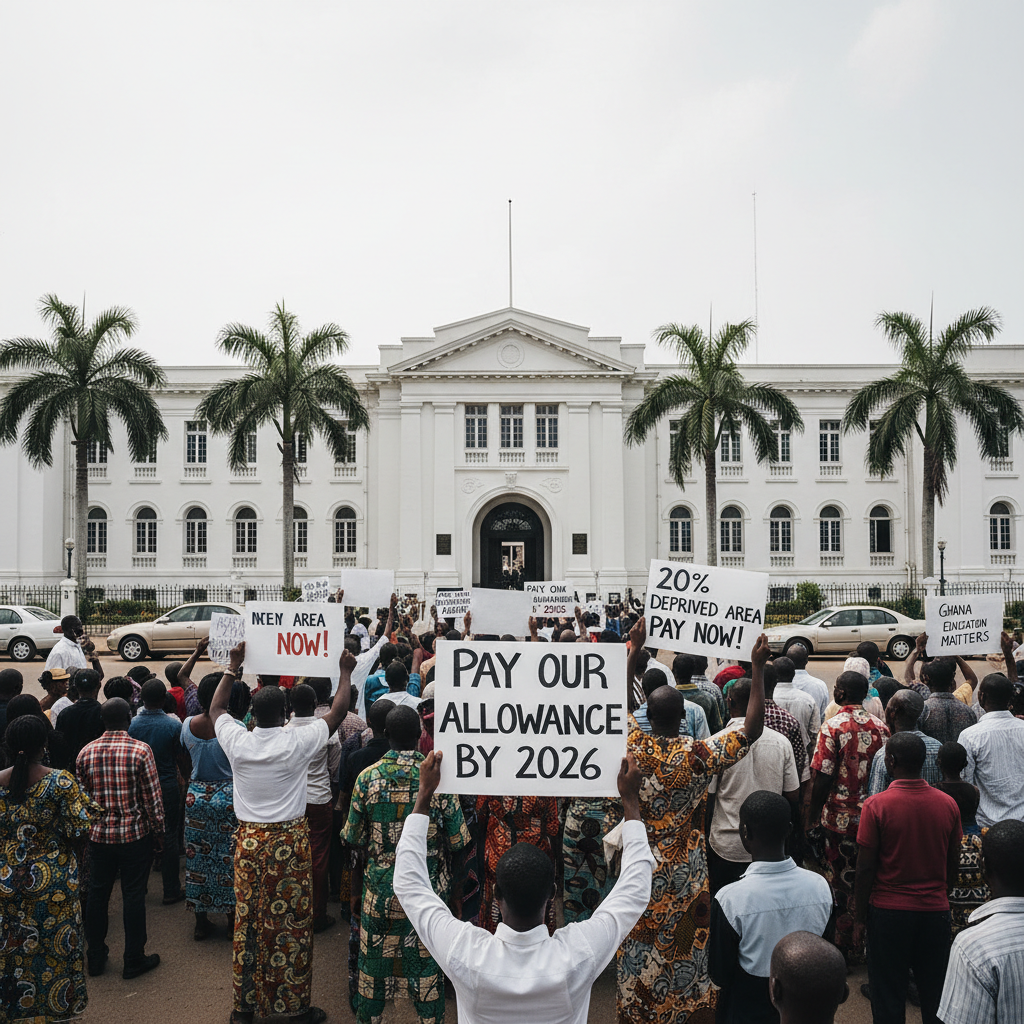
Ghana's teacher unions, the National Association of Graduate Teachers (NAGRAT) and the Pre-Tertiary Education Workers Union (PTTU), have called on the government to start paying a 20% Deprived Area Allowance by September 2026. This payment would directly support over 100,000 teachers currently serving in rural and deprived communities across the country.
These teachers face significant challenges, including difficult living conditions and inadequate teaching facilities. The proposed allowance aims to provide financial encouragement and alleviate some of the burdens associated with working in these less-resourced areas. It seeks to recognize the essential role these educators play in ensuring access to education in every part of Ghana.
The push for this allowance fits into Ghana's ongoing efforts to improve its education sector and achieve equitable development. Data from the Ghana Education Service indicates a persistent disparity in teacher distribution, with many qualified professionals preferring urban areas. Introducing specific incentives like the Deprived Area Allowance could help balance this distribution. This initiative aligns with past government policies designed to boost the welfare of public sector workers. Such policies often focus on retaining skilled individuals in critical sectors, like education, especially in underserved regions.
NAGRAT and PTTU issued this joint call, emphasizing the urgent need to address the welfare of teachers in deprived areas. They highlighted that over one-third of Ghana's more than 300,000 teachers work under these challenging circumstances. This direct intervention is seen as crucial for both teacher morale and the quality of education in these communities.
The government's response to this demand will be closely watched by teacher unions and the broader public. Implementing such an allowance could have significant financial implications for the national budget, requiring careful planning and allocation of resources. Future negotiations between the teacher unions and the government will likely focus on the feasibility and modalities of this payment. The decision will influence teacher retention rates in rural areas and impact educational outcomes for thousands of Ghanaian children.