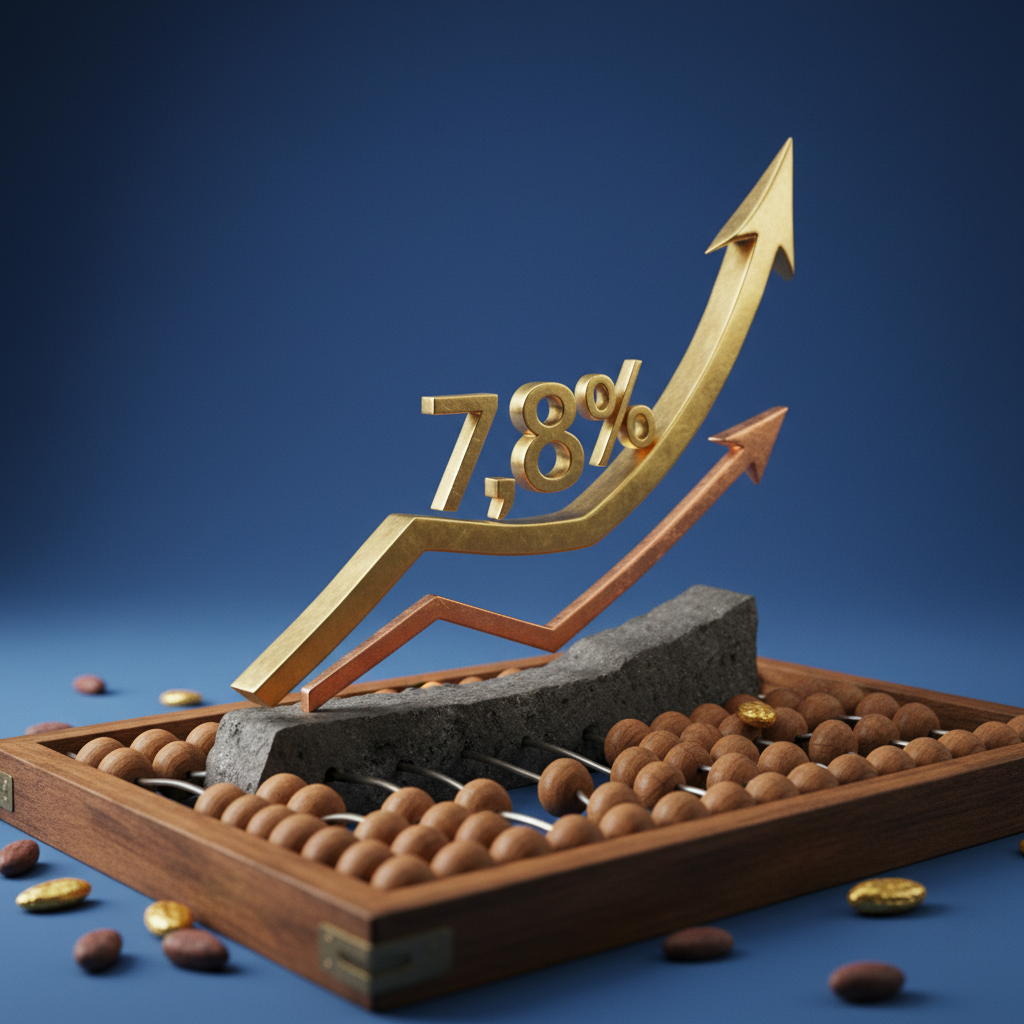
Fitch Solutions has significantly raised its forecast for Ghana’s 2026 current account surplus to 7.8% of Gross Domestic Product (GDP). This marks a substantial increase from its earlier projection of 5.2%.
This upward revision follows a stronger-than-expected trade performance in the first half of 2026. Ghana recorded a merchandise trade surplus of US$4.3 billion during this period. This figure is notably higher than the US$700 million average seen in the first halves of 2016 to 2025.
The improved trade balance reflects Ghana's strengthened external financial position. A current account surplus means the country is earning more from exports and investments abroad than it is spending on imports and foreign investments. This trend is crucial for Ghana's economic stability and its ability to manage external debts. The nation has been working to stabilize its economy after recent challenges, including high inflation and currency depreciation. A healthy current account balance helps to support the Ghana cedi and attract foreign investment.
Fitch Solutions, the research arm of global ratings agency Fitch Ratings, confirmed the revised forecast. The firm stated, “As such, we have revised up our 2026 current account surplus forecast to 7.8% of GDP, from 5.2% previously.” This direct statement underscores the confidence in Ghana’s export-driven recovery.
The stronger external position has positive implications for Ghana’s economic outlook. A larger current account surplus can reduce pressure on the Ghana cedi and improve the government's ability to service its foreign debts. It also signals greater resilience against external economic shocks. Decision-makers will closely monitor commodity prices, especially for gold and crude oil, as these remain critical drivers of Ghana's export earnings. Investors will also watch for sustained fiscal discipline and structural reforms to cement these gains.
The robust performance was primarily driven by strong gold exports and increasing crude oil shipments. Gold remains a major source of export earnings for Ghana, one of Africa's largest gold producers. Rising global demand and prices for these commodities have significantly boosted Ghana's export revenues. The country's mining sector, particularly gold, continues to play a pivotal role in its economic health. Increased oil production and favourable international prices also contributed to the positive trade balance. These factors combined to create a substantial merchandise trade surplus, exceeding previous expectations.
A current account surplus indicates that Ghana is a net lender to the rest of the world, or at least that its foreign currency inflows exceed its outflows. This can lead to an accumulation of foreign exchange reserves, providing a buffer against future economic uncertainties. It also suggests that the country is becoming less reliant on foreign borrowing to finance its economic activities. This positive development could improve Ghana's credit ratings in the future, potentially lowering borrowing costs for the government and businesses. Such an improvement would make Ghana a more attractive destination for foreign direct investment.
While the outlook for 2026 is strong, Fitch Solutions expects the current account surplus to narrow in 2027. Despite this anticipated narrowing, the firm projects the balance to remain sizeable. This suggests that while the peak performance might be in 2026, Ghana's external position is expected to remain healthy in the medium term. The continued importance of commodity exports to Ghana’s external position is evident. Diversification of the export base beyond gold and oil remains a long-term economic goal to ensure more sustainable growth. However, for now, these key commodities are providing a significant boost to the nation's finances.