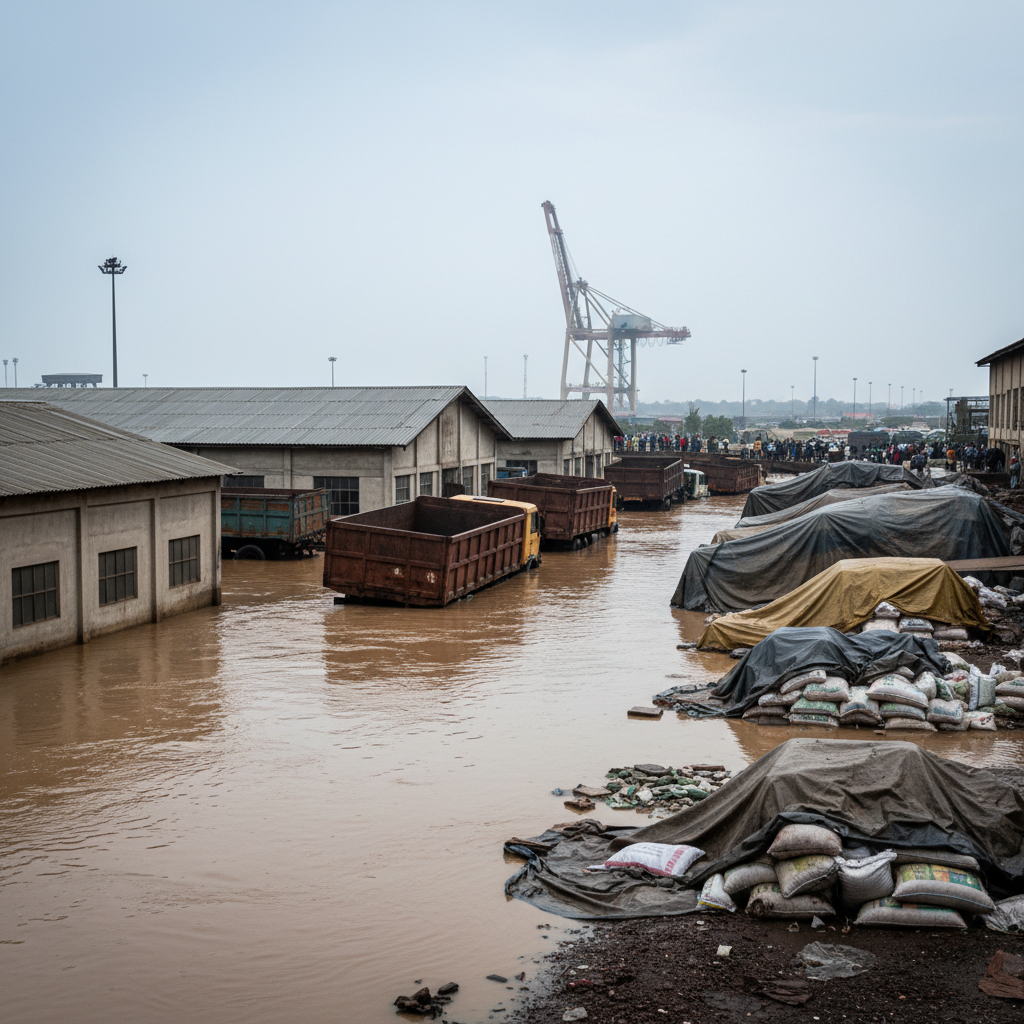
Ghana's persistent flood crisis costs its economy millions of cedis annually through lost productivity, severe traffic congestion, and widespread business disruptions. Professor Peter Quartey, a prominent economist, has warned that these recurring events are silently draining the nation's financial resources.
These comments follow devastating floods that struck Accra, parts of the Central Region, and other communities. The recent floods tragically killed 18 people and destroyed properties valued at millions of cedis. Professor Quartey highlighted that repeated investments in drainage and sanitation projects yield poor value, with up to 90% of the annual GHS 750 million to GHS 780 million spent on the Water, Sanitation, and Hygiene (WASH) programme coming from donor funds.
This ongoing issue fits into a broader national challenge of infrastructure development and public finance efficiency in Ghana. The country faces continuous pressure to improve urban planning and waste management systems. Data consistently shows that inadequate drainage and poor sanitation contribute significantly to urban flooding, especially in major cities like Accra. Past governments have initiated various flood control measures, but their effectiveness has been frequently questioned due to poor execution and weak oversight.
Speaking on Joy News’ PM Express Business Edition, Professor Quartey expressed deep concern. He stated, “We are not investing our money efficiently or properly.” He cited an example near West Hills Mall junction on the Weija to Kasoa Road, where storm drains were constructed with substantial investment but quickly became choked due to poor engineering. This outcome renders the investment ineffective.
The implications of this inaction are far-reaching. Businesses face significant losses from disrupted supply chains and reduced working hours. Workers spend excessive time in traffic, leading to exhaustion and decreased output. Professor Quartey also noted the ecological and psychological toll on citizens. Decision-makers must urgently re-evaluate investment strategies in infrastructure and urban development. The market will be watching for concrete steps towards sustainable flood mitigation and efficient resource allocation. Stronger enforcement of sanitation laws and improved waste management are crucial for Ghana's economic stability.
Professor Quartey also criticized the neglect of waste management systems and the weak enforcement of sanitation laws. He mentioned Zoomlion's contract to sweep streets had not been renewed for eight months, highlighting a broader systemic failure. This neglect contributes to blocked waterways and exacerbates flooding. He suggested that stronger law enforcement, possibly involving retired military officers in local assemblies, could improve compliance.
The economic impact of flooding extends to every sector. Transport delays affect the movement of goods and services, increasing operational costs for businesses. Reduced consumer spending during flood events further dampens economic activity. The cumulative effect of these losses poses a significant threat to Ghana's growth targets and overall economic resilience. Effective flood control is not just an environmental issue; it is a critical economic imperative.