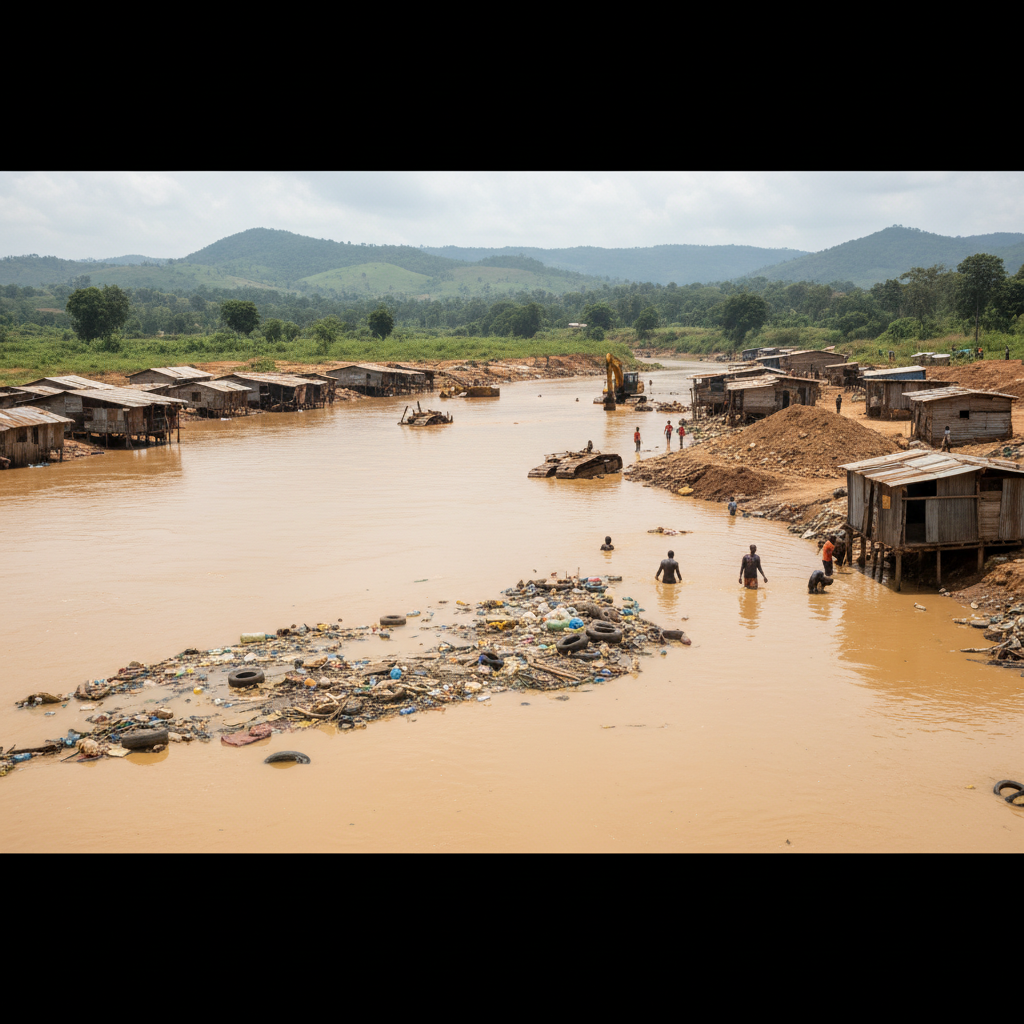
Ghana’s protracted struggle against illegal gold mining, locally known as “galamsey”, has intensified, resulting in over 60% of the country’s water bodies being polluted. This widespread contamination impacts drinking water supply and poses serious environmental and health risks across various regions.
The pollution stems directly from unbridled mining activities, which discharge high levels of mud and toxic chemicals into rivers. Operations by the Ghana Water Company have faced repeated shutdowns as their treatment plants, like those in Daboase and Kyebi, cannot process water with turbidity levels exceeding 10,000 NTU, significantly above their design capacity. This alarming trend has prompted warnings that Ghana may need to import drinking water by 2030 if conditions do not improve.
This persistent issue highlights a critical failure in successive governments' efforts to curb illegal mining. Despite two presidents pledging their presidencies to end galamsey and numerous task forces deployed, the problem continues to grow. The economic implications are severe, affecting public health, agricultural output, and forest reserves. Global Forest Watch reported in 2018 that Ghana experienced the fastest-rising rate of primary forest loss worldwide, a 60% increase in one year, with illegal mining being a major contributor.
The Managing Director of the Ghana Water Company publicly warned in 2024 about the dire state of water bodies across the country. “If the trend continued, Ghana could be importing drinking water by 2030,” the managing director stated, underscoring the urgency of the situation. Clinicians in the Western Region have also reported increasing cases of kidney disease and birth anomalies in mining communities, with the Ghana Medical Association repeatedly demanding government action.
Looking ahead, the ongoing failure to control galamsey will continue to strain public health services and natural resources. Decision-makers must find more effective strategies to enforce mining regulations and protect vital water sources. The long-term costs to Ghana’s economy, environment, and citizen well-being demand immediate and comprehensive solutions beyond current approaches. The gold sector, both legal and illegal, contributes significantly to export revenue, making robust regulation critical.
The financial scale of gold mining complicates regulatory efforts. Gold exports generated GHS 11.6 billion in revenue for Ghana in 2024. The small-scale mining sector now accounts for roughly two-fifths of Ghana’s total gold output of approximately 4.8 million ounces, according to the Ghana Chamber of Mines. This indicates a complex interplay between economic benefits and environmental devastation.
The historical context of galamsey shows it developed significantly after the Rawlings government legalised small-scale mining for citizens in 1989. This policy aimed to formalize the activity but inadvertently led to its expansion. The industrialisation of galamsey occurred between 2008 and 2013, notably with the influx of approximately 50,000 Chinese migrants who introduced heavy machinery. This mechanisation transformed pick-and-shovel digging into large-scale strip-mining operations.
The scale of environmental damage is extensive, affecting far more than just water. COCOBOD, Ghana’s state cocoa regulator, estimates that around 19,000 hectares of cocoa farms have been destroyed or converted for mining activities. This land loss contributed to the 2023/24 cocoa harvest being the worst in over two decades, impacting a key agricultural export and source of livelihood for many Ghanaians. Furthermore, 44 of Ghana’s 288 forest reserves have suffered degradation, with nine now deemed “red zones” due to armed gangs.