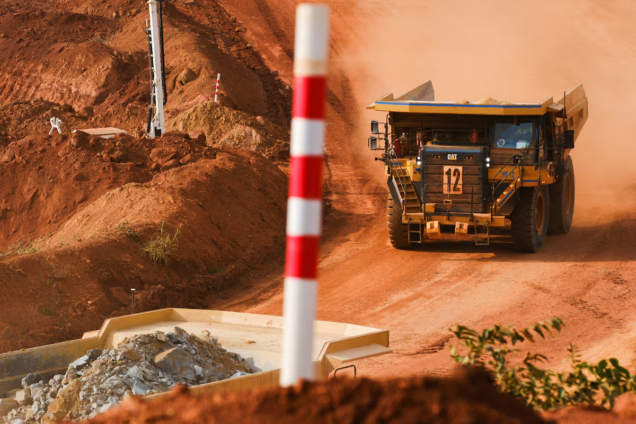
Ghana’s government will acquire 30% of the gold output from large-scale mining companies starting July 1, 2026. This strategic acquisition aims to bolster the nation's foreign currency reserves and develop its local gold refining capacity.
The government announced this agreement with major miners on Thursday. The state entity, Gold Board (GoldBod), will purchase the gold in dore form. These transactions will occur at a 0.55% discount to the central bank's reference rate and will be settled in Ghanaian cedis.
This initiative builds upon Ghana’s ongoing gold purchase programme launched in 2022. That programme initially secured 20% of annual output from miners for the central bank. Bank of Ghana data indicates that bullion holdings reached 19.2 metric tons by February 2026.
Reuters reported on the government's plans to revamp the gold purchase programme in February. The new target is to accumulate up to 157 tons of gold by 2028, representing 15 months of import cover. Negotiations with major miners, including Newmont, Gold Fields, and China’s Zijin, facilitated this increased commitment.
Increased gold reserves provide crucial protection against external economic shocks. They also offer a means to generate foreign currency, specifically US dollars, through international sales. Central banks globally are increasing their gold stockpiles due to high prices, which enhance its appeal as a safe-haven asset.
The arrangement also directly supports Ghana's ambition to secure London Bullion Market Association (LBMA) accreditation for at least one domestic refinery by 2030. Achieving LBMA accreditation would significantly enhance Ghana's role in the global gold market. It would allow locally refined gold to meet international quality standards.
Gold from this scheme will undergo local refining before being sent to an LBMA-accredited facility for final melting and stamping. Afterward, it will be added to the nation’s central bank reserves. GoldBod already procures the entire gold output from Ghana’s artisanal miners, demonstrating its existing capacity in the sector.
This expanded gold purchase plan signals Ghana's proactive approach to macroeconomic stability. It also underscores its commitment to developing value addition in the mining sector. The government's actions will likely be closely watched by investors and market analysts. They will observe the impact on Ghana's foreign exchange stability and local industrial growth. Success in achieving LBMA accreditation by 2030 could significantly elevate Ghana's position in global precious metals trading.