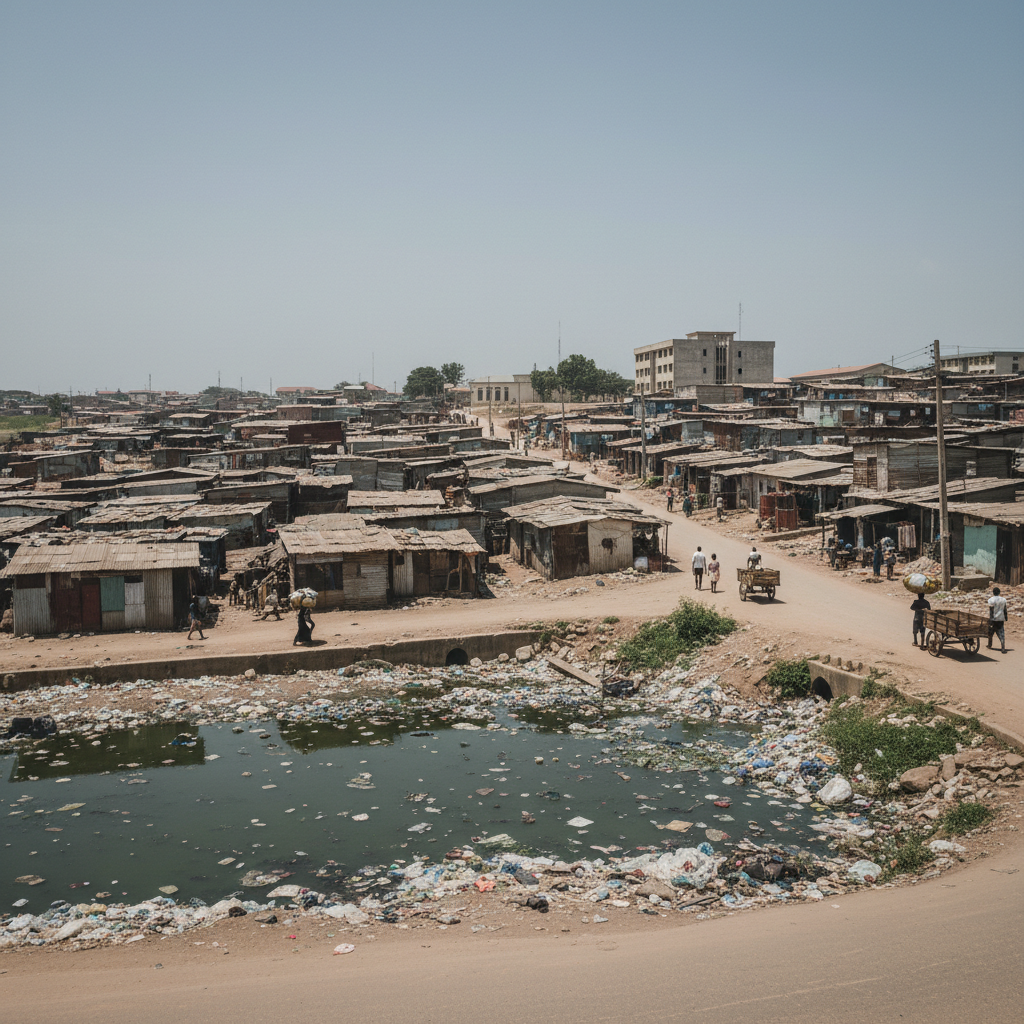
Ghana loses over GHS 6.2 billion annually due to poor waste management and sanitation. This finding comes from a new study by the Institute of Statistical, Social and Economic Research (ISSER) at the University of Ghana.
Preventable diseases, such as malaria, cholera, and typhoid, are major drivers of these economic losses. These illnesses lead to billions in healthcare expenditure, lost productivity, and thousands of avoidable deaths. Metropolitan, Municipal and District Assemblies (MMDAs) collectively spend only GHS 180.2 million on waste management and sanitation annually. This spending is far less than the economic costs of poor sanitation.
This substantial economic drain underscores a critical challenge to Ghana's national development agenda. The annual health and productivity losses linked to inadequate sanitation represent a significant portion of the country's economic output. The World Bank previously estimated that poor sanitation alone costs Ghana about US$290 million, or roughly 1.6 per cent of its national income, each year. Increased urbanisation and population growth continue to strain existing, inadequate waste management systems, further exacerbating the situation.
The ISSER report, titled "Waste or Wealth? The Economic Returns to Sanitation Investment in Ghana," states that "insufficient waste and sanitation management in Ghana is not merely a social and environmental concern, but also a significant economic burden." Researchers estimate these diseases result in 31.9 million lost work and school days every year. They also contribute to approximately 107,222 premature deaths annually. Direct medical treatment costs Ghana GHS 5.58 billion each year, with an additional GHS 650 million lost from absenteeism and reduced productivity due to illness.
Ghana’s decision-makers must consider increased investment in sanitation infrastructure as a strategic imperative. Such investments could significantly reduce disease, improve productivity, and enhance economic growth. The report concludes that strategic investment would improve public health and strengthen human capital, create jobs, and stimulate innovation in the circular economy. This would ultimately improve the quality of life for all Ghanaians, providing substantial economic returns.