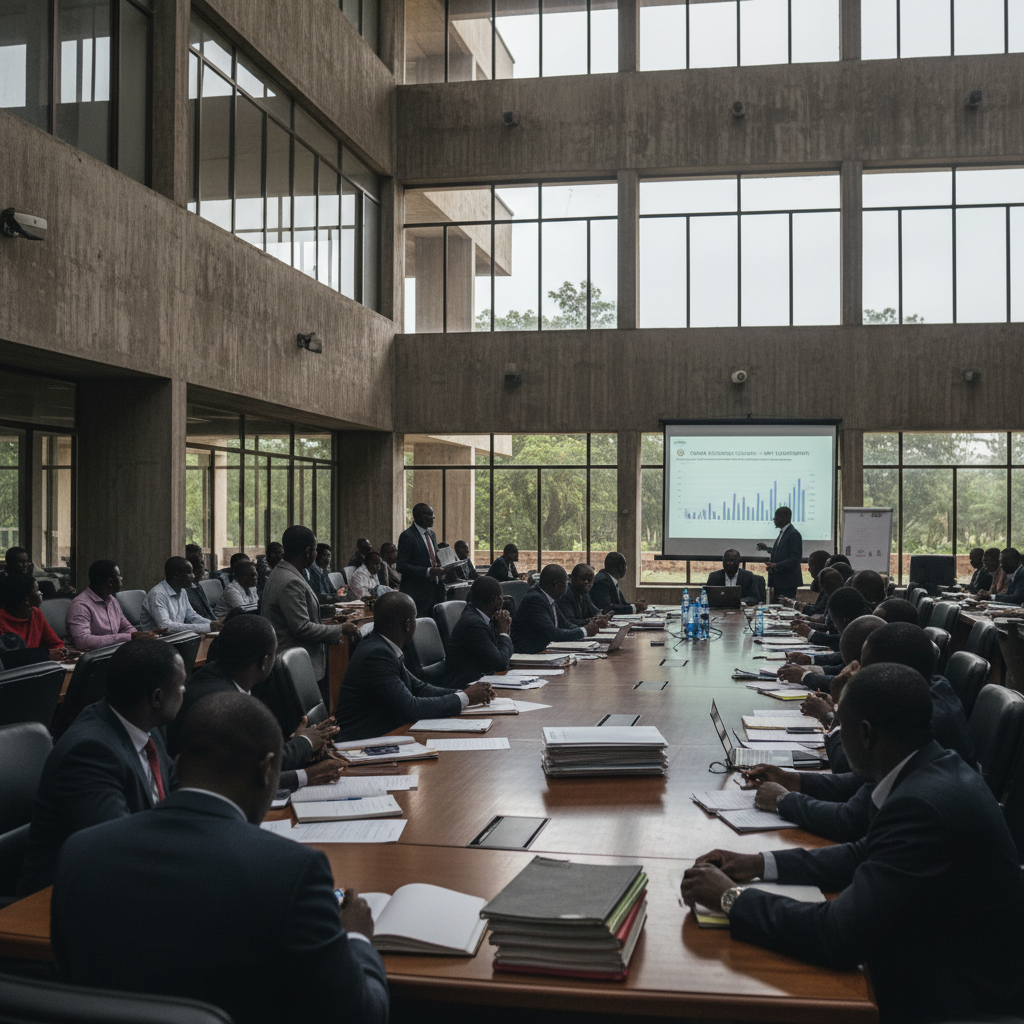
A delegation from the International Monetary Fund (IMF) recently met with the Economics Department at Kwame Nkrumah University of Science and Technology (KNUST). The meeting centered on Ghana’s current IMF-supported economic program. It also covered the broader Regional Economic Outlook for Sub-Saharan Africa.
The discussions included a detailed presentation on the economic outlook for the Sub-Saharan African region. Participants also provided insights into Ghana's specific economic reform efforts. This engagement underscores the IMF's commitment to involving local stakeholders in economic policy dialogues.
This marks a continuation of the IMF's close involvement in Ghana's economic recovery efforts. Ghana secured a GHS 39.15 billion (approximately USD 3 billion) Extended Credit Facility (ECF) from the IMF in May 2023. The program aims to restore macroeconomic stability and debt sustainability. It also seeks to foster higher and more inclusive growth. Successful program reviews are crucial for continued financial disbursements. These funds are vital for supporting Ghana's fiscal position and exchange rate stability.
Official statements from the IMF typically emphasize collaboration with key national institutions. While direct quotes from this specific meeting are unavailable, IMF missions regularly engage with central banks, finance ministries, and academic bodies. These interactions ensure a comprehensive understanding of local economic conditions. They also allow for sharing of technical expertise and policy recommendations.
The outcomes of such dialogues could influence future policy considerations within Ghana's IMF-supported program. Policy makers and financial markets will watch for signals regarding program implementation progress. They will also look for any adjustments based on domestic and regional economic developments. Continued engagement with technical experts like those at KNUST provides valuable data and perspectives for the ongoing program.
This collaboration is significant for bridging the gap between theoretical economic models and practical policy implementation. Academic inputs can offer critical perspectives on the social impacts of economic adjustments. They can also contribute to long-term sustainable growth strategies. The discussions reinforce the need for data-driven policies to navigate complex economic challenges. Transparency and broad participation in these dialogues are essential for sustained economic progress.
Ghana’s economic program is crucial for regaining investor confidence and reducing inflation. The latest inflation rate, though declining, remains a key concern for households and businesses. The government's fiscal consolidation efforts, supported by the IMF, are expected to stabilize public finances. This stability is essential for attracting foreign direct investment and creating jobs.