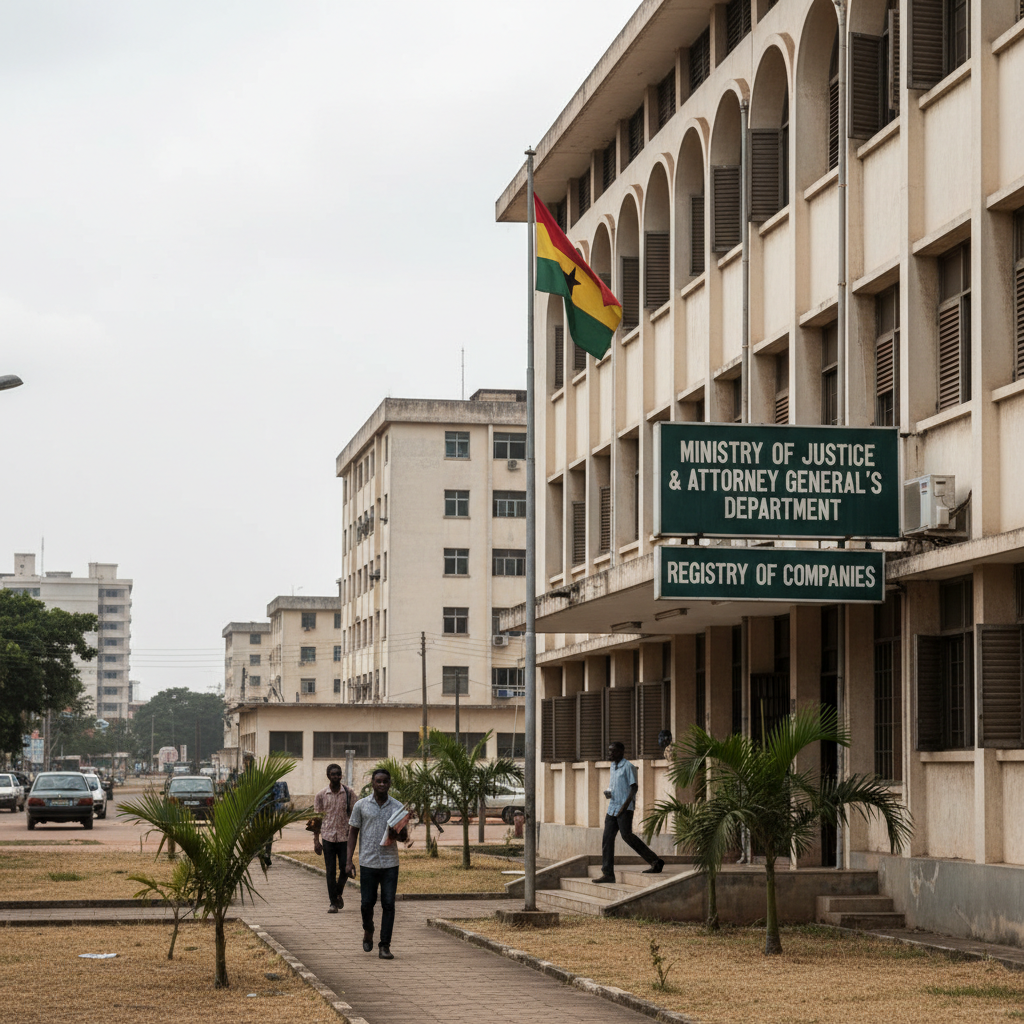
Ghana's Attorney General has asked the Accra High Court to revoke a travel order granted to Hanan Abdul-Wahab, the former Chief Executive Officer of the National Food Buffer Stock Company (NAFCO). The Attorney General alleges Mr. Abdul-Wahab used an online booking from UK health and beauty retailer Boots, not a confirmed medical appointment, to secure permission to travel abroad.
Mr. Abdul-Wahab faces charges of stealing and causing financial loss to the state. These charges involve more than GHS 70 million. The Attorney General argues that relying on a retailer's online booking instead of a specialist medical appointment raises serious concerns. This action affects the judicial process and public trust in legal proceedings.
This case highlights the government's efforts to combat corruption and protect public funds. Previous cases, such as the EOCO recovering GHS 337.4 million in 2025, show a clear trend. The Attorney General's office is actively pursuing financial crimes, impacting the nation's economic stability. High-profile cases like this also reflect broader concerns about accountability among public officials in Ghana.
An affidavit sworn by Radiatu Abdulai, an Assistant Staff Officer at the Economic and Organised Crime Office (EOCO), supports the Attorney General's application. The affidavit states, “A1 could not present to this Court a valid medical appointment from a medical officer in London, but rather a British health and beauty retailer and pharmacy chain online booking.” The Attorney General also contends Mr. Abdul-Wahab's medical reports, presented to the court, did not show any urgent medical condition. These reports suggested his ailments were allergies and catarrh, treatable with anti-allergic eye drops.
This development could lead to Mr. Abdul-Wahab being prevented from leaving Ghana. It also signals increased scrutiny by the courts on evidence presented for travel requests in ongoing criminal cases. The outcome will influence perceptions of government's commitment to fighting financial malfeasance. Decision-makers and the public will closely watch the court's ruling on July 16, 2026.
The Attorney General believes Mr. Abdul-Wahab's conduct has increased his flight risk. This case may set a precedent for how courts evaluate medical evidence in future travel applications. It underscores the importance of credible documentation in legal matters. This could also prompt further investigations into how the initial travel order was granted.