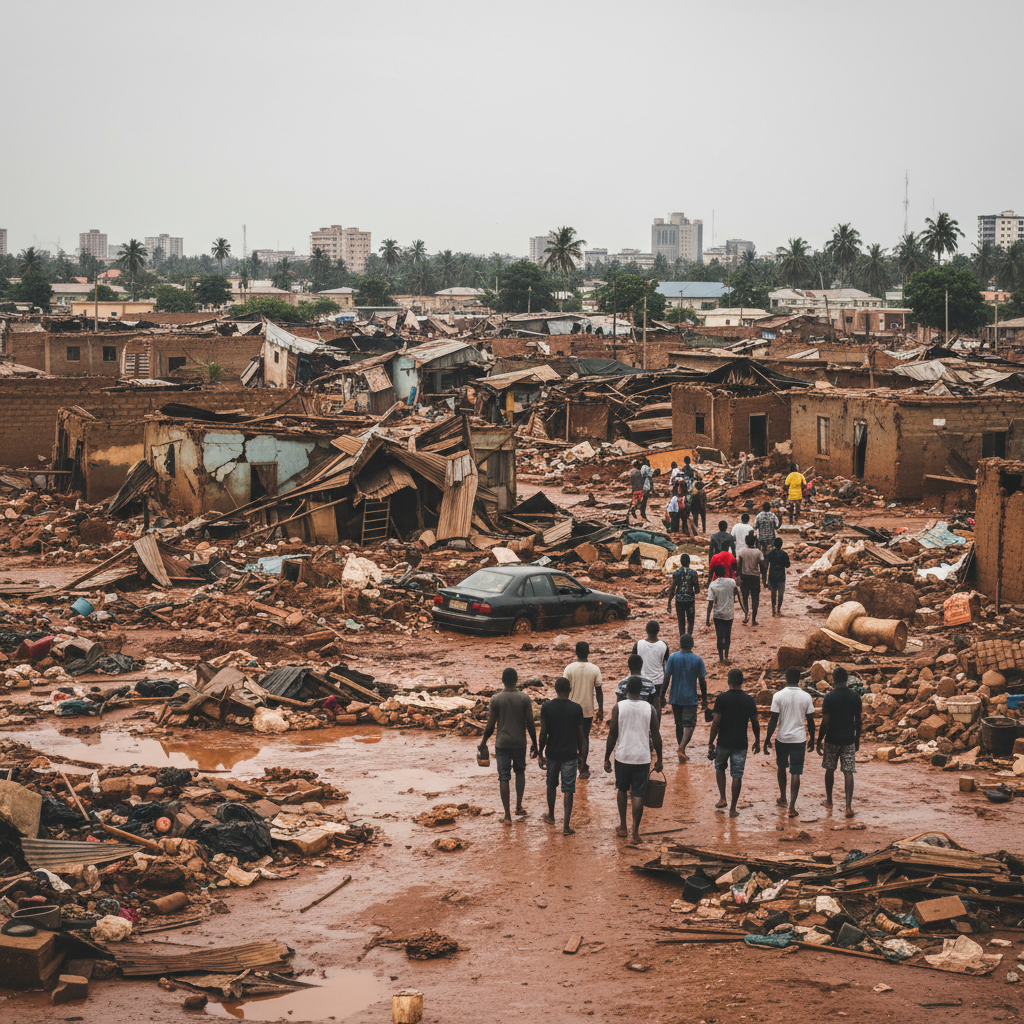
Torrential rains in Cape Coast, Central Region, caused 18 deaths and the collapse of 58 houses. Interior Minister Muntaka Mohammed-Mubarak reported these figures to Parliament on Tuesday, June 30, following the disaster two weeks prior. This event highlights the significant human and structural cost of extreme weather in Ghana.
The destruction occurred largely because of the age and type of houses in affected communities. Many structures, some over 100 years old, were made of mud and brick. These older buildings could not withstand prolonged heavy downpours. The floods also forced thousands of residents to abandon their homes.
This incident fits into a broader national challenge of flood management. Ghana has experienced increasing instances of severe flooding, particularly during rainy seasons. Recent floods in Greater Accra displaced thousands and disrupted economic activities. The Central Region disaster adds to the growing list of such events across the country.
Minister Mohammed-Mubarak provided the update to Parliament. He stated, “In the Central Region, Mr. Speaker, in the last two weeks, we had 58 houses that collapsed.” The Minister also added, “Unfortunately, there too we lost 18 individuals as per the report that was sent to me in Cape Coast.” He extended condolences from President John Dramani Mahama to affected families.
The government's response and disaster preparedness will face continued scrutiny. Decision-makers must address the resilience of infrastructure, especially older buildings, against future extreme weather events. Markets and local economies will respond to the disruptions caused by these recurring floods, potentially impacting businesses and livelihoods. The National Disaster Management Organisation (NADMO) and other emergency agencies will likely continue search-and-rescue operations and humanitarian aid efforts in affected areas.
The increasing frequency and intensity of floods demand long-term strategies for urban planning and public safety. Infrastructure development must include robust flood mitigation measures. Proper drainage systems and durable housing construction are vital to protect lives and property. Without these interventions, Ghana risks further economic disruption and loss of life from similar weather events. The government needs to invest in resilient infrastructure and early warning systems across all regions.
The Greater Accra floods, reported by the Interior Minister, affected 7,761 households and 3,882 individuals already. These events collectively put immense pressure on public finances for relief and reconstruction. The economic impact includes damage to businesses, loss of productivity, and increased healthcare costs. Continuous monitoring of weather patterns and proactive measures are essential to mitigate future disasters.