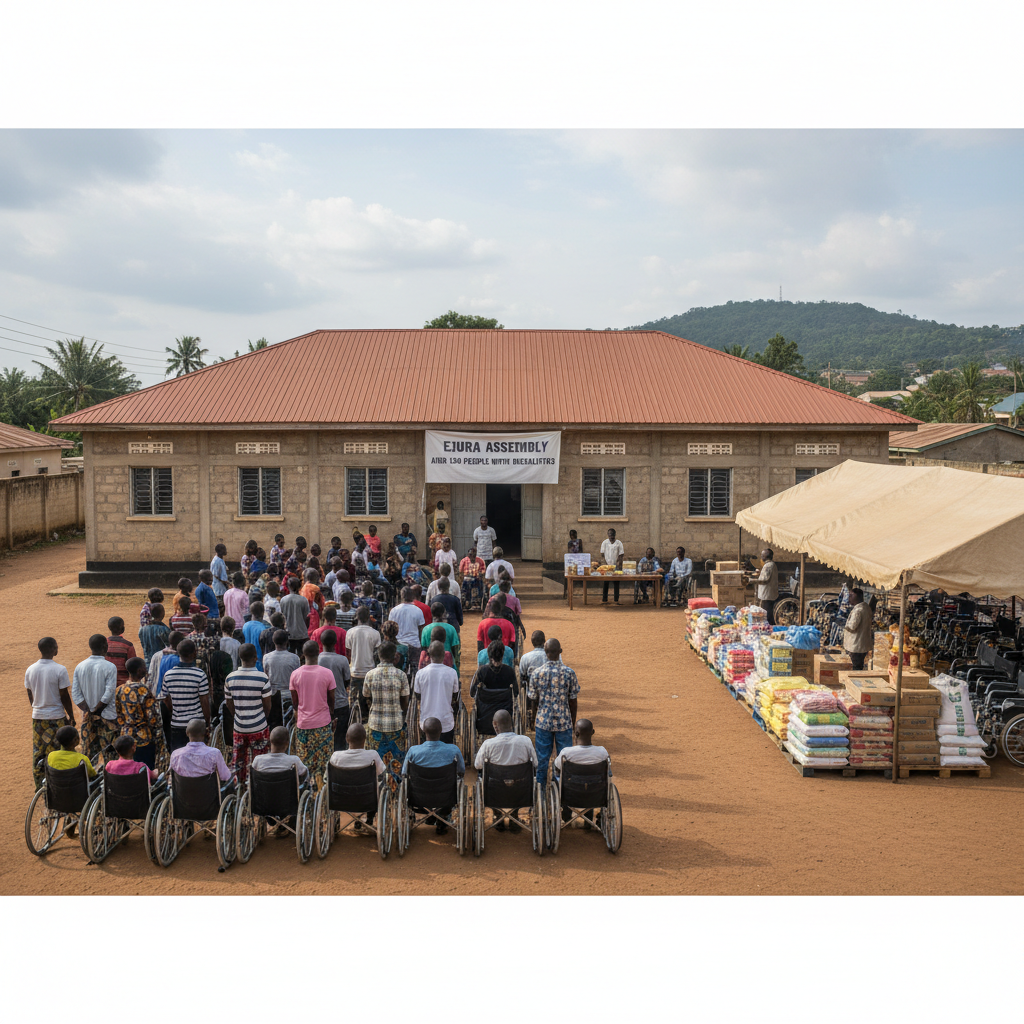
The Ejura Sekyeredumasi Municipal Assembly in the Ashanti region distributed GHS 268,300 in business, educational, and medical assistance to 136 persons with disabilities. This support comes from the District Assemblies Common Fund allocation for 2025 and targeted additional funds.
This initiative aims to boost the economic independence of persons with disabilities. The package included deep freezers, startup capital, educational aid, medical support, and assistive devices. The Municipal Chief Executive (MCE), Rafiu Adam Seidu, spearheaded these efforts, seeking extra funding when needed.
This programme aligns with Ghana's broader commitment to social inclusion and economic empowerment for vulnerable groups. District assemblies often use a portion of their common fund allocations to support such initiatives. The goal is to integrate these individuals into the productive economy, easing the financial burden on families and government social services.
MCE Rafiu Adam Seidu confirmed that 81 beneficiaries received support during the latest disbursement. He stated that the received items serve as startup capital for expanding existing businesses or starting new ventures. Mr. Seidu also noted that an earlier phase in August last year helped 55 people, bringing the total to 136 beneficiaries for the 2025 Common Fund programme.
The assembly provided specific items to help beneficiaries establish sustainable sources of income. For example, 34 individuals received deep freezers, coolers, and sachet water for trading activities. Eleven others received assorted provisions to strengthen their businesses. One person received a wheelchair, and 15 others received cash as startup capital. Additionally, 14 students received financial support for school fees, and six individuals got assistance with medical expenses. The Municipal Director of Social Welfare, Abdul Shakur Mutawakil, highlighted that income-generation interventions alone cost over GHS 230,000. Educational support amounted to GHS 18,500, and medical assistance cost GHS 19,800. Fifteen beneficiaries also received GHS 3,000 each as startup cash. This comprehensive support seeks to move individuals from dependence to self-sufficiency.
Going forward, the Social Welfare Department plans to conduct monitoring visits within three months. These visits will assess how beneficiaries are utilising the items and support provided. This evaluation will guide future decisions on increasing support or adjusting beneficiary lists. Such monitoring ensures accountability and maximizes the impact of public funds. The assembly hopes to transition hundreds of registered persons with disabilities from street begging to economically viable enterprises.