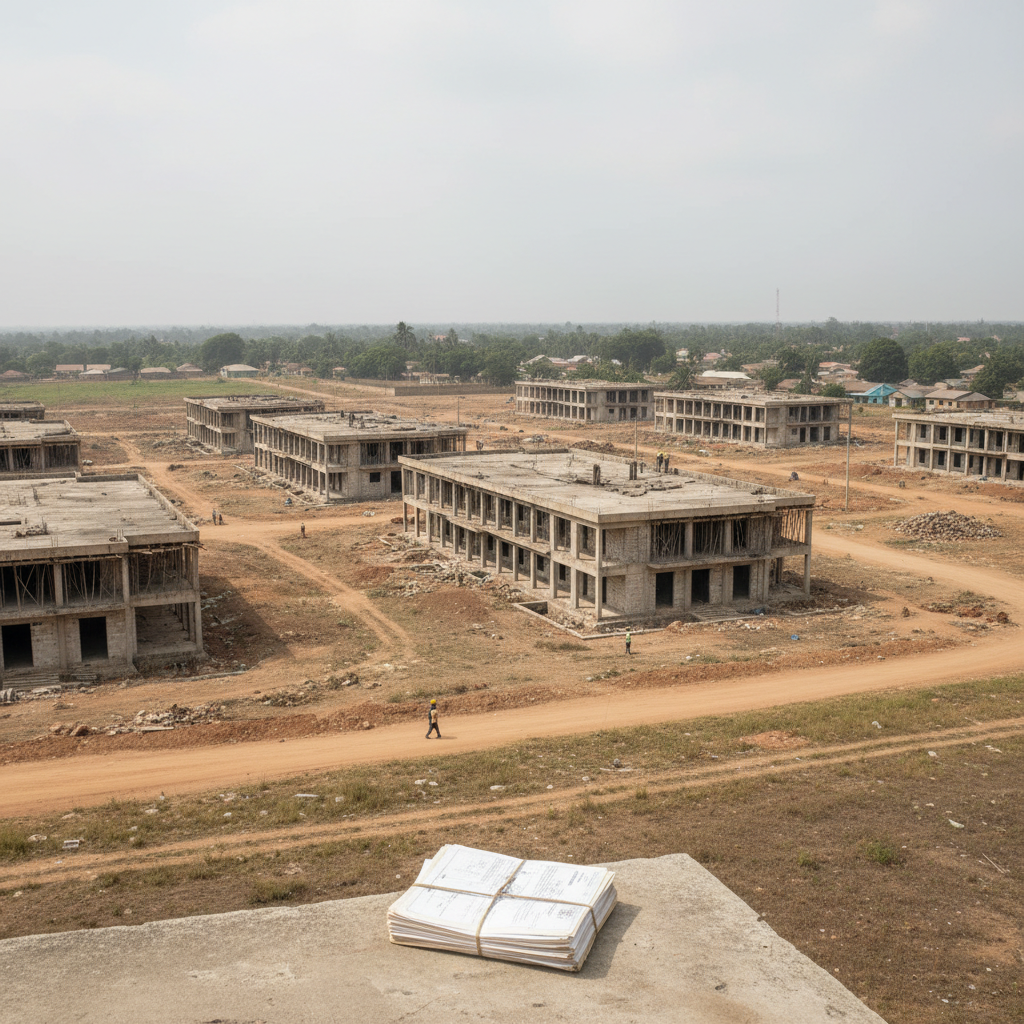
Former Assin Central Member of Parliament, Kennedy Agyapong, has threatened to expose New Patriotic Party (NPP) members for allegedly selling Agenda 111 hospital contracts to themselves and taking kickbacks. He asserts that these practices have hindered the completion of critical healthcare infrastructure. The former MP's accusations point to potential financial irregularities totaling over GHS 1.8 billion, impacting the nation's healthcare development.
Mr. Agyapong's allegations arose after NPP MPs toured the Afari Military Hospital and criticized the current National Democratic Congress (NDC) government for project delays. He claims that internal corruption, rather than structural issues, caused the setbacks in Agenda 111 projects. The accusations highlight concerns about governance and public financial management within major government initiatives.
This situation fits into a broader narrative of public concern regarding the timely and cost-effective execution of large-scale government projects in Ghana. The Agenda 111 initiative, launched in 2020, aims to build 101 district hospitals across the country. Only a handful of these projects are nearing completion, significantly behind schedule. Previous instances of contract inflation and financial mismanagement have often plagued public infrastructure projects, raising questions about accountability and oversight.
Mr. Agyapong’s claims, captured in a video played on YouTube, center on inflated costs for hospital projects, estimated at approximately $16.88 million (GHS 250 million) per facility. He also alleges that contract recipients re-sold these contracts and pocketed a 10% kickback of the total contract value. He said party members approached his wife with an offer for a contract in exchange for an 11% kickback. As a former chairman of Parliament’s Defence and Interior Committee, Mr. Agyapong claims detailed knowledge of contract sums.
These allegations suggest significant leakages of state funds, directly impacting the successful and timely delivery of essential healthcare facilities. Should these claims prove true, they could lead to increased public scrutiny of government contracts and renewed calls for investigations by bodies like the Office of the Special Prosecutor and the Economic and Organised Crime Office (EOCO). Decision-makers will face pressure to address these corruption allegations, potentially affecting public trust and future large-scale projects.
The Afari Military Hospital, a 500-bed facility, exemplifies these delays. Initiated in 2014, its construction officially began in March 2014 with a 2016 completion target. It remains unfinished in 2026, though reportedly 98% complete. Mr. Agyapong insists that corruption caused this significant delay, which affects military personnel and the general public in Ghana's middle belt. The project is vital for easing pressure on the 37 Military Hospital in Accra.
The total investment in Agenda 111 is estimated at $1.7 billion (GHS 25.1 billion). A 10% kickback on each $16.88 million project could amount to $1.688 million (GHS 25 million) per hospital. If this practice is widespread across all 101 projects, the total alleged kickbacks could reach $170 million (GHS 2.5 billion), representing over 10% of the total project cost. The former MP's warnings indicate a potential political fallout within the NPP if these allegations are pursued.