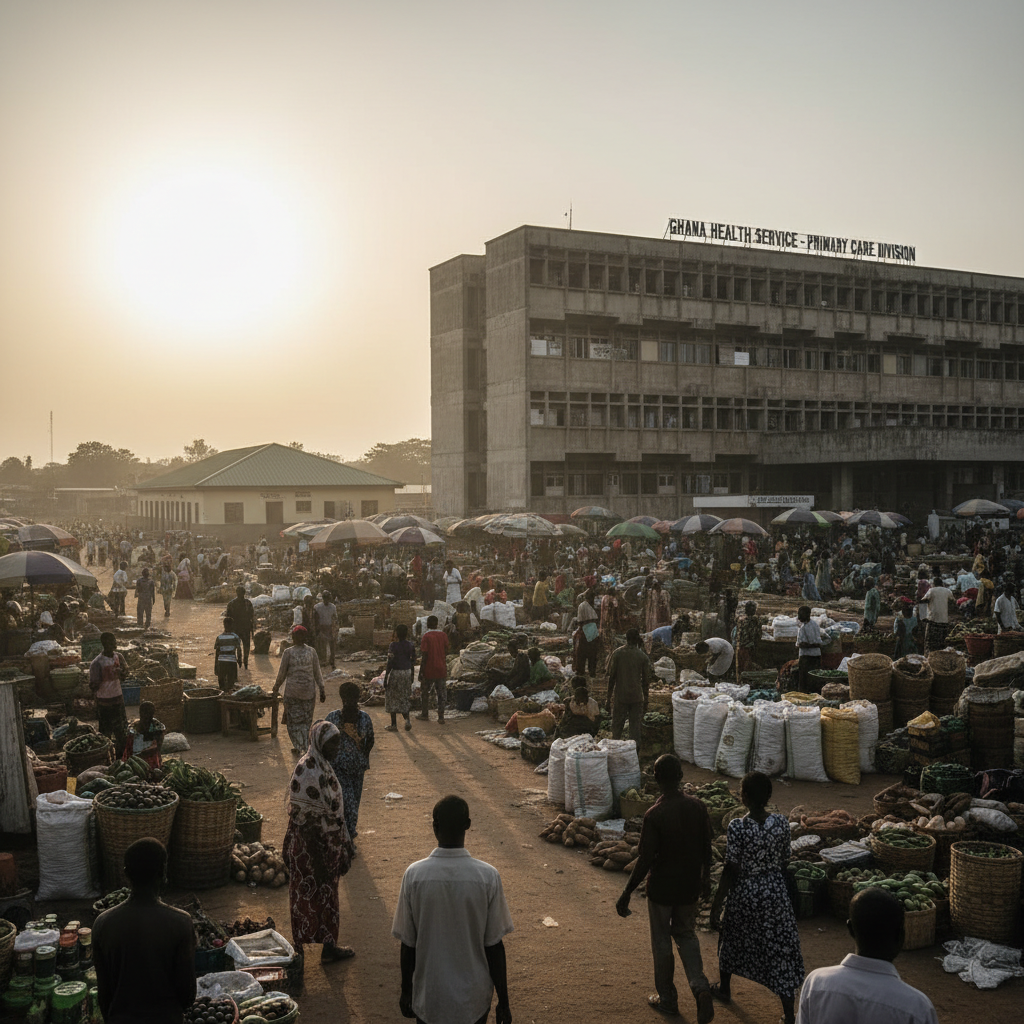
Ghana's National Health Insurance Authority (NHIA) stated that the government's Free Primary Healthcare program represents the most important health financing change since the National Health Insurance Scheme (NHIS) began. Dr. Victor Asare Bampoe, CEO of the NHIA, announced this at the 2026 CHAG Annual Conference in Koforidua. The program seeks to fundamentally change how essential healthcare services are funded and delivered across Ghana.
The Free Primary Healthcare program aims to move the country's health system 'upstream'. This means it will prioritize preventing illnesses, diagnosing problems early, and providing basic healthcare services in communities. This new focus will strengthen primary healthcare, lead to better health outcomes, and ease pressure on larger hospitals. The success of this initiative depends on strong partnerships with healthcare providers.
This initiative fits into Ghana’s broader goal of achieving Universal Health Coverage. This means ensuring that every Ghanaian can access necessary health services, regardless of their income or where they live. The NHIS, established years ago, improved access by reducing financial barriers. The new program extends this by focusing on community-level care and prevention. This approach is vital as Ghana works to efficiently use its healthcare resources.
Dr. Bampoe specifically highlighted the critical role of the Christian Health Association of Ghana (CHAG). He stated that CHAG has been a key partner in developing the program. CHAG’s extensive network, with 375 health facilities in all 16 regions, makes it indispensable for implementation. “The Free Primary Healthcare Programme represents one of the most significant shifts in Ghana's health financing architecture since the scheme itself was established,” Dr. Bampoe said.
Many communities that will benefit from this program are already served by CHAG facilities. CHAG provides between 30 and 40 percent of healthcare services nationwide even though it owns only about seven percent of Ghana's health infrastructure. Most of its hospitals, clinics, and health centers are in rural and remote areas. These are places where government health facilities are often scarce. The NHIA will work closely with CHAG to ensure the program rolls out successfully.
The program's financing arrangements will support healthcare providers and improve patient access. This ensures that services reach those who need them most. Strengthening preventive healthcare will reduce avoidable illnesses and improve overall efficiency in Ghana's health system. This strategy could lead to a healthier population and reduced long-term healthcare costs.
The Free Primary Healthcare program's success will be a key indicator for Ghana’s public health policy moving forward. Decision-makers and the healthcare market will closely watch its execution and impact on health outcomes. Continued collaboration between the government, the NHIA, and providers like CHAG will be crucial. This initiative could significantly reshape Ghana's healthcare landscape for generations to come.