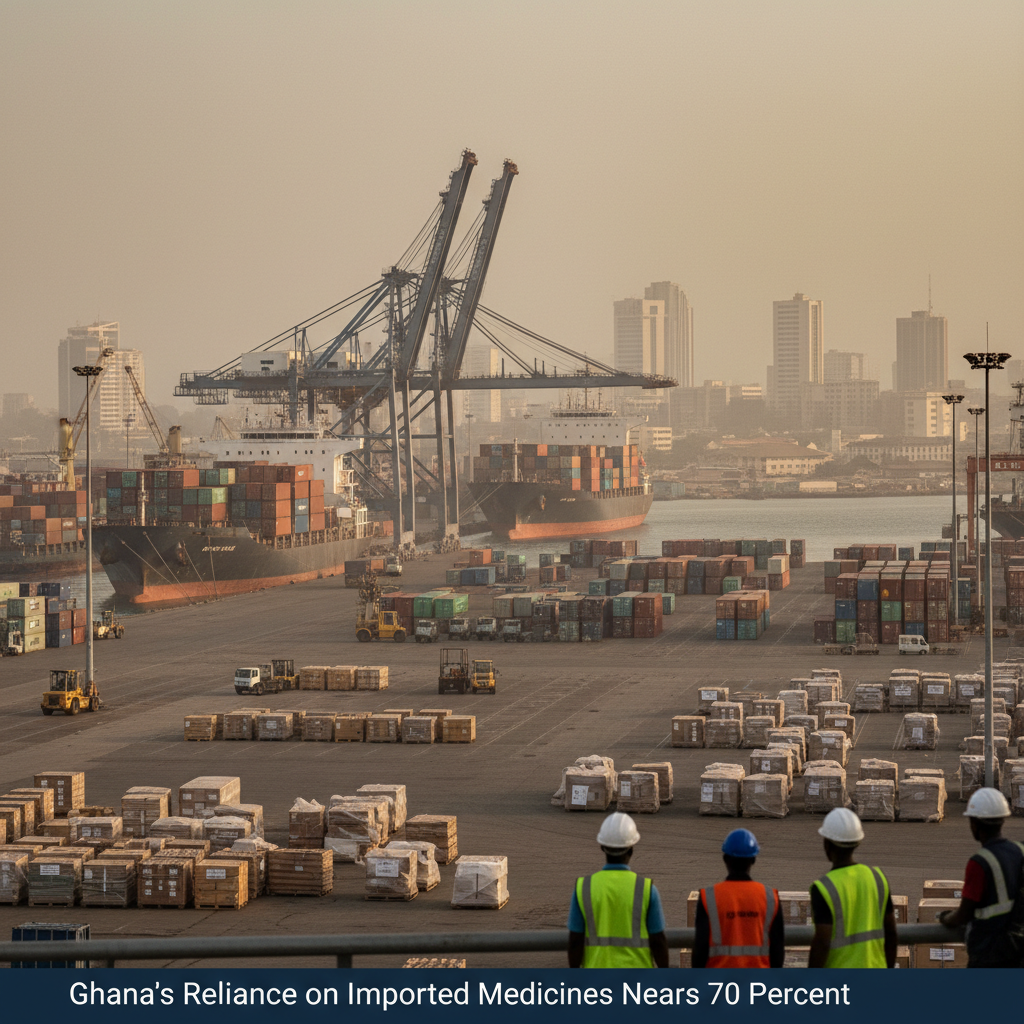
Ghana currently relies on imported medicines for 70 percent of its healthcare needs. This heavy dependence presents a growing threat to the nation's security, according to the Pharmaceutical Society of Ghana (PSGH). The remaining 30 percent of medicines come from local production.
This significant reliance on external suppliers makes Ghana vulnerable to disruptions in global supply chains. The PSGH has called for strategic investments to bolster local pharmaceutical manufacturing. By increasing domestic production, Ghana can reduce its exposure to international shocks and ensure a stable supply of essential drugs.
The push for local pharmaceutical production aligns with Ghana's broader economic goals of self-sufficiency and industrialization. Ghana has made efforts to reduce imports in various sectors. Data from the Bank of Ghana regularly highlights the impact of import bills on the national currency, the Ghana Cedi. Boosting local manufacturing can lead to job creation and economic growth, further strengthening the nation's economy.
Dr. Paul Owusu Donkor, President of the PSGH, stressed the critical nature of the situation. He said, "If we continue to rely on global supply chain systems for our medicines, then we are compromising our national security." He made these comments during the PSGH's 90th-anniversary celebrations at the Manhyia Palace in Kumasi.
Achieving local production of 70 percent of Ghana's pharmaceutical needs requires substantial investment. This includes funding for manufacturing infrastructure, capital, and technology. Access to land and human resource development are also crucial for this expansion. A robust local industry could position Ghana as a pharmaceutical manufacturing hub for the entire West African region. Increased local production would also help in the fight against antimicrobial resistance (AMR), a public health challenge linked to the misuse of medicines and the circulation of substandard products. Between 4,900 and 6,200 Ghanaians die each year from infections due to AMR.
Government and other stakeholders must seriously consider the PSGH's recommendations. Future actions will likely involve policy frameworks and incentives to attract both local and foreign investment into the pharmaceutical sector. This includes stricter regulatory oversight by bodies like the Pharmacy Council and the Food and Drugs Authority (FDA) to combat counterfeit medicines. Addressing this vulnerability is essential for public health, national security, and economic stability.