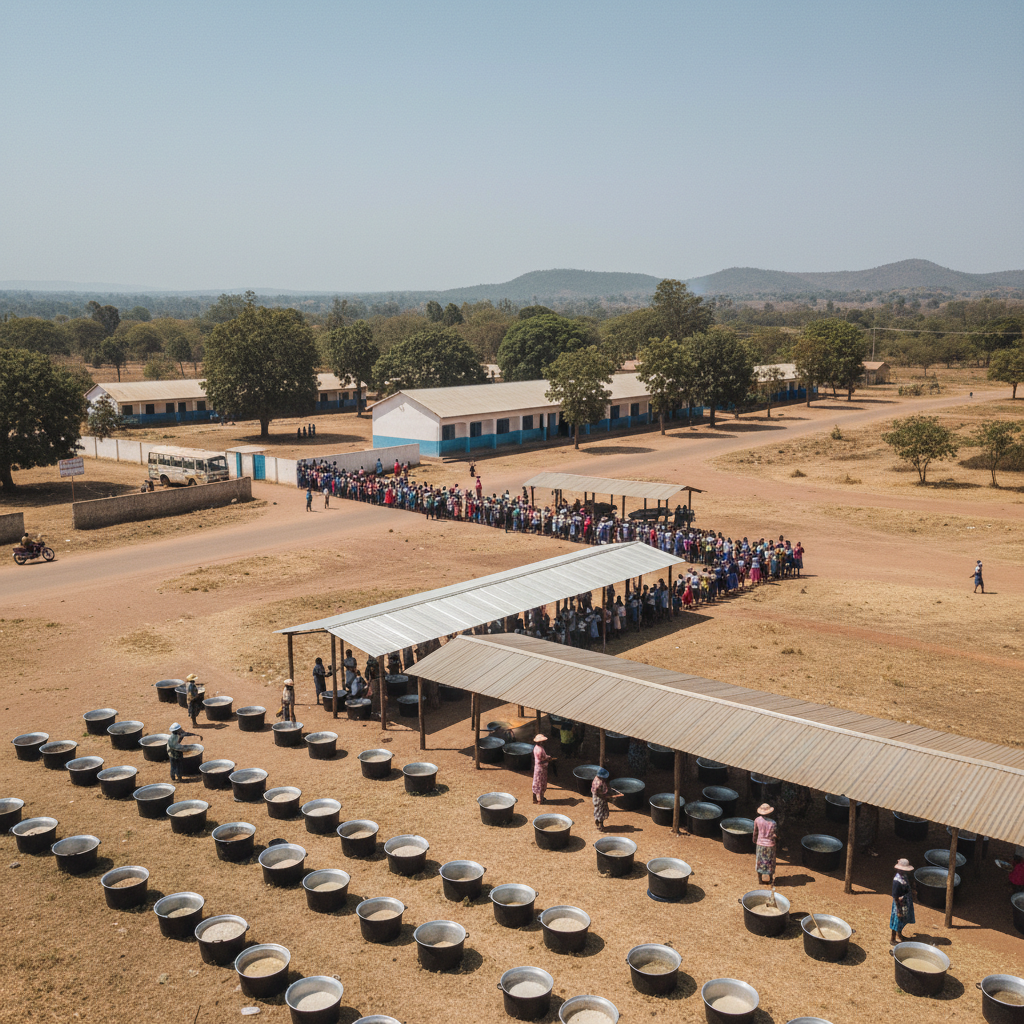
The Ghana School Feeding Programme currently provides one hot meal daily to 4 million pupils. These meals are served in 12,000 public basic schools nationwide. The initiative aims to support child nutrition and school attendance.
This program benefits 4,231,059 learners from kindergarten to Primary Six. It helps improve school enrolment and retention rates across the country. The initiative also supports local food production by sourcing ingredients from Ghanaian farmers.
The School Feeding Programme is a flagship social intervention by the Ghanaian government. It forms part of broader efforts to boost access to education and reduce hunger. The programme aligns with national development goals for human capital development and agricultural growth. Previous reports have highlighted concerns about funding and timely payments to caterers, impacting consistent service delivery.
Agnes Naa Momo Lartey, the Minister for Gender, Children, and Social Protection, confirmed these figures. She addressed Parliament regarding the program's reach and future. The Minister stated the government is committed to strengthening and expanding the programme. However, she noted that further expansion is currently constrained by financial limitations. The program did not receive financial clearance for additional beneficiaries this year.
The government's long-term policy goal is to progressively strengthen and expand the programme. Decision-makers will monitor resource availability and financial clearances for future growth. The program’s ability to secure consistent funding will be key to its continued success. Market conditions for local agricultural produce could also be affected by both sustained and expanded demand.
Sustaining this programme is crucial for maintaining gains in education and child welfare. Any disruptions could impact school attendance and nutrition for millions of children. The government's resource allocation for social interventions like this remains a critical focus. This commitment to social protection reflects government priorities amid economic challenges. Future parliamentary discussions will likely focus on funding mechanisms for such vital programmes.